

[비즈한국] The government's proposal to designate the damaged area of Yeomchang Neighborhood Park in Gangseo-gu as the only new public housing district in Seoul under the August 13 housing supply plan continues to face fierce resistance from residents. With the public information session on the 11th falling through, the goal of breaking ground by 2029 is already facing complications from the start.
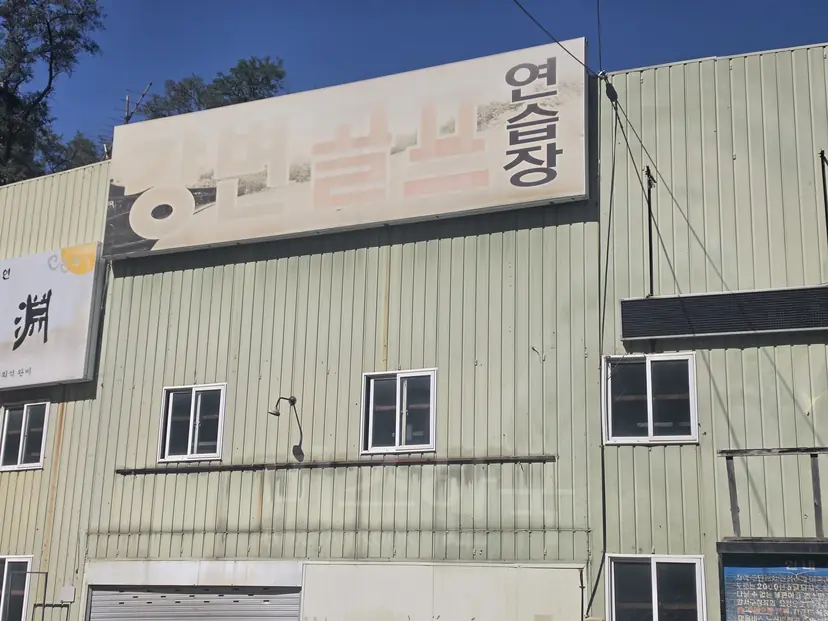
On the 15th, residents could be seen taking walks or using exercise equipment throughout Yeomchang Neighborhood Park in Gangseo-gu, Seoul. As I climbed the park trail situated between apartment complexes, I spotted an empty plot of land tucked away in the forest, filled with construction equipment and vehicles.
The damaged area of Yeomchang Neighborhood Park is a site where a park development project began in 1990 under the condition that a private developer would build a culture center, a youth center, and a senior citizen center, in exchange for constructing profit-generating facilities like a golf driving range. However, only the commercial facilities were built, and the promised amenities never materialized. Consequently, Gangseo-gu cancelled the project developer's designation and the implementation plan in 2006, and the golf driving range was shut down in 2009. Since then, the development has been left in limbo for a long time due to factors such as the scale of the site, fragmented land ownership, and changes in ownership.
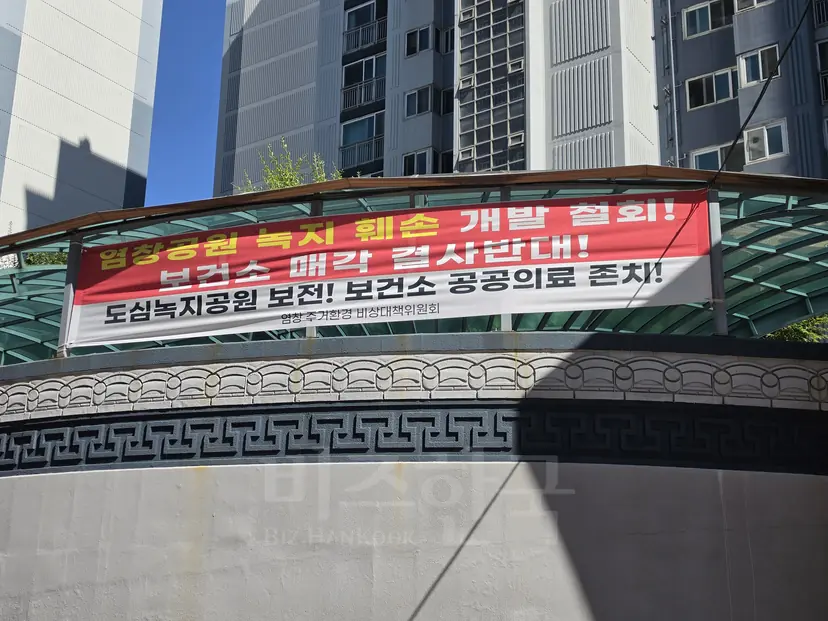
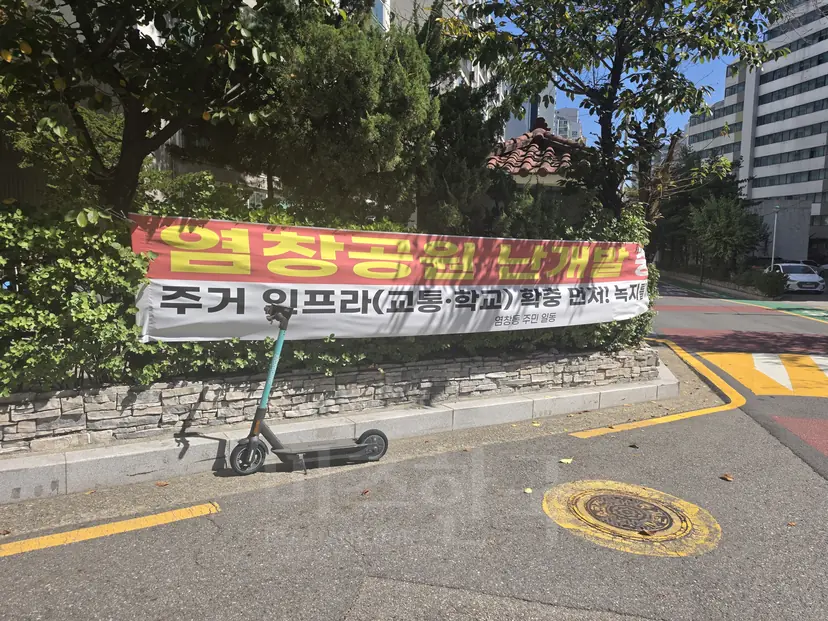
In the "Rapid Housing Supply Plan" announced on August 13, the government stated its intention to supply 1,000 public housing units on the 50,711-square-meter plot of long-neglected damaged land within the park. However, residents are strongly opposing the plan, insisting that the area should be restored as a park. The public information session, which was scheduled to be held at the Yeomgyeong Middle School gymnasium on the 11th, was cancelled due to protests from residents. Banners and posters opposing the development of Yeomchang Park hung throughout the Yeomchang-dong area further reflected this atmosphere.
Residents I met at the park also expressed strong opposition to the government's public housing supply plan. Resident A said, "There are already many apartments around here, and the roads are narrow. In some sections, the sidewalks were widened, making the space available for vehicles even narrower. In such a situation, if 1,000 more units are added, traffic will inevitably become even more inconvenient."
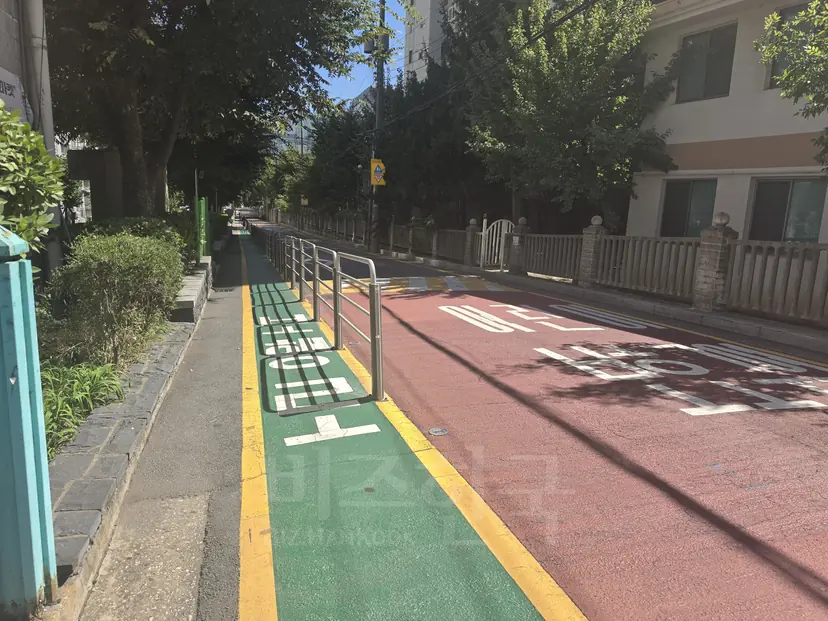
As I toured the area near the park, the surrounding roads did not appear suitable for handling a large volume of vehicles. In particular, for the roads near school zones, the risk of traffic accidents seemed likely to increase if vehicle traffic were to rise.
Concerns about a lack of living infrastructure, such as educational facilities, also continued. Resident B, whom I met at a nearby crosswalk, said, "This neighborhood lacks basic living infrastructure. It doesn't seem right to build houses first when there isn't even a high school nearby."
Among residents who had been looking forward to the creation of a park, there was also dissatisfaction regarding the site being used for housing supply. Resident C, who has lived in Yeomchang-dong for 30 years, said, "It is baffling that they are suddenly deciding to use it for housing supply after all this time. Given that there are already plenty of apartments in the vicinity, we need a park here."
In local group chats where residents gather, messages opposing the public housing development and discussing future response strategies are being posted daily. Complaints against the project have also been flooding the websites of the Gangseo-gu Office and the Gangseo-gu Council. The Yeomchang Residential Environment Emergency Response Committee issued a statement on the 14th, pointing out problems in the process of conducting the public information session and demanding that elected officials, including local National Assembly members and city/district council members, publicly state their positions for or against the development.
The conflict appears set to continue for the time being. Although the government is pushing the project with a target of breaking ground in 2029, how it resolves the residents' opposition will be a major variable in the future of the project.
Meanwhile, Gangseo-gu Mayor Jin Gyo-hoon apologized at the site of the information session on the 11th for failing to sufficiently collect resident opinions during the process of designating the public housing district. He further stated that if the Seoul Metropolitan Government clearly commits to a plan and timeline for restoring the damaged area of Yeomchang Neighborhood Park, he would withdraw the public housing development plan. However, he maintained the position that there is a need to develop the long-neglected site.