

[비즈한국] One of the reasons why producing historical dramas or films is so difficult is the challenge of historical research. From the actors’ costumes and accessories to furniture, household items, and various props, there is much to prepare on a tight budget. The days when audiences would laugh off a fire hydrant or an air conditioner unit appearing in the background as a minor blooper are long gone. Even a single misaligned topknot, traditional women's hairstyle, or ribbon on a garment can draw fierce criticism from viewers.
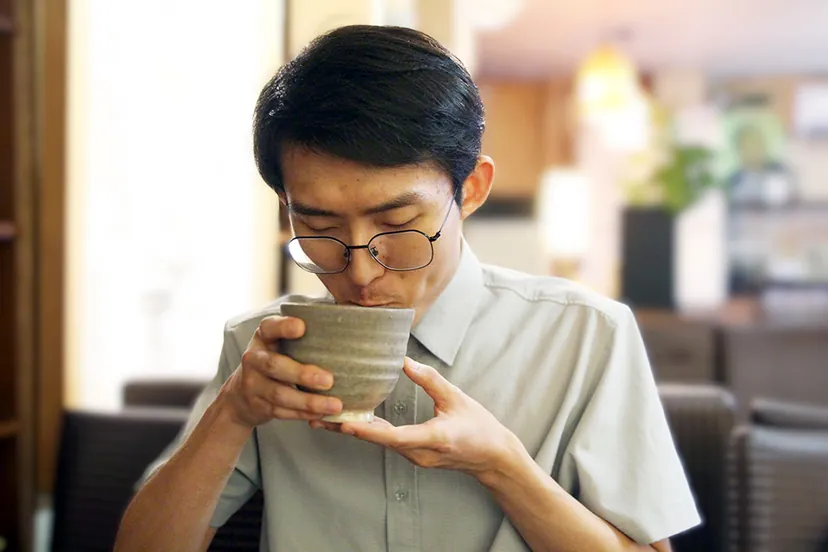
In such an era, there is a bold artist who has placed an ‘Elf’ right in the heart of historical comics. I met with Woo Yong-gok, the artist who released ‘Myths of the Joseon Royal Court’ in 2022 and is currently serializing the Instagram toon ‘Joseon Elf Daumeotji,’ at a janchi-guksu (banquet noodle) restaurant in Insa-dong.
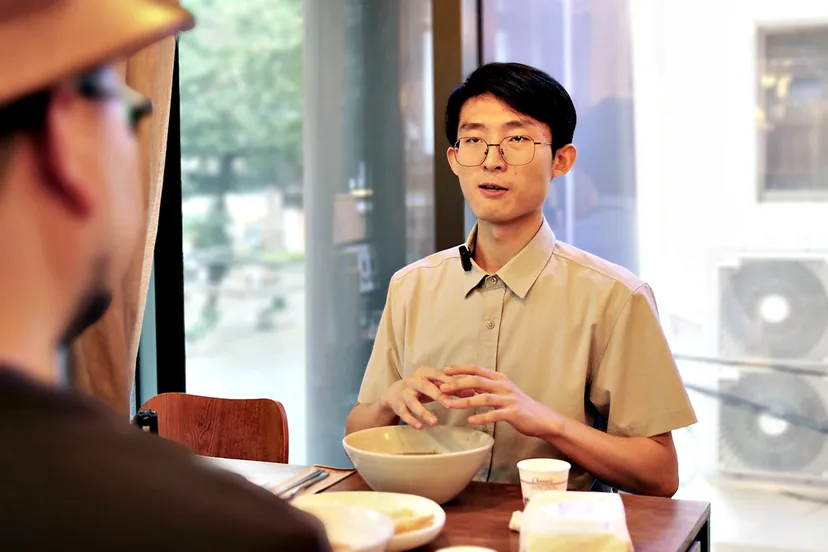
Janchi-guksu: Different for Every Region and Person
There is a reason why Woo started to love noodles. His grandmother, whom he lived with as a child, was of a generation that had lived through the war and would always serve rice in heaping bowls. For a grandson with a small appetite, finishing every grain of rice she gave him at every meal was quite a struggle. While he understood his grandmother’s desire to keep her grandson well-fed, he naturally began to enjoy noodles more as he grew tired of the heavy rice meals.
At first, he sought out janchi-guksu often because it was available everywhere and the taste was generally reliable. However, after tasting an unforgettable bowl of janchi-guksu at a restaurant in Gongju, South Chungcheong Province, in the middle of summer, he started looking for janchi-guksu whenever he went on field research trips. He felt that since the types of garnishes and the methods of making the broth varied by region and individual, each bowl contained the unique narrative of the person who boiled the noodles.
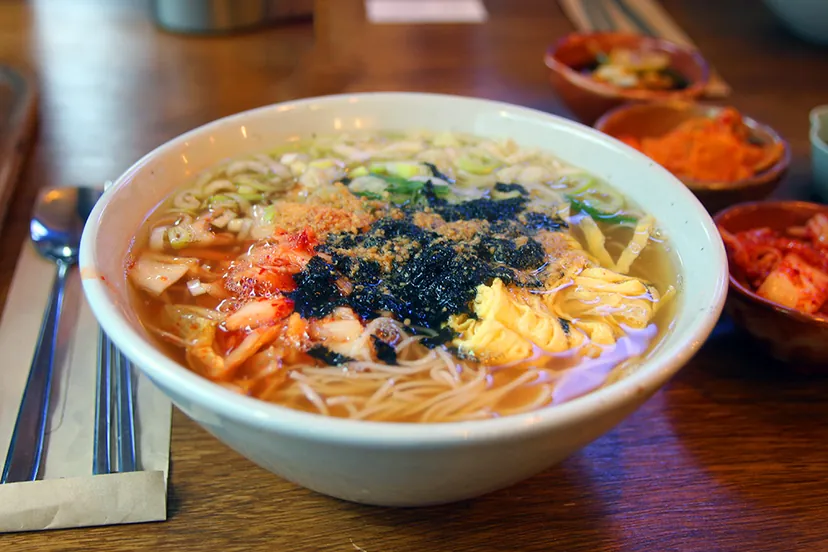
“In a way, I thought that perhaps a bowl of janchi-guksu contains that person’s history. It could be a recipe learned from their mother, or they might use ingredients that are abundant in that region. Those points felt new and meaningful to me. You could say that janchi-guksu became an indicator that shows the characteristics of that region.” Today, janchi-guksu has become a common and simple food, but for the artist, it has become a special dish that makes him curious about the life of the maker and the characteristics of the local area.
Naengmyeon (cold noodles) is another food that gives the artist a sense of narrative. His interest in history and culture naturally extended to North Korean-style food. He interviewed the owners of naengmyeon shops opened by displaced people and those run by North Korean defectors, finding that the tastes differed and delving into their origins. Is there any narrative as powerful as the ‘flow and movement of noodles’ (麵生流轉) of Pyongyang naengmyeon, which survived after crossing the 38th parallel and changing its identity multiple times? We decided to meet at a naengmyeon shop next time to unravel a bundle of tearful stories about the ‘thousand-ri journey’ (a reference to the song 'Yujeong Cheonli').
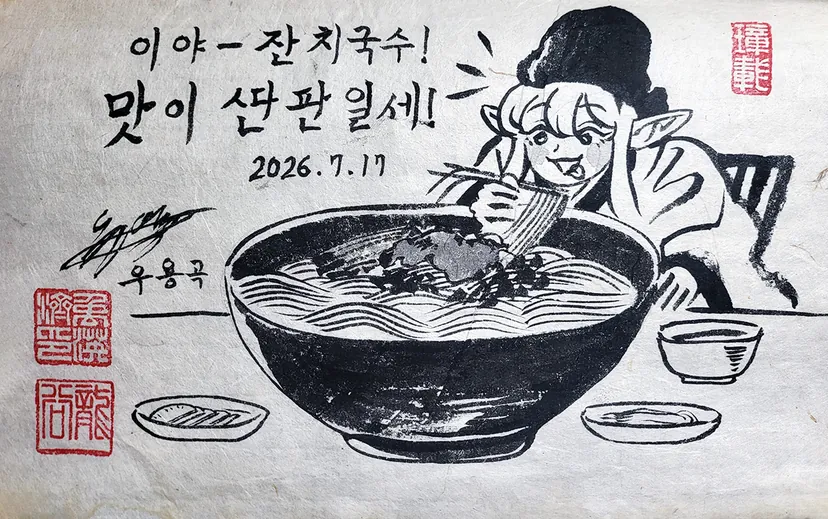
An Elf in a Joseon Dynasty Story?!
“Back in the days when tigers smoked pipes,
When Hwanung, the son of Heaven, descended from the sky,
All sorts of strange beings followed along in the crowd.
Among them were ‘long-eared fellows’ who looked strangely… like humans,
In today’s terms, they are called ‘Joseon Elves’.”
-‘Joseon Elf Daumeotji’, Episode 1, Once Upon a Time (2026.5.6.)
The ‘Elf’ is an imaginary race with origins in Norse mythology, famous for having ears even larger than those of Liu Bei in ‘Koau Young’s Romance of the Three Kingdoms.’ To us, they are familiar characters who appeared in J.R.R. Tolkien’s ‘The Lord of the Rings’ or Ryo Mizuno’s ‘Record of Lodoss War’ series, which were also adapted into movies.
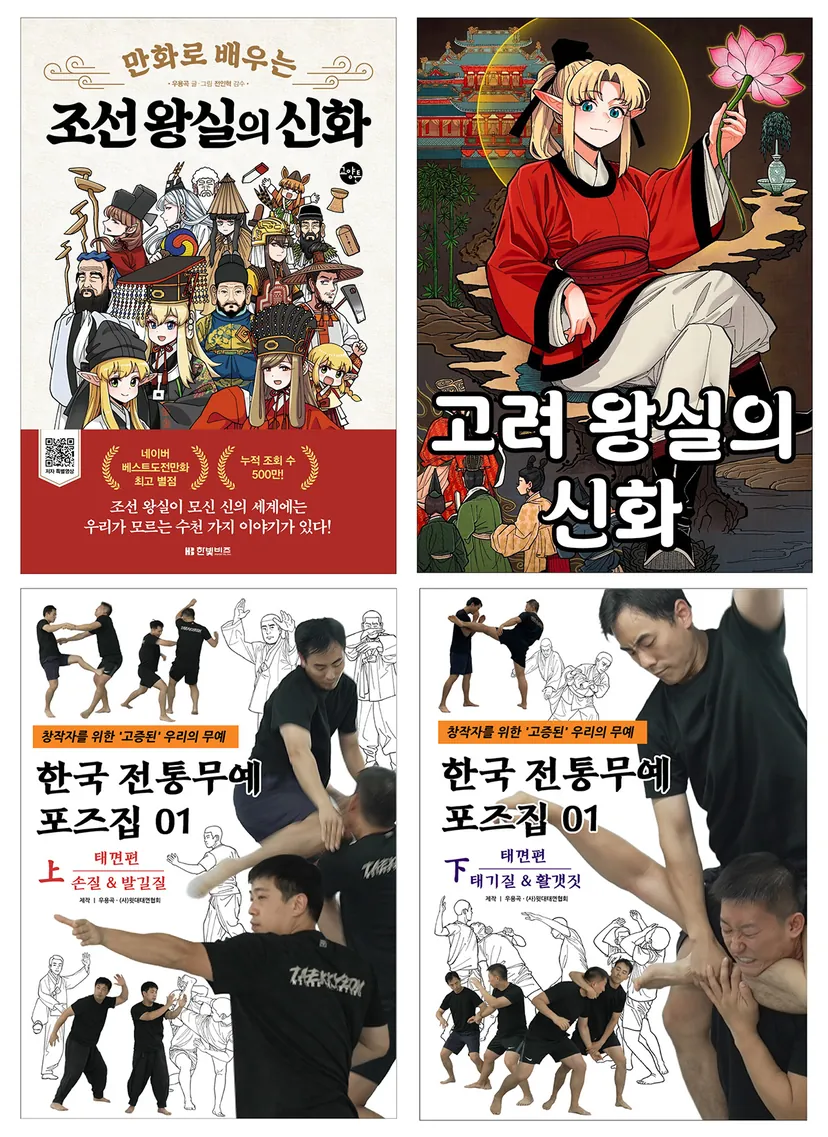
Woo Yong-gok used this very elf as the narrator in his ‘Myths of the Joseon Royal Court,’ an educational comic introducing the various divine beings worshiped by the Joseon royal family. The work, a blend of various memes and illustrations of beautiful elf girls, became a hot topic online, reaching 5 million cumulative views and marking a milestone by presenting a new type of historical educational comic.
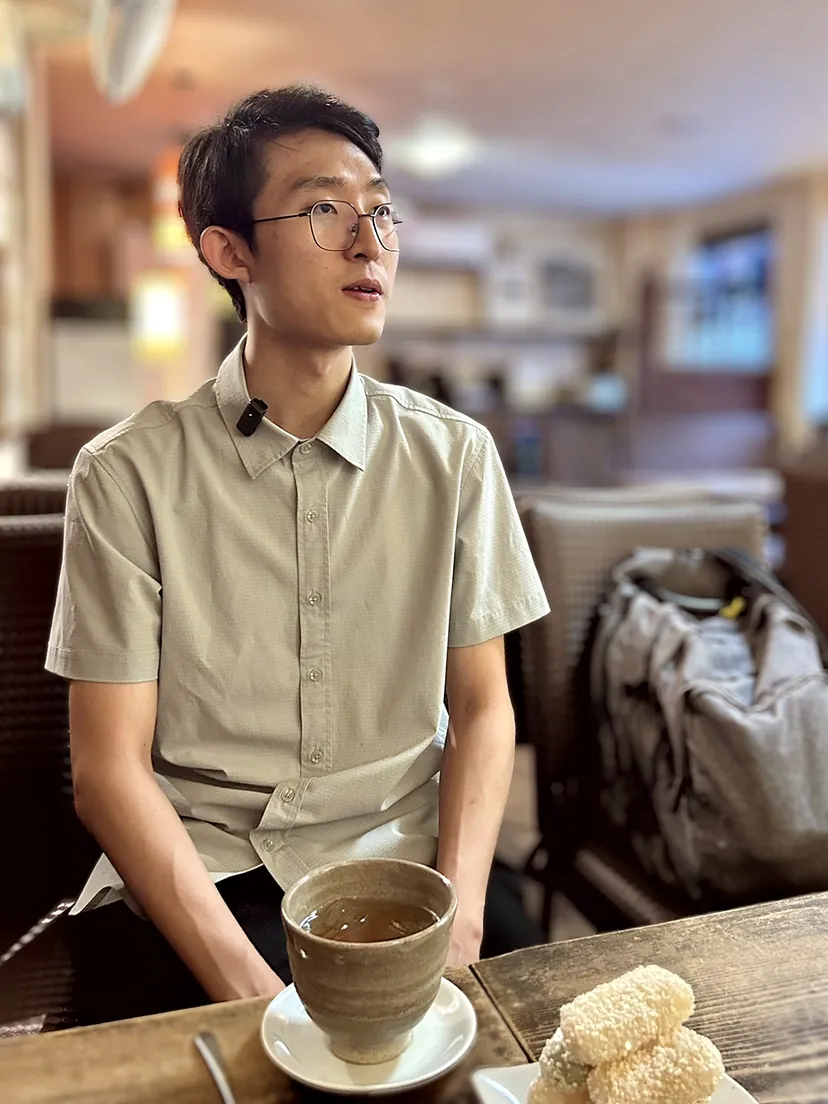
However, he says he didn’t have elves in mind from the start. What he originally planned with his publisher’s producer was a standard educational comic, focusing on the stories of Joseon kings, war history, royal mysteries, and strange tales. But judging that it lacked a hook, they decided to include a character completely unrelated to Joseon, Confucianism, or mythology, and what came to the artist’s mind was an elf. While many people can recite the genealogy of the 27 Joseon kings, few know about the royal myths; the elf serves as a dramatic device to deliver this information easily and funnily.
Just because he explains things easily and funnily doesn't mean his comics are drawn effortlessly. Woo personally participates in ancestral rites and other ceremonies, travels extensively to visit historical sites domestically and abroad—including Goguryeo ruins in the Three Northeast Provinces of China—collects information, and digests it all before drawing. For Woo, history is not knowledge stuffed into books, but something reconstructed by meeting people and visiting sites.
“They’re called Elves, but they act just like old scholars.”
The elf, a character initially set to attract attention, has become a very important figure in the artist’s storytelling over time.
In the Instagram toon ‘Joseon Elf Daumeotji’ (Daumeotji is an old Korean term for ‘comics’ before the Chinese-derived word became established, derived from the phrase ‘what will happen in the next scene’), which the artist launched this year after returning from military service, the elves transcend being mere vehicles for information to become characters living among humans. The elf characters, called ‘Ear-ers,’ are long-lived beings who have witnessed the rise and fall of regimes and dynasties, and at the same time, they bear witness to scenes of the era while living and bickering with humans from the Joseon era to the 21st century.
Controversy over ‘Japanese-style’ Art, Message over Image
In the past, the work that led the elf character boom in Korea was Ryo Mizuno’s ‘Record of Lodoss War,’ and as the artist also drew in the beautiful girl art style popular in Japan, he was often caught up in controversy over whether he was “dealing with Joseon history while imitating Japanese fantasy,” even though the basic settings for the elves relied heavily on Tolkien’s.
Having grown up in an environment where Japanese comics were widely imported, Woo empathizes with the long-standing slogan of the comics industry—typified by “Cast off Manga”—which calls for finding our own drawing style that breaks away from Japanese influence. However, he is now moving toward a method of focusing on the message beyond the image. For an artist who uses a bold, dramatic style for short stories, freelance work, and museum-related projects, the message contained within is more important than a fixed image.
Studying History and Confucianism to Understand Grandparents, Now Moving to Goryeo
Woo Yong-gok’s interest in history was largely influenced by his grandparents, who consistently upheld Confucian traditions. Instead of rejecting things he couldn’t immediately understand, Woo began studying Confucianism and history to understand his grandparents’ lives and the ideas flowing underneath. “When a character moves, they usually do so according to the philosophy, personal ideology, or religious views of that era. I thought, wouldn’t real people be the same? Fortunately, studying Confucianism helped me understand.”
When listening to Woo’s story, I was reminded of how Art Spiegelman worked on ‘Maus’ to understand his father, who suffered from war-related PTSD. If this is an artist who dwells on the stories of people found in janchi-guksu and naengmyeon, wouldn’t he be capable of drawing a comic as excellent as ‘Maus’ someday?
Artist Woo Yong-gok is currently awaiting the publication of the sequel to ‘Myths of the Joseon Royal Court,’ titled ‘Myths of the Goryeo Royal Court.’ Unlike Joseon, the Goryeo era is an age of Buddhism. It is exciting to see how the elves of Goryeo will unravel the grand themes of that period.
While attending Cheongkang College of Cultural Industries, he released ‘Learning Myths of the Joseon Royal Court through Comics’ in 2022. He is a cartoonist who hits the pavement, traveling across the country for historical site research due to his love for Korean history, archaeology, mythology, and traditional culture. He is currently training with the goal of obtaining a National Heritage Repair Technician certification, and as a Taekkyeon practitioner, he was in charge of producing the 2025 ‘Korean Traditional Martial Arts Pose Collection: Taekkyeon Edition Vol. 1/2.’ In August 2026, he was appointed as an ambassador for the Witdae-Taekkyeon Association, with whom he collaborated on the pose collection. He is scheduled to publish ‘Myths of the Goryeo Royal Court’ soon. Instagram: https://www.instagram.com/joseon_elf/