

[비즈한국] Winners Asset Management, which suffered an 80 billion won loss in a private equity fund based on the Japanese Nikkei index during the COVID-19 pandemic, has declared bankruptcy. Winners Asset Management had been embroiled in a legal battle for over five years with the selling agent, KB Securities, regarding liability for the fund’s forced liquidation, but ultimately lost the case. After entering rehabilitation due to the financial impact of the protracted lawsuit and damages, the firm sought a recovery through a merger and acquisition (M&A), but the deal recently collapsed, leading to its eventual closure.
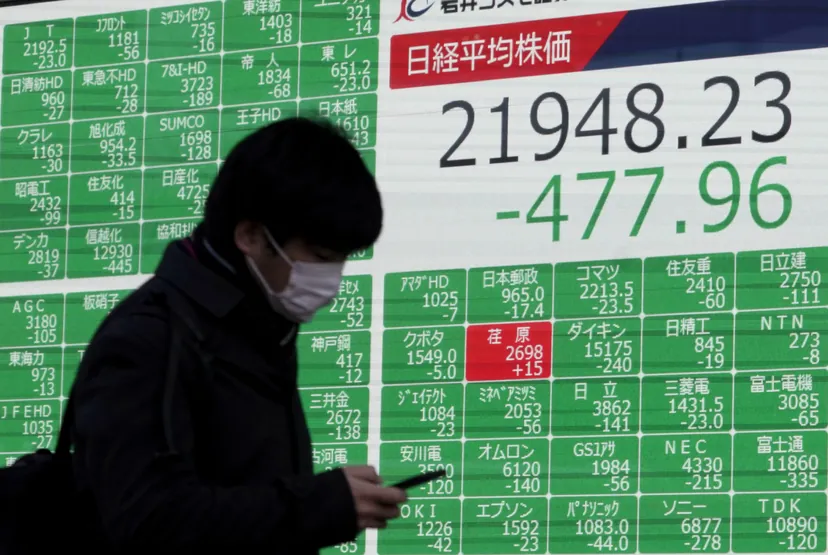
On August 26, the Seoul Rehabilitation Court declared the bankruptcy of Winners Asset Management. This comes about half a month after the court terminated the firm’s simplified rehabilitation procedure on the 11th. Winners Asset Management had submitted a rehabilitation plan in late April, but withdrew it after the M&A failed; as no supplementary plan was submitted, the court ruled to terminate the rehabilitation. A creditors' meeting to decide on the continuation of operations is scheduled for October 2.
On the 27th, the day after the bankruptcy declaration, Kim Hee-byung, CEO of Winners Asset Management, issued a notice regarding the suspension of operations, stating: “Winners Asset Management has been in a long legal battle with KB Securities since early 2020. During the five-year litigation, we initially appeared to be on the path to recovery after winning the second trial, but we lost the final appeal.” He added, “As a final effort to keep the company alive, we pursued an M&A. Although a final acquirer was selected and the deal was imminent, the primary creditor did not consent, causing the rehabilitation process to fail and leading to the bankruptcy declaration.”
Winners Asset Management was a small-to-medium-sized domestic firm launched in 2014 with the goal of investing in mid-risk, mid-return products. The firm gained attention following the 80 billion won loss in its private equity fund that invested in Nikkei index options, a derivative product. As the stock market plunged in late February 2020 due to the COVID-19 pandemic, two funds investing in options based on the Nikkei 225 index (a index calculated based on the stock prices of 225 blue-chip Japanese companies) on the Osaka Exchange not only lost their entire value but recorded negative returns.
The fund in question was designed primarily to sell put options (the right to sell an index at a specific price), a structure where losses increase as the index falls. However, as COVID-19 spread, the index plummeted, and as evaluation losses mounted, KB Securities, the consignment sales agent, forcibly liquidated the entire option position without a margin call, finalizing the losses.
Subsequently, Winners Asset Management and KB Securities engaged in a legal battle over liability for the fund's losses and the potential for damages. KB Securities filed a lawsuit against Winners Asset Management claiming over 10 billion won in damages, including receivables and delayed interest incurred during the forced liquidation process.
Winners Asset Management argued that KB Securities had exacerbated losses for investors and the asset manager by executing the forced liquidation in an inappropriate situation, and claimed that KB Securities should compensate the investors. Conversely, KB Securities countered that it had acted lawfully according to the product terms and conditions, and that Winners Asset Management had failed to adhere to the stop-loss principle outlined in the product prospectus.
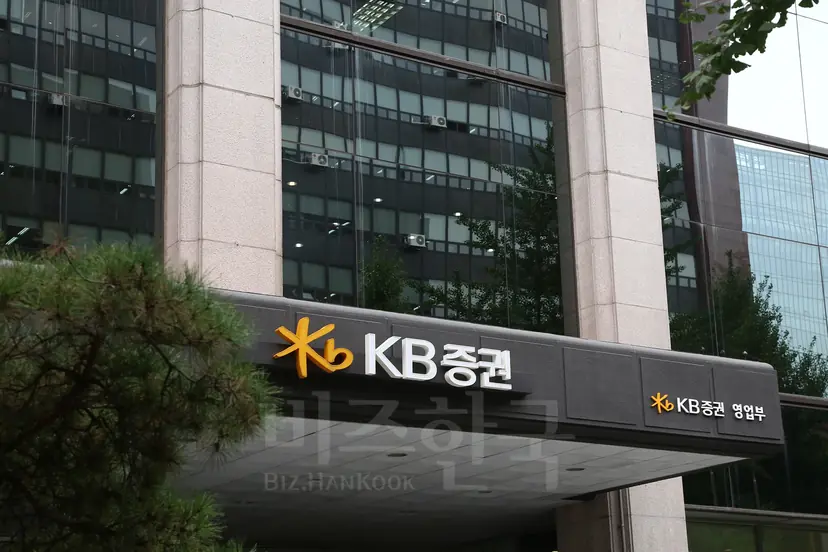
The litigation, which lasted over five years, ended with a final victory for KB Securities. KB Securities won a partial victory in the first trial but lost in the second. In January 2023, the first-instance court ruled that KB Securities’ forced liquidation was justified under the Korea Financial Investment Association’s "Terms and Conditions for Overseas Derivatives Market General Account Setup" (Article 14, Paragraph 2) and ordered Winners Asset Management to pay damages.
However, the appellate court reached a different conclusion. It reasoned that given the purpose of the Capital Markets Act—which is to protect investors—and the characteristics of the fund, the validity of the Financial Investment Association's terms could not be recognized, and that executing a forced liquidation without a margin call was unfair. In January 2024, the second-instance court dismissed KB Securities' claim for receivables and ordered it to compensate for 30% of the investors' losses.
Nevertheless, in March 2025, the Supreme Court ruled that KB Securities' forced liquidation was an appropriate measure, bringing the litigation to a close in favor of KB Securities. Having faced financial difficulties after being ordered to pay massive damages following the remand trial in August 2025, Winners Asset Management entered rehabilitation in October of that year. The firm hoped for a turnaround through an M&A before the rehabilitation plan was approved, but that failed, leading the firm to bankruptcy.
It appears that Winners Asset Management was in a state of insolvency, with total liabilities exceeding its assets, making a second attempt at rehabilitation difficult. A bankruptcy declaration is possible if a corporation is unable to repay its debts (illiquidity) or is in a state of insolvency. According to the firm’s second-quarter 2026 business report, its assets stood at only 400 million won while its liabilities reached 2.9 billion won, indicating a state of complete capital impairment. During the same period, revenue from fund management fees was approximately 50 million won, but the company recorded an operating loss of 100 million won, resulting in a deficit.