

[비즈한국] The government is changing the KS certification process that has been holding back domestic wind turbine companies. It is expected that the market entry of Korean firms, which have lagged behind in the global market, will gain momentum.
The Korean Agency for Technology and Standards (KATS) under the Ministry of Trade, Industry and Energy is establishing a separate KS certification for the Rotor-Nacelle Assembly (RNA)—a core component of medium-to-large wind turbines—to support domestic companies in obtaining certifications more quickly. The new system goes into full effect on July 31. This measure is seen as an institutional turning point that will boost the competitiveness of domestic wind turbine manufacturers, who have faced a relatively narrow standing compared to global giants.
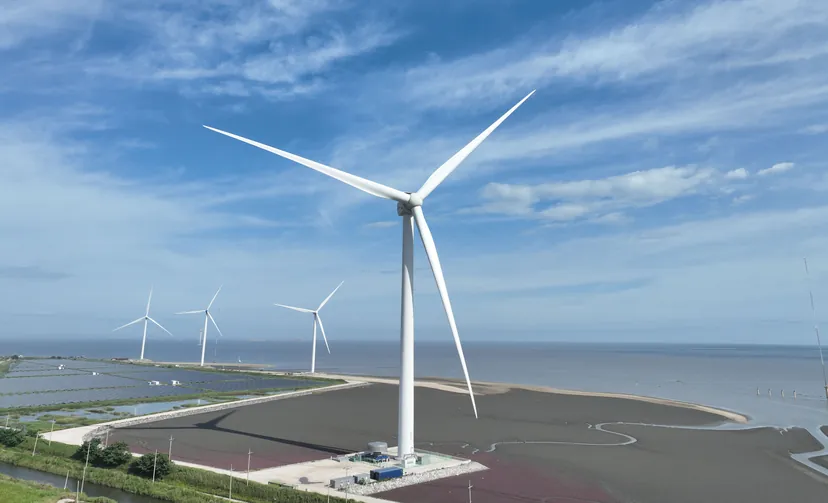
The RNA is an assembly combining the rotor (blades and hub), which converts wind energy into rotational force, and the nacelle, which contains essential equipment such as the generator and gearbox. It is called the "core of the wind turbine" because it determines the overall power generation performance and structural safety of the turbine. Until now, the domestic KS certification system required the entire wind turbine to be bundled as a single package for certification.
This acted as an excessive temporal and financial burden on domestic wind turbine companies. Even if the same RNA specifications were used, if the tower height or structure changed due to the terrain or weather conditions of the installation site, the entire turbine had to be evaluated and certified from scratch. With redundant evaluations for the same parts, it took an average of 1,118 days (about 3 years) for medium-to-large wind turbine companies to apply for and finally obtain KS certification. In the fast-paced renewable energy market, a 3-year certification period hampered the market responsiveness of domestic companies.
The system has been overhauled to fundamentally improve this redundant review structure and align it with the International Electrotechnical Commission for Renewable Energy (IECRE) standards. Moving forward, once an individual RNA component obtains KS certification, the results of the initial review and evaluation can be utilized even if downstream specifications, such as tower height, change in the future. With redundant evaluation procedures significantly reduced, costs and time spent on certification are expected to drop sharply. The newly established RNA KS certification can be applied for starting July 31 through the Korea Energy Agency, the designated institution for medium-to-large wind turbine KS certification.
Kim Dae-ja, Administrator of the Korean Agency for Technology and Standards, stated, "The introduction of RNA KS certification is an improvement to the system designed to alleviate the certification burden on companies by reflecting feedback from the field," adding, "We will continue to improve the KS certification system to proactively respond to changes in the industrial environment."
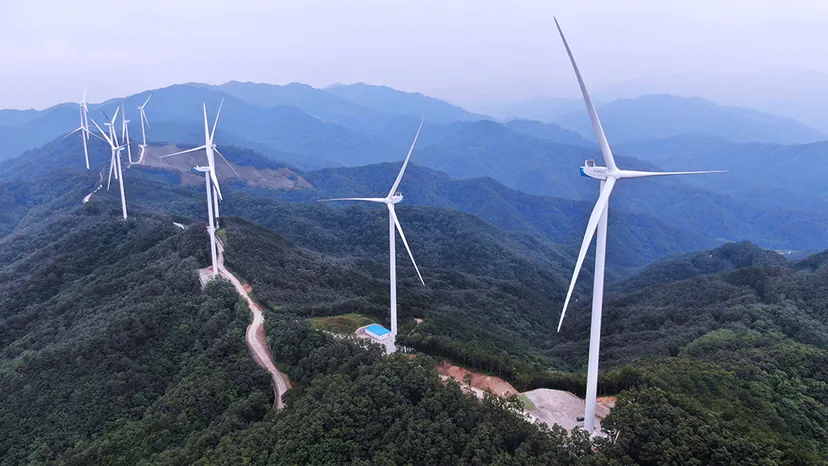
This overhaul of the certification system is interpreted as a policy move to solidify the standing of late-coming domestic wind turbine manufacturers.
Currently, Korea's wind power industry possesses world-class competitiveness in certain supply chain manufacturing sectors, such as turbine towers or sub-structures for offshore wind power. However, in the sector of medium-to-large wind turbines—a core piece of infrastructure with high barriers to entry—Korea has been assessed as lagging behind leading global firms like Vestas and Siemens Gamesa.
Leading domestic turbine manufacturers like Doosan Enerbility and Unison have been putting in multi-faceted efforts to bridge the technological gap with global leaders by accelerating the development of high-capacity turbines. As a result, Doosan Enerbility completed the development of a 10MW offshore wind turbine last year and is nearing commercialization, while Unison is focusing on the localization and verification of a 10MW-class offshore wind turbine.
However, the previous KS certification method was time-consuming because even if the same RNA was used, the entire turbine had to be recertified if the tower section changed. An official from the Korean Agency for Technology and Standards said, "Domestic companies like Doosan Enerbility and Unison have consistently requested through meetings and other channels that they be allowed to certify only the RNA separately, just like in the IECRE system."
The change in the certification method is also expected to improve competitiveness against overseas companies. Leading global companies, based on their technical superiority, are prepared to obtain advance certifications for RNA and tower specifications regardless of whether a power plant project has been ordered. However, domestic companies have repeatedly followed the practice of designing a tower tailored to the terrain only after an official order is placed, and then applying for package certification by combining it with the RNA.
Under the package certification method, the certification process could only begin once the tower design was completely finalized, which meant that domestic companies inevitably spent more time than their overseas counterparts at every market entry point.
With this overhaul, domestic wind turbine companies can now proactively obtain certification for the RNA—the core component—regardless of whether the tower design is complete, which is expected to speed up project execution. Shorter certification times lead directly to the timely market introduction of products. Some suggest that this has provided a minimal foundation for competing on equal footing with leading overseas companies in the domestic market. Attention is now on whether this system improvement will lead to the enhanced competitiveness of domestic wind turbines and the self-reliance of the local renewable energy ecosystem.