

[비즈한국] In the face of the dual challenges of climate change response and energy transition, wind power is receiving attention as a key power source for achieving carbon neutrality. On September 2, the government held its first Offshore Wind Power Committee meeting and formalized a large-scale planned site blueprint, aiming to designate 25GW of preliminary sites by 2031 and supply a cumulative 45GW of offshore wind power by 2040. However, the risk of "bird strikes," where wind turbine blades intersect with bird migratory paths, has also surfaced. Discussions on realistic solutions that can balance power generation with ecosystem protection are becoming urgent.
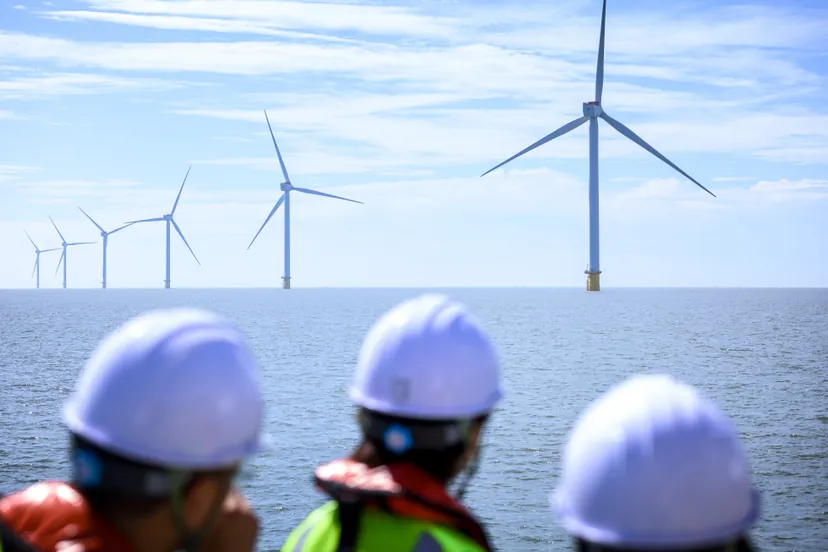
The top priority is 'avoidance of site selection'... Planned site system implemented for the first time this year
The overarching principle for mitigating ecological impacts, as recommended by international organizations such as the International Union for Conservation of Nature (IUCN), is the "Mitigation Hierarchy." This is a norm that stipulates that when carrying out development projects, negative environmental impacts must be controlled sequentially through four stages: "Avoidance," "Minimisation," "Restoration," and "Offset." In this hierarchy, the most ecologically certain measure is "avoidance"—simply steering clear of ecologically sensitive areas from the start.
For wind farms where the site has already been determined, changing the design or relocating is practically impossible due to sunk costs. Ultimately, the only solution to fundamentally prevent environmental risks like habitat destruction or bird strikes is to exclude high-risk areas during the initial site selection phase.
In this context, the government-led planned site system based on the Offshore Wind Power Act could be a turning point that institutionalizes pre-emptive avoidance. Previously, the structure required developers to select sites themselves and apply for approval, which had limitations as a post-hoc procedure where pre-emptive avoidance was difficult to realize. In contrast, the planned site method, which directly identifies preliminary sites based on big data from offshore wind power site information networks that encompass marine spatial information and regulations, can create a structure that filters out ecologically sensitive waters in advance. The important point is how much ecological consideration will be given to the selection of these preliminary sites.
Jang Da-ul, Korea representative of Ocean Energy Pathway, stated, "The designation of preliminary sites under the Offshore Wind Power Act, which is being implemented for the first time this year, will be the first litmus test to verify how faithfully ecological considerations, such as pre-emptively avoiding ecologically sensitive areas at the planned site stage, are reflected."
Reducing collisions by just changing blade and lighting colors
For wind farms that have already obtained business permits or are currently in operation, the introduction of the aforementioned "minimization" technologies is inevitable. Accordingly, the global wind power industry and research institutions are applying and considering various engineering and ecological methods to reduce collision risks.
The most representative method is "temporary turbine shutdown," which links observation equipment and predictive models to slow down or stop turbine blades during bird migration periods. Countries along the North Sea coast in Europe are actively introducing this method.
The Netherlands operates a system that comprehensively uses bird migration predictive models developed by the University of Amsterdam, offshore radar, and meteorological data to forecast large-scale nocturnal bird migration up to 48 hours in advance. When a large-scale nocturnal migration was forecasted in May 2023, the Dutch Ministry of Economic Affairs and Climate Policy ordered the turbines at the Borssele and Egmond aan Zee offshore wind farms to slow down and stop completely for about 4 hours. This was the world's first official case of temporarily halting wind power generation through a government decision.
Germany has also institutionalized shutdown procedures after four years of bird migration research through agreements with environmental groups at the Nordergründe farm near the Wadden Sea, and is applying a method of stopping turbines when specific migration intensity thresholds are exceeded at its Baltic Sea farms. France has specified planned operational restrictions during major migratory bird seasons in April and September as a condition for the permit of the Grand Large floating wind farm.
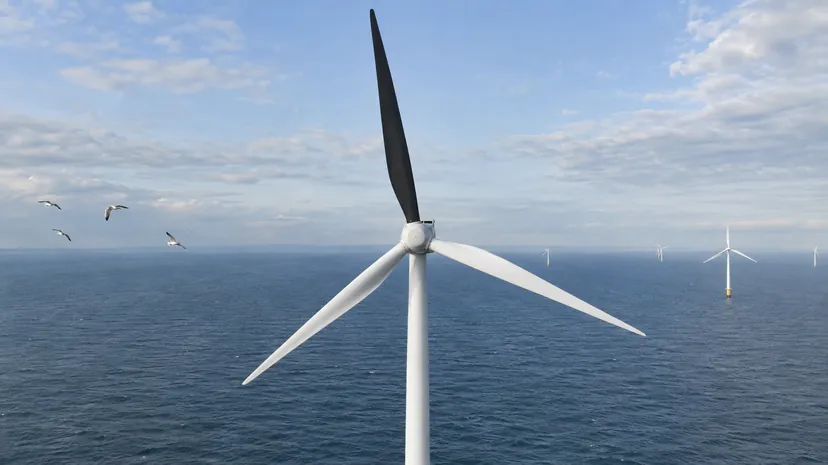
Another method is "blade painting," which involves painting one of the three wind turbine blades black to increase birds' visual perception. Birds have a narrower front field of vision than humans and better side vision, making them vulnerable to stereoscopically perceiving obstacles in front of them during flight. In particular, when three white blades rotate at high speed, a "motion smear" phenomenon occurs, where visual afterimages overlap and appear scattered like a transparent window, causing birds to mistake the rotating object for empty space and fly into it.
According to an empirical study conducted over 10 years by Dr. Roel May's research team at the Norwegian Institute for Nature Research (NINA) at the Smøla wind farm, painting just one blade black reduced annual bird collision mortality by more than 70%. In the case of the white-tailed eagle, a large raptor that suffered significant damage because its flight altitude overlapped with the turbine rotation radius, not a single carcass was found after the painting. This result proves that substantial collision mitigation effects can be achieved just by providing visual contrast to one side of the blades during the manufacturing and installation stages, without large-scale facility modifications.
Methods to change the lighting method and color of aviation obstruction lights installed at the top of wind towers to protect nocturnal migratory birds have also been proposed. Nocturnal birds flying at night are vulnerable to the "trap effect," where they are attracted to the constant red light glowing in the dark and circle the tower, eventually colliding with the blades. NatureScot published a report stating that installing flashing white strobe lights instead of constant red lights, or green lights that cause less disruption to birds' vision and magnetic field sensing, could potentially reduce nocturnal attraction.
Stopping them is not a matter of technology, but of governance... Seeking solutions from 'European OCEaN'
Even if technology develops, the problem in Korea right now is that there is no "system" to make the technology actually work. Accordingly, providing incentives to operators and improving bidding evaluations are being discussed as alternatives.
Since turbine shutdowns lead to revenue losses for power plant operators, policy-driven incentives are needed. An alternative currently under review is utilizing the government's Contracts for Difference (CfD) system. The CfD is a system where the government and renewable energy operators mutually settle the difference between the pre-contracted price and the actual power market price (wholesale price). The idea is to reflect the losses from shutdowns for ecosystem protection when calculating the base price. This involves incorporating the time and losses inevitably incurred from stopping power generation during bird migration periods as a "weight" in the calculation formula to compensate through the purchase unit price or settlement payments.
Furthermore, there are voices calling for active use of the "offshore wind competitive bidding" system that selects power plant operators at the start of a project. Currently, domestic competitive bidding evaluations consist of price indicators and non-price indicators focused on contributions to industry, economy, and security, leaving the ecosystem conservation category effectively empty. If ecological design or planning were included in non-price evaluation items and given extra points, as in the Netherlands, operators would proactively incorporate bird protection measures into their farm designs to gain a competitive edge in winning bids. Ultimately, renewable energy and ecosystem protection can only coexist in practice if clear policy signals and systems are in place.
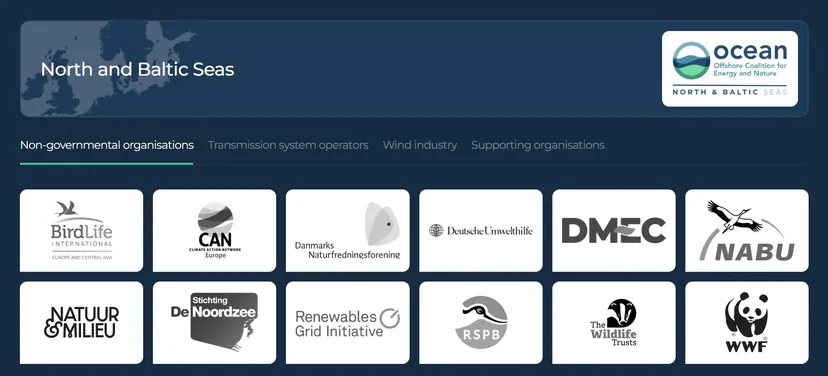
A representative model where industry and environmental groups have solved these conflicts of interest and institutional voids together is the European public-private governance coalition, "OCEaN" (Offshore Coalition for Energy and Nature). Launched to resolve environmental conflicts that emerged during the expansion of offshore wind power in Europe, OCEaN was built with partners including large power generators like Ørsted, Vattenfall, and Siemens Gamesa, power grid operators, and about 30 global environmental organizations such as the World Wide Fund for Nature (WWF) and BirdLife International.
OCEaN participants have established a joint research fund to accumulate marine ecosystem data over the long term and have organized 80 avoidance and minimization measures through their report on "Environmental Impact Avoidance and Minimization for Offshore Wind and Power Grid Infrastructure." They are also urging the EU and national governments to improve maritime spatial planning, harmonize Marine Protected Areas (MPAs) with offshore wind farm locations, institutionalize the "Mitigation Hierarchy," and disclose data.
Jung Yoon-ho, a campaigner at the Poolssi Action Research Institute, pointed out, "In Korea, there is no entity to decide on operational shutdowns when migratory birds approach, nor is there a governance system to compensate for the resulting power sales losses." Campaigner Jung suggested, "The government must quickly establish concrete institutional frameworks, such as incentive systems and decision-making structures for temporary turbine shutdown measures, while simultaneously setting clear and consistent biodiversity goals."