

[비즈한국] Varta, once called the pride of the German battery industry, has collapsed. On July 24, Varta filed for self-administered preliminary insolvency proceedings at the Stuttgart District Court in Germany. This includes not only the parent company, Varta AG, but also four other entities: Varta Microbattery GmbH, Varta Microproduction GmbH, and Varta Storage GmbH. While this does not mean immediate liquidation of the company, the firm is now in a position where it must restructure its debt, sell off business units, and implement personnel layoffs under court supervision. This comes just two years after Porsche stepped in as a white knight to reduce debt and inject capital in 2024.
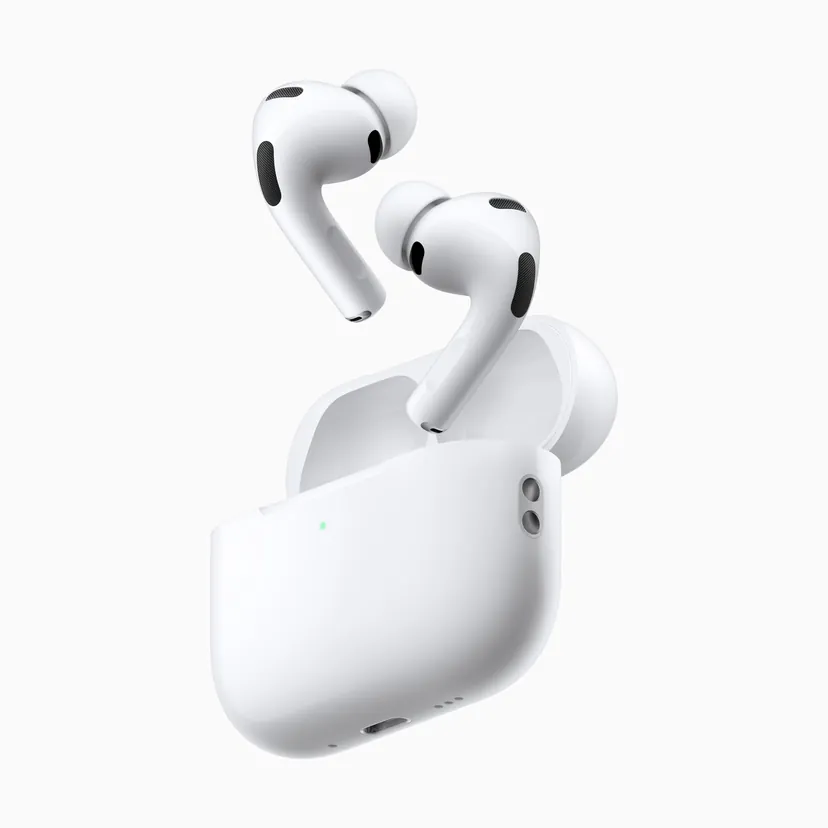
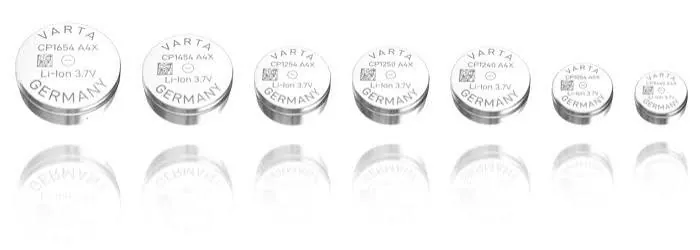
Varta did not fail because it lacked technology. Starting as a lead-acid battery manufacturer in 1887 and formally established in 1904, the company built long-standing competitiveness in household batteries and button cells for hearing aids. As the era of wireless earphones dawned, it enjoyed a resurgence with its ultra-compact rechargeable button cell, "CoinPower." By entering the Apple AirPods supply chain, it shed its image as an outdated battery company and transformed into one of Europe's representative battery tech stocks.
In 2021, Varta’s share price exceeded 181 euros during trading. The market believed that every time an AirPod was sold, a Varta battery would be sold with it. Varta judged the situation the same way. The problem was that, based on that belief, the company expanded its production and investments far too rapidly.
Technological Prowess Built on Hearing Aid Cells, Rapid Growth via AirPods
The product that created Varta’s golden age was "CoinPower." Fully wireless earphones require batteries that fit in small spaces while maintaining high energy density and stability. Varta secured a technological edge in this field and established itself as a key supplier for global electronics companies, including Apple.
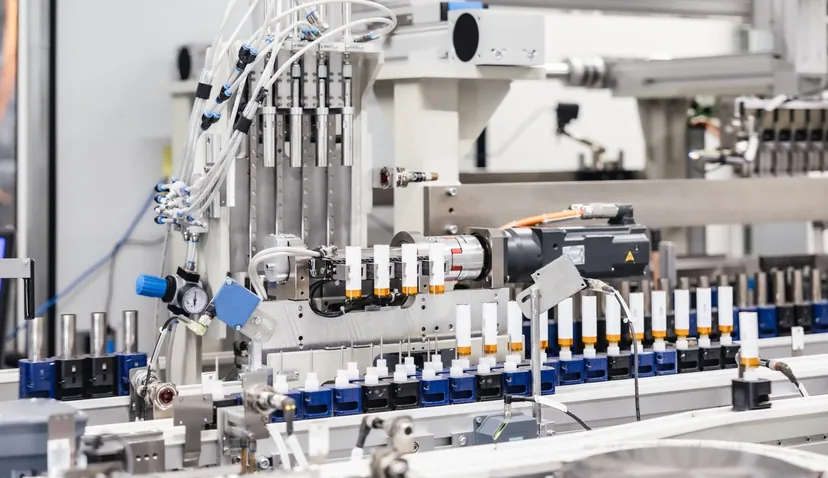
As orders poured in, Varta rapidly expanded production capacity at its Nördlingen factory in Germany. It increased facilities and personnel based on the premise of high utilization rates and made new investments in line with the outlook that the wireless earphone market would continue to grow. The orders from Apple, the world’s largest customer, appeared to be a guarantee that shielded the company from investment risks.
Varta went a step further. Building on the success of its ultra-compact cells, it ventured into developing the "V4Drive," a high-output cylindrical lithium-ion battery. The plan was to manufacture batteries not only for power tools but also for electric and hybrid vehicles. This was a period when European nations were attempting to bring battery supply chains that had relied on Asia back to the region, and the German government had promised support for Varta’s investment.
The expansion of the CoinPower factory and the development of automotive batteries proceeded simultaneously. It was a classic growth strategy: using profits from existing businesses to nurture future ones. However, there was one premise: orders for wireless earphone batteries, led by Apple, had to keep increasing.
The problem was that the premise began to falter starting in 2022. As the demand for electronic devices that had surged during the COVID-19 pandemic normalized, the growth of the wireless earphone market slowed. Customers began adjusting inventories, and CoinPower order volumes fell more than expected. Following Russia’s invasion of Ukraine, the prices of energy and raw materials in Europe also skyrocketed.
From January to September 2022, Varta’s revenue fell 8.3% compared to the same period the previous year, recording 570.7 million euros. During the same period, adjusted EBITDA plunged 63.6%, from 182.47 million euros to 66.36 million euros. The profit decline was much steeper than the revenue decline. This is because, while factory utilization rates fell due to lower order volumes, the costs associated with the expanded facilities and increased workforce remained fixed.
It was difficult to pass on all of the cost increases to large customers. Supplying parts to a global company like Apple means securing stable volume, but it also means transferring the power to determine prices and order quantities to the customer. This structure was not apparent when orders were increasing. When orders decreased, the weakness was exposed all at once.
Thought It Was a White Knight… Porsche’s ‘Betrayal, Not Betrayal’
Varta began full-scale restructuring in 2023. Major shareholders participated in capital increases, and banks adjusted loan conditions. The company announced it would restore profitability by reducing personnel and scaling back investments. However, this was closer to buying time until performance recovered rather than fundamentally solving the debt issue.
For Varta to survive, several conditions needed to be met simultaneously: CoinPower orders had to rise again, sales of household energy storage systems had to grow, and V4Drive had to lead to large-scale orders from automakers. In reality, none of these played out as planned.
In February 2024, a cyberattack even occurred. The company disconnected its IT systems from the production network, and operations at some factories were halted. While the cyberattack was not the root cause of the crisis, it was fatal for a company already short on cash. Production and sales were disrupted, and the preparation and auditing of financial statements were delayed.
Ultimately, in April of the same year, Varta admitted that it was difficult to normalize the company with the existing restructuring plan alone. Market stagnation, declining customer orders, intensifying competition in energy storage, and the cyberattack had converged. Just one year after the first restructuring began, another round of restructuring was needed.
This was when Porsche appeared. Porsche was not interested in all of Varta, but specifically in the V4Drive. This battery could produce high instantaneous output, making it suitable as a booster for high-performance hybrid sports cars. In a sense, Porsche recognized the value of the technology that Varta had failed to cultivate into a large-scale business.
Under the restructuring plan established in 2024, 285 million euros of Varta’s approximately 485 million euros in financial debt were cut. In return, existing capital was fully written down. Individual shareholders who held Varta stock essentially lost all their investments. Afterward, Porsche, the existing major shareholders, and creditors divided the new equity and economic rights.
Porsche simultaneously secured management rights over the automotive battery subsidiary. The company name was later changed to "V4Smart." While Varta’s high-performance battery technology and production facilities fell under Porsche’s control, Porsche did not take on Varta’s remaining businesses or debt.
This scene illustrates the essence of Varta’s restructuring. The most valuable technology moved to the customer, while Varta’s core body was left with household batteries, hearing aid batteries, the energy storage business, and still-hefty debt. The company survived, but it lost a significant portion of its future growth engines.
New Factory Built Relying Only on Apple Becomes ‘Excess Capacity’
The final blow was the departure of a key customer. In 2026, Varta announced plans to close its Nördlingen factory and lay off about 350 people. While the company did not disclose the customer's name, German media and Reuters reported that Apple, which received batteries for AirPods, had decided to terminate its business with Varta.
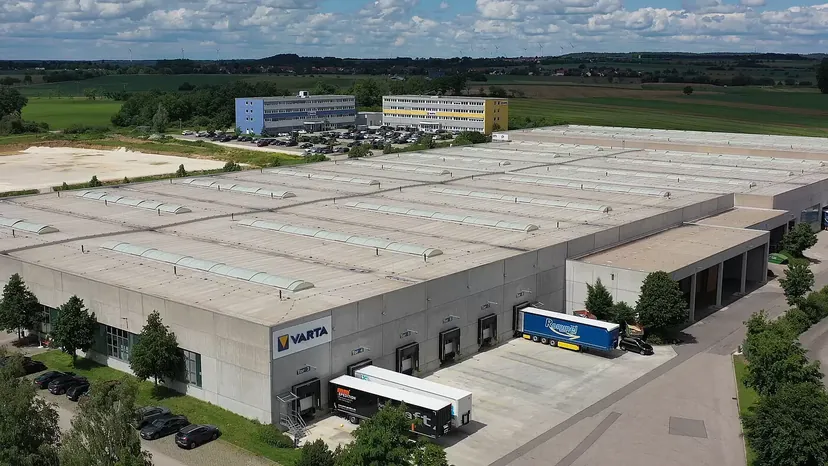
This was not just an incident of losing one sales channel. It meant that the reason for the existence of the CoinPower production facilities, which Varta had expanded during the boom, had vanished. The factory, built on the premise of Apple’s orders, became excess capacity the moment Apple left.
Varta needed tens of millions of euros in emergency funding again, but Porsche and the existing major shareholders refused to contribute additional capital. The creditors also moved toward stripping off profitable segments rather than saving the entire group. A plan to separate the household battery business into a distinct entity for acquisition was pursued, and the automotive battery business had already moved to Porsche. The remaining businesses are expected to be reorganized regarding possibilities for sale, downsizing, or liquidation.
Varta’s failure cannot be explained solely by the low-cost offensive of Chinese battery manufacturers. It is true that the price competitiveness of Chinese companies, high energy costs in Germany, and the slowdown in the electric vehicle market worked against them. However, a more direct cause was a business structure that was overly dependent on a specific customer.
Varta mistook its status as an Apple supplier for independent market dominance. It expanded facilities to meet the quality and volume Apple required, but the power to determine order scale, pricing, and supply periods lay with Apple. During the boom, it appeared as if both parties were growing together. When the crisis hit, the customer could change suppliers, but the partner was left with the factory, the debt, and the employment responsibilities built exclusively for that client.
The Recurring Tragedy of Subcontractors Subordinated to Conglomerates
In fact, these scenes are not unfamiliar in South Korea. Suppliers in the automotive, electronics, shipbuilding, and semiconductor industries install dedicated equipment and hire personnel to meet the quality and delivery deadlines demanded by major corporations. They sometimes build factories specifically for a certain vehicle model, smartphone model, or production line. As long as the orders are maintained, they are evaluated as stable partners and their revenue grows rapidly.
However, when orders decrease or the customer changes, the situation changes. Conglomerates simply adjust their production plans and supply chains, but the suppliers are left with the equipment and loans specifically arranged for that client. Even if they try to find other customers to prepare for the suspension of trade, dedicated parts and dedicated production lines cannot easily be repurposed. The fact that the supplier hadn't grown *with* the conglomerate, but only *within* the conglomerate's orders, becomes apparent only then.
The same applies to joint technological development. Suppliers invest R&D costs and manpower according to the demands of the conglomerate, but the profit secured when a product succeeds and the risk borne when it fails are not symmetrical. If it succeeds, there is pressure to lower unit prices; if it fails, the structure forces the supplier to bear the development costs and facility investments. There are not a few cases where technology or core talent moves to the customer or other capital after the trading relationship ends.
Varta was a German battery powerhouse with a 130-year history and world-class technology. However, within the supply chains of Apple and Porsche, Varta’s bargaining power was not as great as its reputation. The moniker "key supplier for a global company" sounds like proof of independent competitiveness, but conversely, it also means that the entire company can be shaken by a single decision made by that client.
Varta’s downfall is not the story of a company that lost in the battery technology race. It is the story of a company that made products wanted by a massive client better than anyone else, but failed to create a business structure to survive without that client. The client took only the necessary parts—technology and production capacity—while the debt and employment responsibilities remained with the supplier.
Although this happened in Germany, the ending is all too familiar. We talk about conglomerates and suppliers growing together, but the moment orders are cut off, it becomes clear who truly held the lead. Varta was a partner of Apple, but it was never an equal partner to the end.