

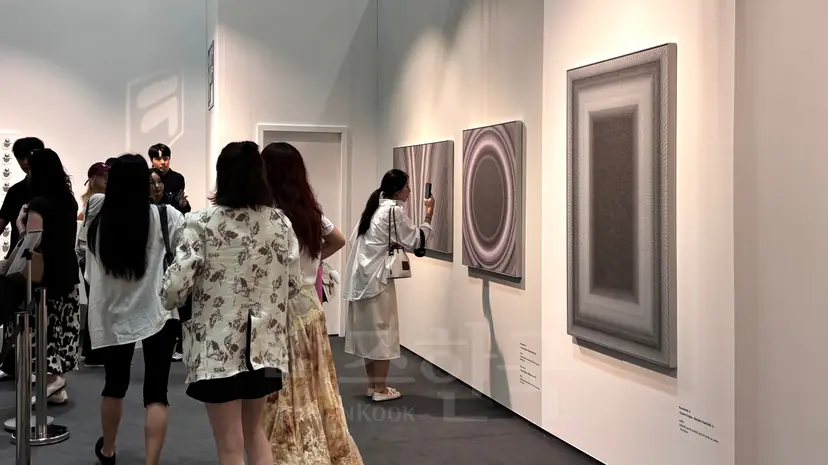
[비즈한국] ‘Frieze Seoul 2026’ kicked off at COEX in Gangnam-gu, Seoul, on the 2nd. As you walk through the galleries filled with works worth hundreds of millions of won, familiar names like Shinsegae, Fila, and LG Uplus appear one after another. At this year's Frieze Seoul, which runs through the 5th, the presence of corporations has become as significant as the artworks themselves.
According to the ‘Art Basel & UBS Global Art Market Report’ released last March, the global art market reached $59.6 billion (approximately 80 trillion won) last year, a 4% increase from the previous year. Although the market, which had declined for two consecutive years, has returned to a growth trajectory, it has yet to reach the levels seen in 2022.
The global art fair market is represented by Switzerland’s ‘Art Basel’ and the UK-originated ‘Frieze.’ Art Basel, held in Basel, Switzerland last June, saw 290 galleries from 43 countries and regions participate, attracting 90,000 visitors. Hauser & Wirth sold a work by Pablo Picasso for $35 million (47.5 billion won), and a Gerhard Richter piece was also traded for $20 million (27.1 billion won).
Compared to this, the scale of Frieze Seoul is smaller. This year, 133 galleries from 30 countries participated. Some critics point out that as more than 70% of the galleries are based in the Asia-Pacific region and the proportion of Korean galleries has increased, its distinctiveness from Kiaf has weakened. However, the appeal of Frieze in terms of corporate marketing remains strong, as it is an event where a global brand like ‘Frieze’ and high-purchasing-power consumers from home and abroad gather in one space.
This year, Shinsegae Group joined as a headline partner, and LG Uplus became the first domestic mobile carrier to become an official partner. Sports brand Fila also added its name to the official partner list for the first time. The continued participation of companies, even while the recovery of the art market remains uncertain, is because art fairs are no longer just marketplaces for buying and selling art. For companies, it is closer to a marketing stage where they can meet their target customer base directly and convey their brand image through cultural experiences.
Department stores and customer base overlap… Shinsegae signs 5-year long-term contract
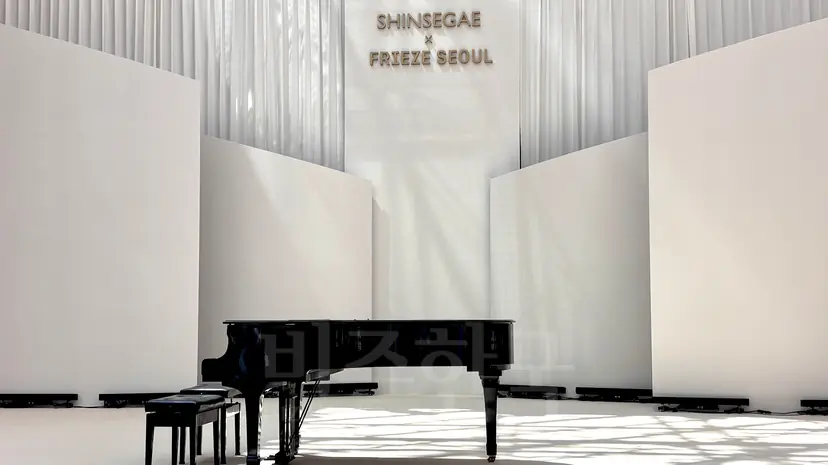
One of the companies that most actively demonstrated its presence at this Frieze Seoul is Shinsegae Group. Shinsegae is the first domestic retail company to become a headline partner. Rather than a one-off event sponsorship, it has committed to a five-year partnership until 2030. It has essentially taken over the long-term partner position following LG Electronics, which had participated as a major partner for some time.
The background to Shinsegae’s long-term investment in the art fair lies in the overlap of its customer base. The collectors and VIPs who visit Frieze are a demographic highly likely to consume not only art but also high-end products and services such as luxury goods, fashion, jewelry, and hotels. For Shinsegae, which focuses on department stores and hotels as its core business, this is a venue to strengthen relationships with existing VIP customers while meeting new, high-net-worth consumers.
Even before participating in Frieze, Shinsegae utilized art and cultural content in its offline businesses. It has operated the ‘Trinity Garden,’ an outdoor sculpture park at the Shinsegae Department Store main branch, the ‘Open Art Contest’ to discover emerging artists, and the ‘Art Tour’ at Josun Hotels & Resorts.
At Frieze Seoul, Shinsegae set up a separate ‘Shinsegae Lounge’ to exhibit works by French artist Paul Cox. It held a special exhibition in connection with Frieze at the Starfield Library in the COEX Mall, and on the afternoon of the 3rd, it hosted a special performance by violinist Daniel Lozakovich. By doing so, they expanded the Frieze experience into spaces operated by Shinsegae, rather than just displaying their logo at the venue.
Shinsegae Group stated, “We plan to help lay the foundation for domestic and international artists, galleries, collectors, and cultural/art institutions to interact actively in Korea, and contribute to connecting Korean art more closely with the global market,” adding, “Our long-term goal for the partnership is to grow Korea into an ‘Asian cultural and art hub.’”
Telecom companies and sports brands also seeking ‘cultural experience’
Companies that have no direct relation to art sales, such as LG Uplus and Fila, have also entered Frieze. However, the effects they aim to achieve through art vary by company.
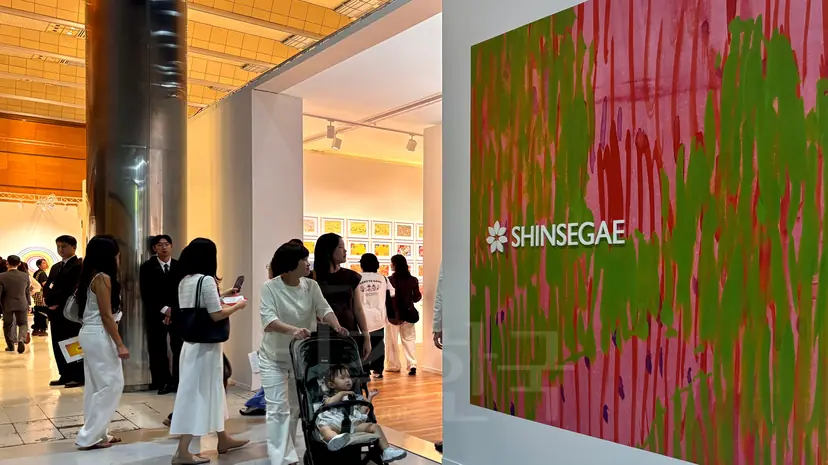
LG Uplus participated as an official partner of Frieze Seoul this year, a first among domestic mobile carriers. The intention is to lower the barrier to contemporary art by combining the tech capabilities of a telecommunications company with cultural and artistic experiences. They set up a ‘U+ Lounge’ at COEX and collaborated with animation director and media artist Erick Oh to showcase his representative work, ‘Opera,’ and a new piece revealed in Seoul for the first time. The direction of the cultural space ‘U+ Everyday’s Gap,’ which reopens on the 16th, was also unveiled here first. It appears that the focus is on expanding the brand image into the realm of culture and content rather than advertising the functions of telecommunications services.
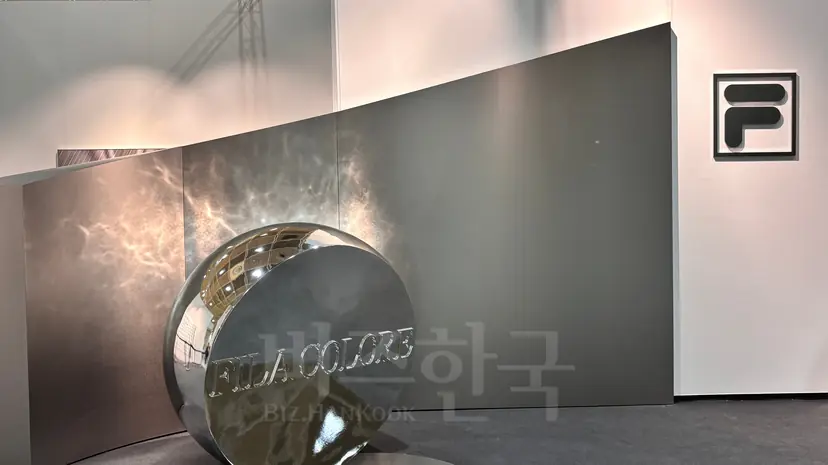
Fila became an official partner of Frieze Seoul for the first time this year as part of its annual cultural marketing project, ‘Fila Colore,’ introduced in the first half of the year. It is a project that selects one color each year and showcases collaborative works by artists utilizing that color.
At the venue, objects created in collaboration with artists Sasha Nordmeyer, Geunuk Ji, and Kiwoong Kim were placed throughout the space, integrated with the brand logo. Rather than putting sneakers or clothing at the forefront, they translated the brand’s color and image into the form of visual art. This is interpreted as a strategy to layer a cultural image onto the familiar impression of a company that sells sports products.
BMW showcased an exhibition in collaboration with artist Lee Kang-so in a separate space, while displaying its high-performance model, the ‘BMW XM Label,’ alongside the artworks. This is a method of presenting the vehicle not merely as a mode of transport or a product for sale, but as one of the objects that make up the exhibition. Turkish Airlines also presented a triptych work in collaboration with Kazakhstani artist Gulnur Mukazhanova and provided snacks to visitors.
High-income consumers in one place… A more precise customer touchpoint than advertising
The most realistic reason companies utilize art fairs is that they can create direct touchpoints with consumers. Unlike general advertising aimed at an unspecified public, they can meet a customer base with high interest in culture and art and high purchasing power in one space. Especially at Frieze, where ticket prices are high and the proportion of collectors and VIP visits is large, companies can relatively focus their brand exposure on their desired target demographic.
Exhibiting works, collaborating with artists, operating lounges, and offering limited-edition merchandise are devices that connect brand exposure to consumer behavior. In fact, on the 3rd, Fila provided mini moon jar objects inspired by its flagship product, ‘Echappe Silver Moon,’ to members on a first-come, first-served basis. Visitors queued up to receive the merchandise. Shinsegae also provided limited-edition eco-bags on a first-come, first-served basis at the site, and the prepared stock was exhausted by around 4 PM.
However, whether exhausting merchandise and gaining new memberships leads to actual purchases or long-term brand loyalty is a different matter. Unlike advertising that puts price or functionality at the forefront, art marketing is a method of indirectly conveying a company’s philosophy and image, making it difficult to quantify the effects in the short term. If the connection between the brand and the artwork does not carry enough persuasive power, there is a possibility that it may simply be seen as an event where a corporate logo was pasted onto culture and art.
A gallery official said, “Although the art market is always difficult, there are many inquiries about purchasing artworks or instances leading to actual contracts at this Frieze,” adding, “As collectors with purchasing power gather in one place, it seems that companies are also paying attention to Frieze in that they can create touchpoints with such a customer base.”
Kim Dae-jong, a professor in the School of Business Administration at Sejong University, explained, “Art is effective in that it can convey cultural values, emotions, and corporate philosophy rather than directly promoting product functions.” He added, “Global art fairs, especially like Frieze Seoul, where high-income earners and consumers interested in culture and arts gather, can be long-term marketing tools for differentiating brands and securing future customer bases.”