
[비즈한국] As Artificial Intelligence (AI) rapidly spreads across the medical field, the South Korean government and the WHO (World Health Organization) have unveiled international principles for the responsible use of medical AI. However, critical issues remain to be resolved, such as determining liability when problems arise during AI-assisted diagnosis and how to apply these internationally agreed-upon principles to medical settings in different countries.
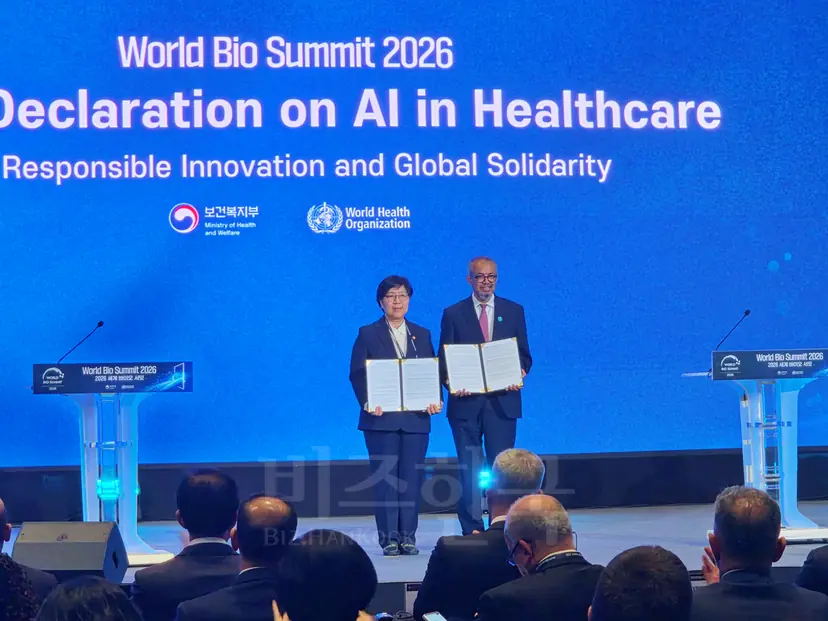
On the 21st, the Ministry of Health and Welfare and the WHO jointly proclaimed the ‘AI Healthcare Seoul Declaration’ at the ‘2026 World Bio Summit’ held at COEX in Magok, Gangseo-gu, Seoul. The declaration emphasizes that human dignity and patient safety must be the top priorities when applying AI technology to healthcare, and that the international community must cooperate to ensure that the benefits of technological progress are not concentrated in specific countries or classes.
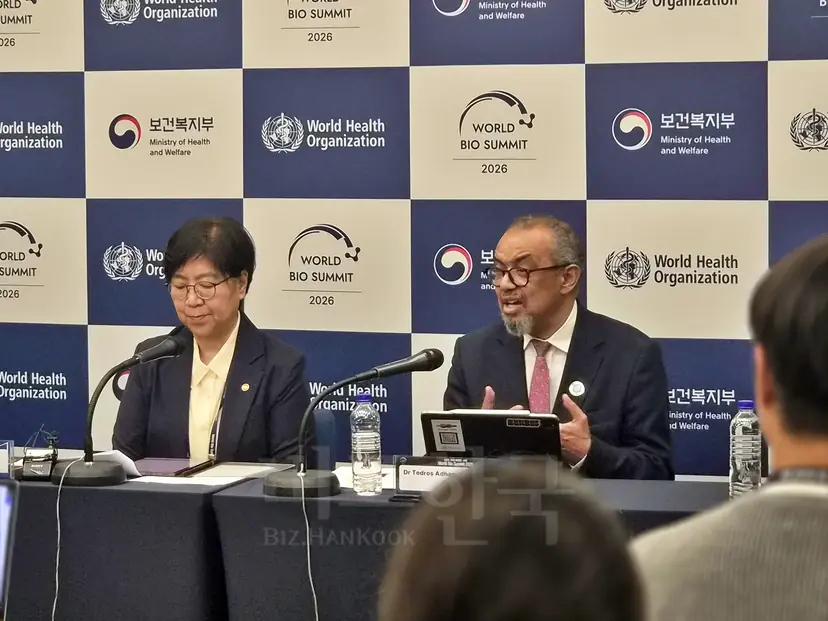
WHO Director-General Tedros Adhanom Ghebreyesus attended the event in person. This marks the first visit to South Korea by a WHO Director-General in 11 years, since Margaret Chan in 2015. Director-General Tedros proclaimed the Seoul Declaration alongside Minister of Health and Welfare Jung Eun-kyeong and shared his stance on the development and regulatory needs of medical AI during a joint press conference.
WHO Emphasizes Medical AI Innovation… Who is Liable in Case of Accidents?
The Seoul Declaration defines the role of AI as supporting decision-making by medical professionals while establishing the principle that final judgment and responsibility remain with humans. It also includes provisions for establishing a regulatory framework proportional to the risk level of AI technology and strengthening data transparency and personal information protection.
During the joint press conference with Minister Jung, Director-General Tedros stated, "The two core pillars of the Seoul Declaration are human dignity and global equity and solidarity," emphasizing that "strict verification, transparency, data protection, and cybersecurity must be guaranteed before the widespread adoption of AI technology."
In his keynote speech, he also explained that "speed does not necessarily mean progress," noting that it is more important to determine whom the technology helps and protects in actual medical settings than the speed of AI development itself.
However, critics point out that many problems must be solved to apply the Seoul Declaration to real-world medical practices. A prominent issue is how to distribute responsibility when medical accidents occur during AI-assisted treatment. As the use of medical AI expands, there is growing concern that without clear standards for risk control and victim compensation, medical personnel and patients may end up bearing the burden.
In response, Director-General Tedros compared AI technology to a knife, stating, "A knife can be used to cut bread, but it can also be used to take a human life. Just as humanity did not stop using knives, we should not abandon the potential of AI due to its risks."
He added, "To control the risks of AI, appropriate regulation and accountability are necessary," emphasizing that "a balance must be found between utilizing AI's potential and managing its risks through transparency, patient consent, and differentiated regulations based on risk levels."
However, no specific criteria were provided regarding how to divide liability among developers, medical institutions, and medical staff when damage caused by medical AI occurs.
42 Countries Participate… Need for Specific Implementation Frameworks by Country
Questions regarding the effectiveness of the Seoul Declaration were also raised. While the international community agrees on the direction of responsible use of medical AI, follow-up measures by individual countries are required to translate this into actual policies and systems.
At the press conference, questions were raised about whether there is a signatory process for countries and how much international cooperation can be expanded given that participation from major countries like the US, China, and the EU remains limited.
Jung Kyung-sil, Head of the Health Policy Office at the Ministry of Health and Welfare, who attended the press conference, said, "Delegations from 42 countries around the world, including those from Europe, attended this event," adding, "More important than whether individual countries signed it is the fact that discussions on the responsible use of AI in the healthcare sector have officially begun in Seoul."
However, there was no explanation regarding specific systems to monitor the signatory process or the implementation status of the declaration by participating countries. As the declaration was jointly proclaimed by the South Korean government and the WHO, its effectiveness will likely be measured by how broadly the international community participates and whether it leads to concrete cooperative projects.
Minister Jung stated, "We are conducting close working-level consultations with the WHO regarding the global AI hub project currently being promoted by the government," and added, "We plan to concretize step-by-step projects such as medical staff training and consulting, the establishment of standard guidelines, clinical demonstration and verification of AI technology and models, and dissemination to low- and middle-income countries."
The International Hospital Federation (IHF) is also set to establish an execution framework for the safe use of AI in medical settings. Lee Wang-jun, the next IHF President, announced, "We have agreed to establish a Global AI Healthcare Leadership Center under the IHF," and added, "We will establish a concrete execution plan by February next year and communicate with hospital leaders around the world to apply these guidelines to medical settings."
The future president emphasized that beyond government-level regulations, execution guidelines that hospitals and medical staff can actually accept and apply are crucial.
Ultimately, for the Seoul Declaration to go beyond international consensus and lead to practical achievements, follow-up efforts to reflect it in national policies and the operational systems of medical institutions will be vital.
Bill Gates Announces Opening of Korea Office
President Lee Jae-myung also emphasized the safe and responsible use of medical AI and international cooperation through a written congratulatory message on this day.
President Lee stated that AI technology, which is directly linked to human life, must be used safely and responsibly in the healthcare sector and should be utilized to bridge global health gaps. He also expressed hope that the Seoul Declaration would serve as an opportunity to spread the values of AI-based healthcare pursued by South Korea across the globe and strengthen international cooperation to protect human life and dignity.
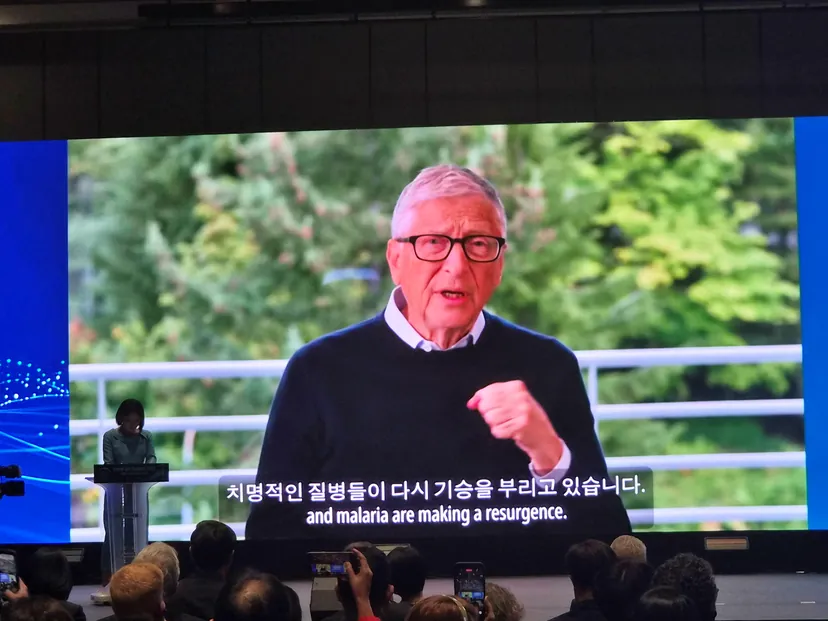
Bill Gates, Co-chair of the Gates Foundation, officially announced the opening of a Korea office in his video congratulatory message.
Gates stated, "Korea’s bio R&D ecosystem is world-class," adding, "We are officially opening a Gates Foundation Korea office in Seoul to support Korea’s global leadership in biotech, pharmaceuticals, and AI."
He further pointed out that while infectious disease threats like tuberculosis and malaria persist, financial support for the global health sector is declining, emphasizing, "At this critical moment, the leadership of countries like the Republic of Korea is more important than ever."
He also expressed his expectation that, given AI's potential to dramatically reduce the time required for diagnosing infectious diseases, discovering drug candidates, and predicting illnesses, cooperation with Korea will contribute to solving global health problems.