

[BizHanKook] The U.S. Nuclear Regulatory Commission (NRC) has approved the construction permit for the first industrial-type Small Modular Reactor (SMR) to be built at a Texas chemical complex, raising expectations for the participation of domestic partners in the North American market. However, even the project lead, Dow, is raising eyebrows by maintaining a conservative stance, explicitly stating that approval does not mean an immediate start to construction. As massive budget overruns and construction delays become a reality for the Darlington SMR project in Canada—the most advanced in North America—the market is experiencing a mix of heightened anticipation and caution regarding the economic viability of SMR commercialization.
Doosan Enerbility and DL Invest Tens of Billions Won
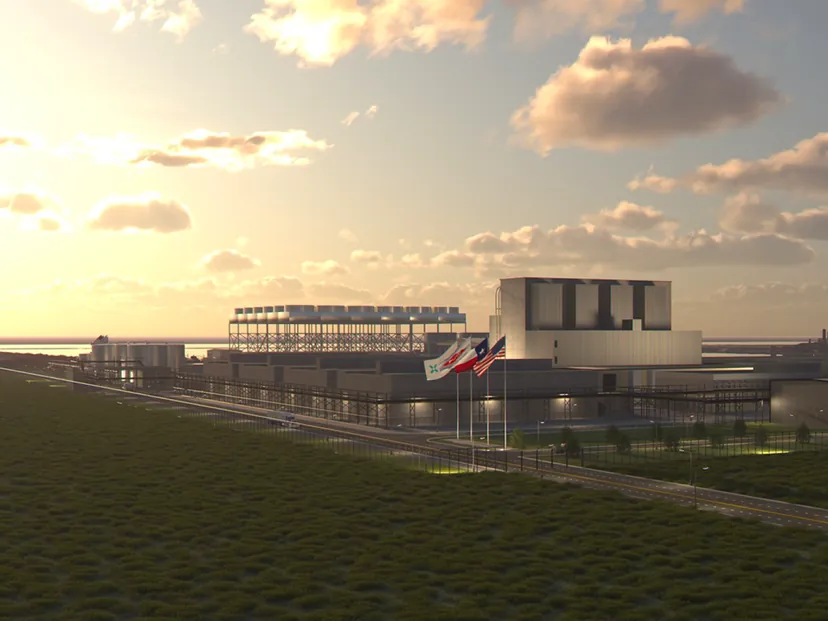
On November 9 (local time), the U.S. NRC officially approved the Construction Permit (CPA) for the ‘Longmoore SMR Power Plant (four Xe-100 units, 320MW total)’ being pursued by Dow and X-energy at the Seadrift chemical complex in Texas. This approval has drawn industry attention as it is the first industrial SMR in the U.S. to supply electricity and 600℃ high-temperature steam directly to a chemical plant, bypassing the existing power grid.
The Longmoore power plant is a project supported by the U.S. Department of Energy’s (DOE) Advanced Reactor Demonstration Program (ARDP). The goal is to replace the aging fossil fuel power and steam facilities at the Seadrift complex by deploying four Xe-100 units—a 4th generation high-temperature gas-cooled reactor with an electric output of 80MWe (thermal output of 200MWth) per unit—and to supply power and process heat for the next 60 years. Driven by the ‘ADVANCE Act,’ a bipartisan nuclear support law enacted in 2024, the NRC completed both safety and environmental reviews within 18 months of receiving the application in March 2025, clearing the regulatory hurdle.
The approval is notable for the domestic industry because Korean companies are responsible for the core equipment and design of the reactors that will actually be installed at Dow's Texas chemical complex. The Longmoore power plant is the first commercial project for X-energy's flagship ‘Xe-100’ model, and Doosan Enerbility and DL E&C have already established themselves as key partners by investing $5 million (approx. 7 billion KRW) and $20 million (approx. 27 billion KRW) respectively in X-energy in 2023.
In particular, following a reservation agreement to manufacture reactor pressure vessels and steam generators in December 2025, Doosan Enerbility began full-scale production of 'helical coils'—core components for the steam generators to be used at the Longmoore site—on November 5 of this year using tubing supplied by the Swedish alloy specialist Alleima. DL E&C, which signed a standardized design contract for the Xe-100 with X-energy in March, could also see its scope of participation expand to include plant Engineering, Procurement, and Construction (EPC) and project development/operation through its affiliate, DL Energy, once the project moves to the construction phase.
Despite Approval… Dow Cautious: “Not a Decision to Start Construction”
Even after passing regulatory hurdles, the project owner, Dow, adopted a cautious tone and drew a line against immediate construction. Immediately after the NRC approval, Dow stated in an official announcement, “The acquisition of this construction permit does not mean a final decision to proceed with the construction of the facility.” A construction permit is merely a regulatory approval that a nuclear plant can be built according to the approved design; actual capital expenditure and construction require separate investment decisions by the business owner and the completion of future operating permit procedures. Consequently, Dow plans to confirm whether to start construction after conducting a preliminary investment review in 2027 and reaching a Final Investment Decision (FID) by the board of directors.
Edward Stones, Vice President of Energy & Climate at Dow, also emphasized, “While this permit is an important milestone, we will continue to evaluate the project’s competitiveness, readiness for execution, and capital affordability before making any decisions regarding actual construction.” The owner’s conservative pace-setting, despite the positive news of regulatory clearance, suggests that significant verification processes remain before actual revenue recognition from a main contract and commercial operation in the early 2030s.
The ‘Warning’ from Canada’s Darlington, a North American Leading Project
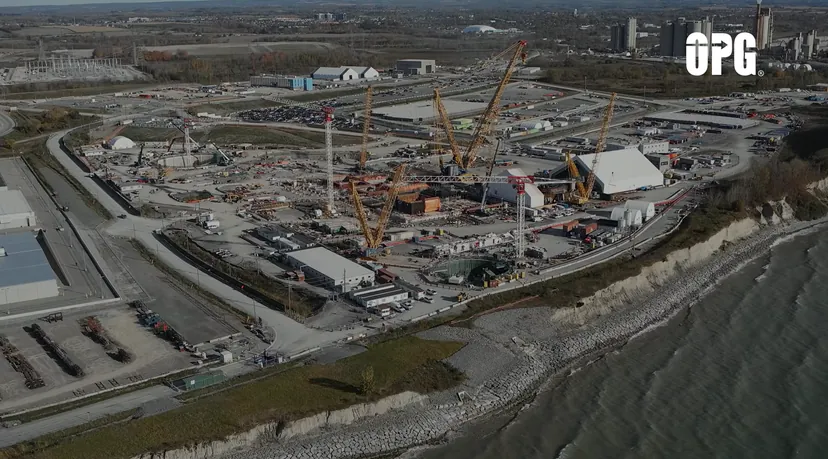
The reason behind the global industry's cautious approach lies in the shocks of soaring costs and construction delays currently facing commercial SMR projects in North America. A prime example is the ‘Darlington SMR (BWRX-300)’ project being pursued by Ontario Power Generation (OPG) in Canada. Darlington Unit 1, considered the first commercial SMR among the G7, received a construction license from the Canadian Nuclear Safety Commission (CNSC) in April 2025 and even completed the foundation concrete pouring, but a total revision of the project schedule and budget has recently become inevitable.
In its Q3 2026 earnings report and documents submitted to the Ontario Energy Board (OEB) on November 10, OPG admitted that it would be impossible to meet the goal of commercial operation for Darlington Unit 1 by October 2030, and that it would exceed the previously set budget of 7.7 billion Canadian dollars (7.1726 trillion KRW). This 7.7 billion figure combined the 6.1 billion CAD (5.6536 trillion KRW) construction cost for Unit 1 alone and 1.6 billion CAD (1.4912 trillion KRW) for common facilities to be shared by subsequent units 2–4; despite including a contingency fund, costs have risen well beyond the original budget.
The core cause of the cost explosion is the delay in the design of the ‘First-of-a-Kind (FOAK)’ unit. As the reactor supplier, GE Hitachi Nuclear Energy (GEH), failed to complete the detailed design of the BWRX-300 model—the world's first commercialization of its kind—on time, it caused a chain reaction of delays in site construction schedules and supply chain procurement for major equipment. On top of this, supply chain instability due to inflation and geopolitical risks further inflated construction costs. OPG has launched a full-scale re-evaluation until mid-2027 to calculate the exact excess costs and the revised completion date. In the rate calculation application for 2027–2031 submitted to regulators, the projected annual generation for 2030–2031 was revised from the existing 0.5–1.9 TWh to ‘0,’ and related capital expenditures and revenue requirements were also significantly reduced.
As project delays and budget overruns became official, the stalled electricity rate negotiation process has been reopened. Originally, OPG and the project company (DNNP LP) had submitted a rate calculation plan agreed upon with stakeholders, based on a commercial operation date of October 2030, to the Ontario Energy Board (OEB) on October 5. However, since the nuclear plant completion date was delayed, the original rate agreement could no longer be applied. Consequently, on November 10, OPG requested re-negotiations to amend the premises of the rate calculation.
In response, the OEB ordered a re-negotiation meeting on December 8 involving OPG, stakeholders, and the board’s working staff, stipulating that they must report in writing by December 11—three days after the meeting—whether they can reach a revised agreement or if negotiations need to continue. The plan to lower construction costs for units 2–4 to about 4.4 billion CAD (4.1011 trillion KRW) per unit through repetitive construction after Unit 1 is also seen as having hit a snag.
Darlington’s difficulties are also raising concerns for leading projects in the U.S. that have adopted the same BWRX-300 model. The Tennessee Valley Authority (TVA), which received the first U.S. construction permit for a BWRX-300 from the NRC on September 29, is pushing for the construction of a 300MW SMR at the Clinch River site, but the board has yet to give final approval. TVA stated, “We are closely monitoring the lessons learned and progress of the Darlington project and evaluating which parts to apply to the Clinch River project,” while continuing negotiations with partners regarding cost sharing and financial responsibility structures.
Domestic petrochemical and steel industries are also considering the introduction of SMRs within industrial complexes to reduce the burden of the European Union’s Carbon Border Adjustment Mechanism (CBAM) and rising industrial electricity rates. However, the fact that even leading North American cases are hitting the realistic walls of skyrocketing construction costs and delays after clearing regulatory hurdles shows that there are still many challenges to overcome before full-scale commercialization.