

[BizHanKook] Following the U.S. midterm elections held on November 3 (local time), the opposition Democratic Party reclaimed both the federal Senate and House of Representatives for the first time in 20 years and secured control over major state governments, triggering a ‘Blue Tsunami.’ This shift is introducing significant political and financial variables to the global artificial intelligence infrastructure market, which had previously been running unchecked.
The result stems from voter frustration amidst high inflation, with many arguing that “massive data centers owned by Big Tech companies are encroaching on household power grids and driving up electricity rates.” Furthermore, market observers on and off Wall Street are raising concerns that major technology companies, which have been financing a significant portion of their capital expenditures through corporate bonds and debt, may slow their aggressive investment pace if they encounter obstacles like localized permitting delays.
Concerns are mounting that domestic power grid-related companies, which have enjoyed record-level booms by securing contracts in North America, may face potential risks such as adjustments to delivery schedules depending on the circumstances of their clients.
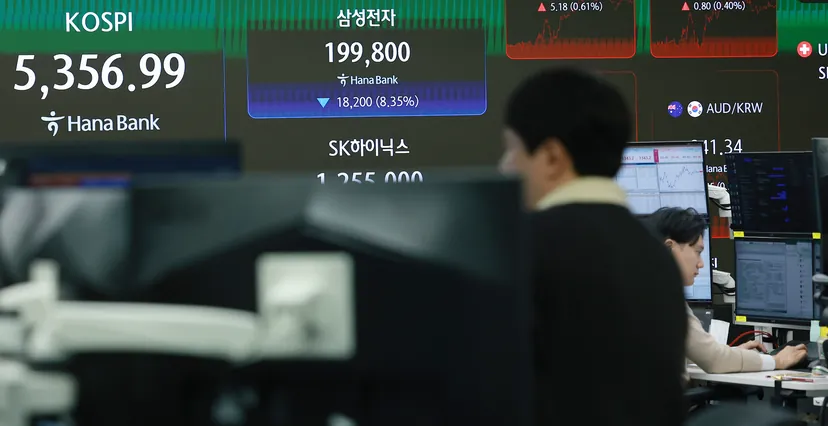
‘Electricity Bill Sentiment’ Shakes U.S. Midterms… Are Data Center Permits Facing a Brake?
In the results of the U.S. midterm elections, the Democratic Party secured 54 seats in the Senate to reach a majority and gained over 240 seats in the House, seizing control of both chambers. Underlying this political realignment is a fierce public backlash against the skyrocketing residential electricity rates that have swept across the U.S., compounded by the rise in international oil prices driven by the war in Iran. The rapid proliferation of large-scale data centers required to provide the vast amounts of power and cooling water needed for AI computation has sparked criticism that local residents are being forced to bear the direct cost burden of rising public utility fees and power shortages.
In particular, the change in local government leadership in key regions where data centers are concentrated is casting immediate uncertainty over infrastructure construction sites. In Texas, where over 27% of the total new data center capacity planned for the U.S. is concentrated, Gina Hinojosa was elected as the first Democratic governor in over 30 years. Throughout her campaign, Governor-elect Hinojosa pledged a temporary moratorium on new development approvals, arguing that large-scale data centers cause electricity rate hikes for working-class families and deplete water resources. In Georgia, Governor-elect Keisha Lance Bottoms, who promised to re-examine data center power consumption from scratch, also won, and in Ohio, Amy Acton, who campaigned on 100% energy self-sufficiency, took the gubernatorial seat. Most of the referendums on data center regulations proposed in some 40 regions across the country were also passed.
While it is unlikely that projects currently under construction will be canceled entirely, the prevailing analysis is that it will be difficult to avoid delays of six months to a year or more for new projects, as environmental impact assessments and grid connection reviews become significantly stricter. Industry experts diagnose that a significant number of planned new data center projects in the U.S. may fail to pass permitting thresholds in time and enter a phase of project schedule re-evaluation.
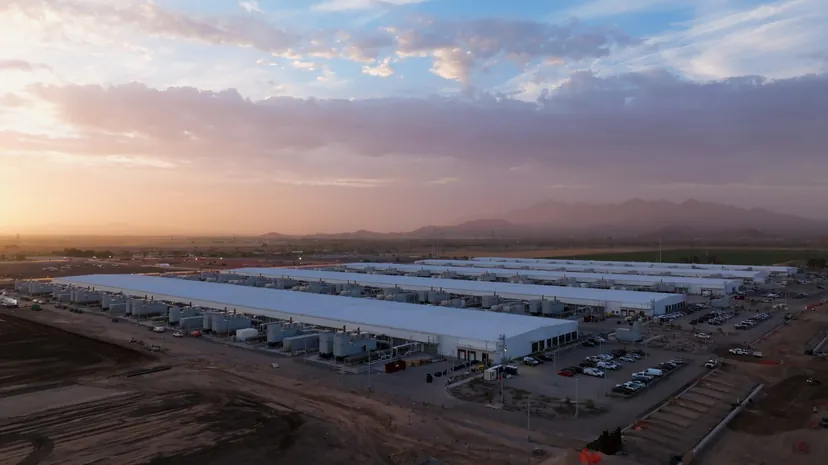
The Dilemma of ‘33% Debt-Reliant’ AI Big Tech
As political regulation strengthens, the spotlight is shifting toward the financial health of Big Tech companies. Previously, these companies funded capital expenditures through their own operating cash flow, but as the pace of infrastructure expansion outpaced cash generation over the past 1–2 years, they began to rely heavily on large-scale corporate bond issuances and external borrowing.
According to credit market analysis by investment bank Goldman Sachs, approximately one-third (33%) of capital expenditures by major hyperscalers in 2026 is being funded through borrowing. The share of AI ecosystem companies in the U.S. investment-grade corporate bond market has surged from a previous 7% to around 18%, and they have absorbed so much capital that they account for 40% of the long-term bond market (maturities of 15 years or more).
The problem arises when infrastructure projects built with such debt encounter obstacles like construction delays. A representative example is Meta, which saw its credit rating outlook downgraded and experienced three consecutive quarters of declining operating margins (35.4%) due to massive equipment depreciation and interest costs, even as it raised its 2026 annual capital expenditure forecast to between $135 billion and $145 billion. The New York stock market's sharp reaction when Meta considered issuing non-voting shares and large-scale private debt to raise funds is testament to market fatigue.
For tech companies that must pay massive interest on corporate bonds every quarter, it is difficult to sustain capital expenditure indefinitely if data center operations and revenue generation are pushed back due to local permitting delays. This is why warnings are emerging that a ‘capital expenditure slowdown,’ which involves prioritizing projects and diversifying investments rather than pursuing simultaneous construction, may become inevitable.
However, the market appears to be anticipating stabilization following this cooling-off period. On the day after the election, the Dow Jones Industrial Average rose 3.03%, and the stock prices of Big Tech firms like Amazon and Microsoft also climbed. Semiconductor stocks, however, saw Nvidia fall 3% and Micron fall 7%. Some interpret this as the market viewing data center supply constraints as a factor that checks the excessive investment of Big Tech.
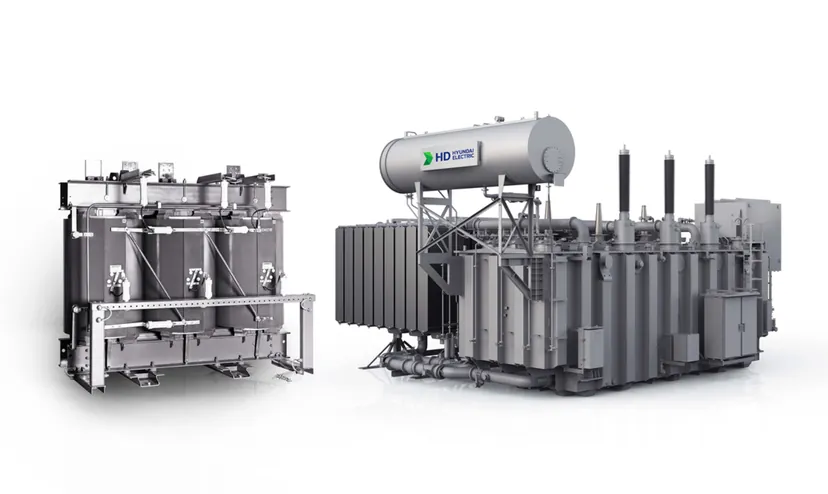
Domestic Power Grid Companies: Time to Re-examine North American Reliance
These global environmental changes are posing complex challenges for domestic heavy chemical and energy equipment supply chains that have enjoyed special demand from North American power grid replacements and data centers. Currently, the three major domestic heavy electric equipment companies—HD Hyundai Electric, Hyosung Heavy Industries, and LS Electric—along with cable manufacturers like LS Cable & System and Taihan Cable & Solution, have increased their reliance on North America.
For Hyosung Heavy Industries, 68% of new heavy industry orders in the third quarter and 60% of its order backlog are from the U.S. LS Electric's North American revenue in the third quarter was approximately 500 billion won, a 25% increase from the previous quarter. As the backlog grows, any changes to client schedules could have a greater impact on performance.
The possibility of order delays is something the industry must prepare for, especially since the burden of capacity expansion is already underway. HD Hyundai Electric's new ultra-high voltage transformer plant in Ulsan began operations this month, and LS Electric is investing 350 billion won in its U.S. production base by 2030. If orders are delayed, the benefits of these expansions may appear later, and capital burdens could be prolonged.
The situation of the three major battery manufacturers—LG Energy Solution, Samsung SDI, and SK On—which have focused on the North American data center-linked large-capacity BESS (Battery Energy Storage System) market as a breakthrough for the EV "chasm" (a temporary slowdown in demand), is also worth noting. With the Democratic Party reclaiming Congress, concerns about the repeal of the Inflation Reduction Act (IRA) tax credits have completely vanished. Furthermore, if regulations for 'Bring-Your-Own-Power (BYOP),' where data centers equip themselves with their own power sources and batteries instead of relying on public grids, spread, it is true that opportunities may open up in the mid-to-long term.
However, the realistic risk factors facing the three battery companies are severe. First, in a situation where they have aggressively built North American BESS production lines to compensate for sluggish EV demand, any delays in the delivery of large-scale BESS due to Big Tech's project financing difficulties and local permit bottlenecks could cause the cornerstone of their recent earnings recovery to collapse.
The current North American AI infrastructure market is moving past the initial overheating phase that relied on indiscriminate borrowing and regulatory vacuums, and is entering a selective phase that carefully considers capital efficiency and local community acceptance. It is a time when risk management is required in line with the U.S. midterm election results and the cooling-off of the AI market.