

[비즈한국] The notion that humanity is returning to the Moon is no longer a romantic declaration. It is not simply a matter of planting a flag and coming back. What NASA is currently preparing for is the establishment of a permanent outpost at the Moon’s South Pole. More precisely, it involves scouting the most valuable real estate on the Moon, securing it, laying down power grids, setting up communication networks, and sending rovers—ultimately creating a foundation where humans can stay for extended periods. This plan has recently become more complex than anticipated because the New Glenn rocket from Blue Origin, a key partner trusted by NASA, exploded on the launch pad.

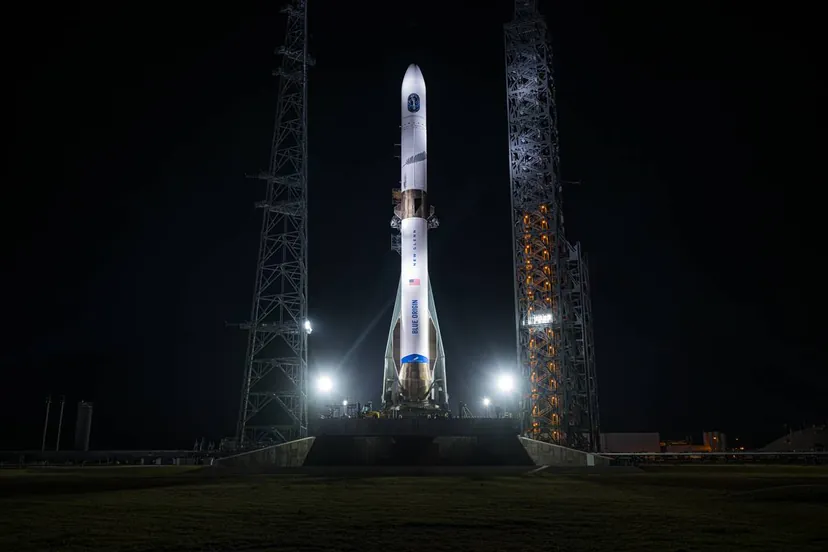
On May 28, 2026, at Cape Canaveral Launch Complex 36 in Florida, a New Glenn booster exploded while emitting massive flames during a static fire test. The accident destroyed the rocket and caused significant damage to a large portion of the launch pad. NASA determined that it would take considerable time to restore the site.
New Glenn is responsible not only for Blue Origin's heavy-lift rocket needs but also for NASA's lunar base plan and the Blue Moon lander program. Therefore, the fallout from this accident is far from simple. Blue Origin had planned to prove its ability to transport cargo to the lunar surface with the Blue Moon Mark 1 lander and then enter the Artemis crewed lunar landing competition with the larger Blue Moon Mark 2. Now, however, the very first hurdle—the launch itself—has become unstable.
As a result, SpaceX has come back into the spotlight. In fact, SpaceX was already one of the most important partners in the entire Artemis program. The Starship HLS was already a candidate for the human lunar lander chosen by NASA and had been discussed as the key vehicle to ferry Artemis astronauts from lunar orbit to the surface. However, with the recent changes to NASA’s Artemis III plan, SpaceX now finds itself in a position where it must compete with Blue Origin. For the Artemis III mission, NASA intends to conduct a test involving the rendezvous and docking of either SpaceX or Blue Origin's commercial landers with the Orion spacecraft in low Earth orbit, rather than a lunar landing.
Artemis III is not simply a question of who lands on the Moon first. It is a question of whose lander is truly ready to carry humans. NASA is effectively placing SpaceX and Blue Origin on the same test bench for a kind of public audition.
In the Apollo missions, the government directly controlled almost everything. From the Saturn V and the command module to the lunar lander and every operational detail, everything functioned within a massive national project. In contrast, Artemis is structured such that private hardware from companies like SpaceX, Blue Origin, Astrobotic, Intuitive Machines, and Firefly is added onto a government-led foundation of SLS and Orion. While this structure is faster and more flexible, it also carries inherent risks.
If a private company's lander tips over, NASA's entire scientific mission is shaken. If a private rocket launch pad suffers a disaster, the entire lunar base schedule can waver. While government financial risk is reduced, the mission risk remains. That reality has now materialized due to Blue Origin's explosion.
NASA's obsession with the Moon's South Pole is also clear. The South Pole is not just a fascinating, unexplored tourist destination; in fact, it is the worst place to go if you only want to plant a flag and leave. It is a place of extreme coexistence between sunlight and darkness. On high points along ridges, the sun stays near the horizon for long periods, allowing for continuous solar power generation. Conversely, deep craters contain permanently shadowed regions that have not seen sunlight for billions of years. There is a possibility that water ice and volatile materials are preserved there. NASA also considers the lunar South Pole to be advantageous for long-term exploration.
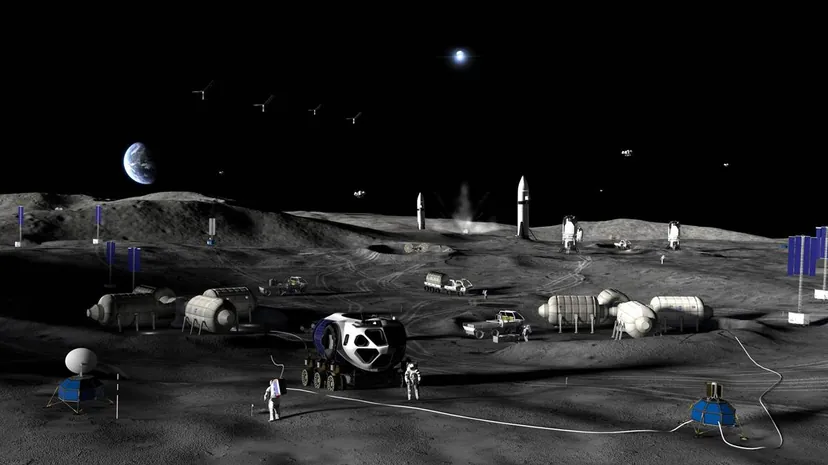
The water obtained here is not merely drinking water. It becomes oxygen and hydrogen, which can serve as fuel. Water itself can also act as radiation shielding. Beyond the water astronauts drink, it is a vital resource that dictates the potential for the base's life support systems and rocket fuel production. On the Moon, water becomes a form of "transparent oil."
Recently, NASA announced an ambitious "Moon Base" plan, explaining that it would build a $20 billion lunar base in stages. Phase 1 runs from now until 2029. This phase focuses on rapid robotic missions, technology demonstrations, lunar terrain reconnaissance, and the establishment of surface operational infrastructure. NASA plans to conduct a total of 25 missions with 21 landings, utilizing rovers, drones, and relay satellites. By landing on the Moon repeatedly, they aim to reduce failure risks while selecting landing sites and base locations. They will learn how lunar dust scatters, test how far rovers can travel, and determine where continuous communication can be maintained on the surface.
Phase 2 begins in 2029 and can be considered the heavy industry phase. It will involve deploying large-scale solar power grids and installing early-stage fission reactors. The plan is to land up to 60 tons of hardware on the Moon through a total of 24 landings.
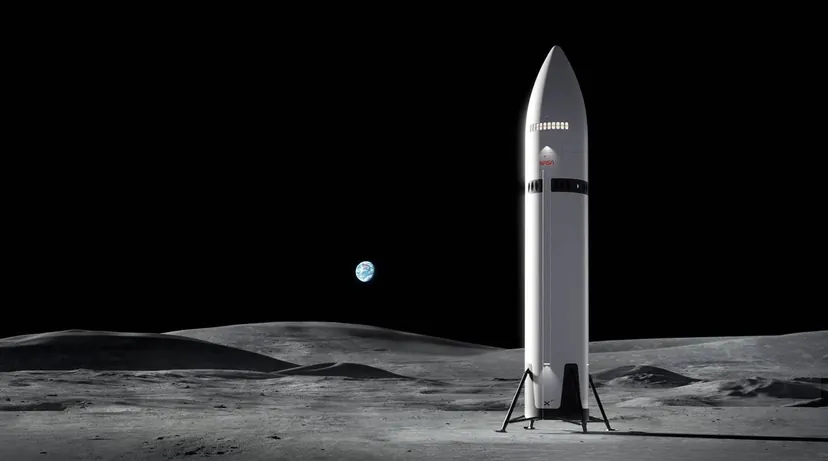
Three locations have been decided for the lunar base. Moon Base 1 had selected Blue Origin's massive Blue Moon Mark 1 as its lander, named "Endurance." This lander was intended to perform unmanned demonstration landings and head toward the Shackleton Ridge. However, due to the recent accident, the likelihood of SpaceX's HLS taking its place has increased.
Moon Base 2 has been assigned to Astrobotic’s Griffin mission. It will carry a 500kg large-scale commercial rover built by Astrolab toward the Nobile Crater. Moon Base 3 has been designated for Intuitive Machines' IM-3 mission. This mission is headed for Reiner Gamma, famous for its beautiful lunar swirls, to map magnetic anomalies in detail. One of the biggest problems for a lunar base is that the Moon lacks a strong protective magnetic field like Earth. However, these swirl terrains are believed to be places where traces of magnetic fields still remain on the surface. Therefore, if one is looking for a long-term habitation site, one might consider terrains where these magnetic fields are still active.
The lunar base will not be just a single building, but a living sediment of operational know-how. The "Moon-Pole" drone is particularly interesting here; it is an autonomous flying robot capable of exploring the rugged terrain of the South Pole more freely than wheeled rovers. If the Ingenuity helicopter demonstrated the possibility of flight in the Martian atmosphere, the Moon-Pole is a concept designed to investigate inaccessible terrain by repeating rocket-like jumps and landings on the Moon, where there is virtually no atmosphere.
The Moon-Pole drone is especially useful at the lunar South Pole. The South Pole is too dangerous to navigate based on maps alone. The low solar angle causes long shadows, and the edges of craters and ridges are filled with rocks and slopes. Terrain that looked flat from Earth can be a terrible disaster for an actual lander. The flames and gas ejected by a lander's engine can blow lunar dust and rocks at high speeds, damaging nearby equipment. Therefore, at future lunar bases, key facilities such as landing pads, living quarters, rover parking lots, nuclear power plants, mining sites, and communication towers must be kept as far apart as possible.
The fact that the entire lunar base covers hundreds of square kilometers does not mean it will be packed with buildings, but rather that major facilities must be spread out as far as possible. However, it is precisely at this point that the seeds of politically sensitive controversy can sprout.
Through the Artemis Accords, the United States shares lunar exploration norms with nearly 60 countries. NASA superficially states that these accords provide common principles needed in an era of increasing private space exploration. However, "safety zones" and "operational zones" on the surfaces of the Moon and Mars are highly sensitive concepts. If there is "prime real estate" on the Moon, it would be around the Shackleton, Sverdrup-Henson, and de Gerlache craters. This is the "egg yolk" territory of the Moon. Naturally, nations competing for the Moon will aim for these areas first. Of course, under international law, no country can own the Moon or Mars as territory.
However, the side that first installs landers, drones, rovers, power facilities, and communication equipment will effectively hold strong operational priority in those vicinities. Although not a border drawn on paper, infrastructure built on dust can act as a de facto boundary. Therefore, the current competition for the Moon is on a different level than the flag-planting competition of the 1960s. This competition is not about who arrives first, but who can be the first to set up a functional system.
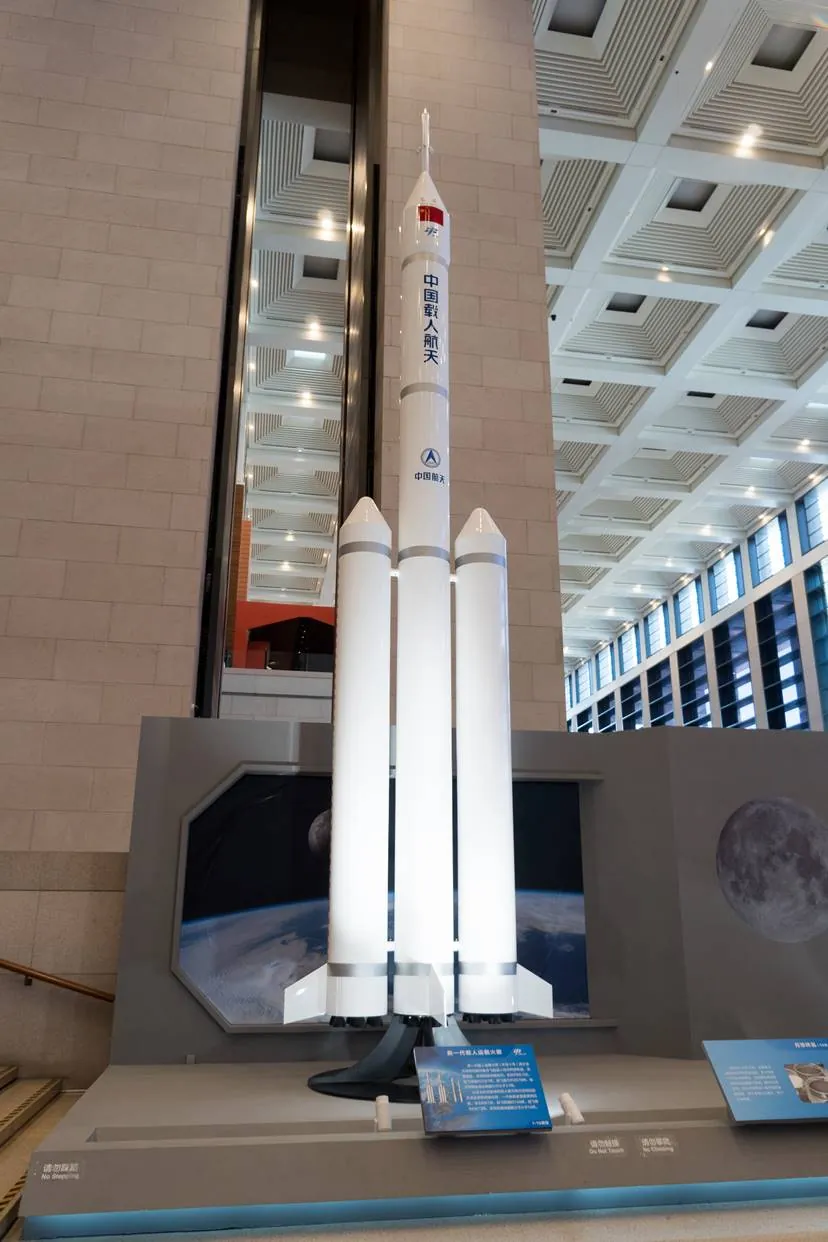
This is where China enters the picture. China is also targeting the Moon's South Pole. China has successfully returned lunar samples through its Chang'e missions and has landed on the far side of the Moon. It has steadily accumulated robotic exploration know-how and is similarly planning a long-term lunar South Pole base. It plans to launch the seventh Chang'e mission after August 2026, aiming specifically for the ridge on the opposite side of the Shackleton Crater at the lunar South Pole. China is also targeting the lunar South Pole more explicitly.
From the U.S. perspective, the lunar South Pole is both a scientific base and a strategic stronghold. If China lands near a permanently shadowed crater first, installs communication and power infrastructure, and starts securing potential sites for water ice, the U.S. Artemis program will inevitably become embroiled in geopolitical competition beyond its scientific mission.
Originally, NASA's Artemis plan included the Lunar Gateway, a space station orbiting the Moon. However, this has been completely canceled—not simply because of costs, but because China is catching up too quickly. China’s crewed robotic project is being pushed forward rapidly. China has set a goal for a crewed lunar landing in 2029 or 2030. The Mengzhou crewed spacecraft is planned to head to the Moon aboard a Long March 10 rocket. China is not doing this alone, either; it has already joined the lunar competition in cooperation with 17 other countries.
Ultimately, the problem is time. NASA aims for the first crewed lunar landing in 2028 via Artemis IV. However, many experts evaluate this schedule as quite aggressive. While SpaceX’s Starship HLS is massive and innovative, it must solve the unprecedented challenge of refueling propellants in orbit. To use Starship as a lunar lander, cryogenic propellants must be refueled in Earth orbit multiple times. It must be capable of storing methane and liquid oxygen for long periods, transferring large quantities in space, and reigniting them—and it must be able to reach lunar orbit safely without accidents.
This is not merely a matter of building a larger rocket. It is a complex issue intertwined with cryogenic fluid dynamics, insulation and valve control, fluid management in microgravity, and multi-launch operational know-how. Blue Origin's Blue Moon is relatively closer to a traditional lunar lander, but it is not easy. Blue Moon Mark 1 must first verify its cargo landing capability. Blue Moon Mark 2 must subsequently verify life support systems and dual redundancy capable of carrying humans. And now, the New Glenn explosion has occurred.
While Blue Origin says it will return within a year, a launch pad explosion is a much larger accident than a typical rocket launch failure. You lose not only the rocket but also the ground infrastructure needed to launch the next one. Previously, following the Falcon 9 launch pad explosion at SpaceX in 2016, it took nearly 15 months just for recovery.
This has made the upcoming Artemis III mission more important. Even if Artemis III does not land on the Moon immediately, it will test problems that must be solved before an actual landing. It will confirm if Orion can safely meet, approach, dock, and equalize pressure with a commercial lander, and whether the crew can transfer. It will evaluate whether oxygen is generated well inside the lander and if carbon dioxide is removed properly. It will also verify that power, cooling, communication, navigation, and emergency procedures work as expected.
Even minor issues like the "toilet problem," which caused controversy in Artemis II, can lead to fatal accidents in an actual mission. If Artemis II verified whether humans could survive and live inside the Orion spacecraft, Artemis III takes the next step. This is exactly why NASA is conducting Artemis III in low Earth orbit rather than at the Moon. In low Earth orbit, one can return quickly if a problem arises. In lunar orbit, there are almost no options if something goes wrong.
At this point, it is natural that SpaceX's presence has grown following the Blue Origin explosion. If Blue Origin's schedule wavers, NASA will have no choice but to choose the Starship HLS. Of course, if Blue Origin succeeds in a rapid recovery while Starship's development remains sluggish, Blue Moon might get another chance.
NASA does not want to rely on just one company. It wants to make the two companies compete and choose the one that is ready first. This is a new space race—it is a competition between the U.S. and China, but simultaneously a competition between SpaceX and Blue Origin within the U.S. The winner of this competition will not just receive the glory of the first landing. It is a race for leadership in the massive business market that will follow: lunar surface cargo transport, crewed landings, rovers, base construction, resource mining, and communication network construction. Both companies are bound to covet it.
Blue Origin has stumbled for a moment due to an unexpected explosion. However, SpaceX's Starship development also has many tasks remaining. If both companies see delays in their schedules, NASA's 2028 lunar landing goal could potentially slip entirely. Even if that happens, NASA does not seem likely to significantly change its current direction of building a base on the Moon. Instead of sending humans immediately, it might prioritize laying infrastructure and conduct as much preparation as possible with unmanned robots in parallel.
Until the days when we were just planting flags, the Moon remained a romance of the space age. But the current competition is completely different. Someday, someone will be living their daily life on the Moon, and the tedious political and economic battles occurring on Earth will eventually unfold there, too. The Moon will no longer be a romantic celestial body in the night sky. It will become the first industrial site, science base, diplomatic stage, and outpost for humanity to venture further to the next planet beyond Earth. Perhaps this is the last era in which we can simply be happy looking at the Moon as it floats in the sky, clear and free from city lights.
The author, Ji Woong-bae, loves cats and the universe. After watching 'Galaxy Express 999' as a child, he dreamed of sharing the beauty of the universe. He is currently an assistant professor in the Faculty of Liberal Arts at Sejong University, participating in various science communication activities such as lectures and writing. He has authored books such as 'On the Uselessness of Astronomers', 'We Are All Born Astronomers', and 'Strange Questions That Come to Mind When Looking at the Universe', and has translated works including 'How I Killed Pluto', 'Quantum Life', and 'UFO'.