

[비즈한국] It has been confirmed that Toss has decided to sponsor the 2026 Busan International Rock Festival, held this October. Toss plans to provide its payment terminal, ‘Toss Front,’ at the festival and conduct various promotions to raise awareness for its facial recognition payment service, Face Pay. Face Pay is currently in a competitive landscape with Naver’s Face Sign. Analysts suggest that Toss needs to strengthen the promotion of Face Pay to secure a dominant market position, and the sponsorship of the rock festival is not unrelated to this goal.
‘Face Pay’ Terminals to be Installed at Festival Payment Booths
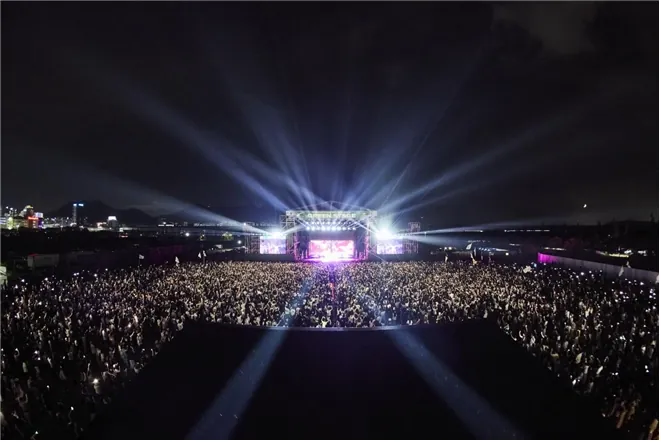
The Busan International Rock Festival is an annual rock festival hosted by the city of Busan every autumn. According to the Integrated Computer Network for Film Admissions, a total of 41,105 people attended the Busan International Rock Festival last year, making it the top music festival in Korea by attendance. Among domestic rock festivals, it forms a duopoly with the Pentaport Rock Festival.
Looking at past sponsors of the Busan International Rock Festival, they were mostly local Busan businesses, music-related companies, or food and beverage firms. The fact that Toss, which has little relevance to these sectors, is sponsoring the event is linked to its recent business moves.
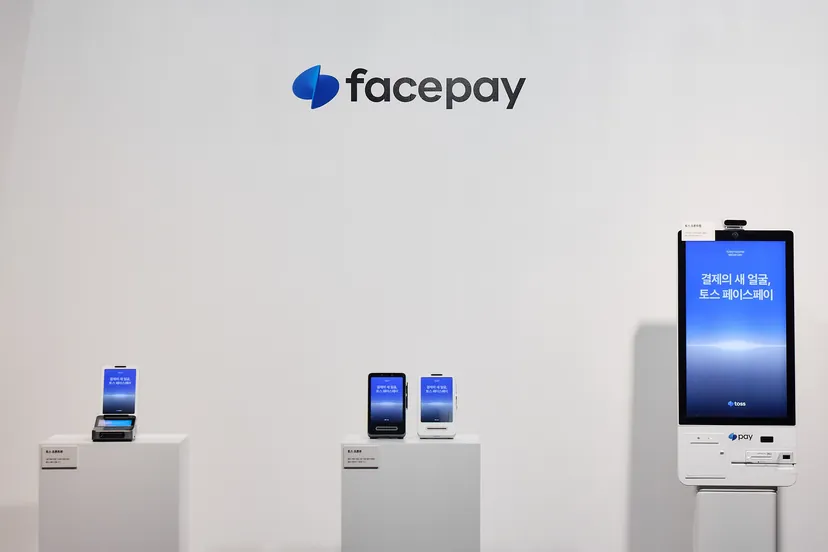
Since the beginning of this year, Toss has been focusing on promoting the payment terminals of its subsidiary, Toss Place, and its facial recognition payment service, ‘Face Pay.’ Toss plans to showcase these products at the Busan International Rock Festival as well. According to Toss, the ‘Toss Front’ payment terminals will be installed at booths where payments are accepted. Various promotions are also being prepared. As rock festivals attract a large number of young attendees, installing Toss Front there is expected to be significantly beneficial for marketing.
A Toss official stated, “As Face Pay is a service that allows payments using only your face without a wallet or smartphone, outdoor festival venues are the perfect places to truly experience its convenience,” adding, “We hope many people will experience Face Pay firsthand at the festival where so many gather.”
Latecomer Naver’s ‘Face Sign’ Showing Rapid Growth
Toss announced that the cumulative number of Face Pay subscribers surpassed 7 million as of July. This is more than double the number in just four months after breaking the 3 million subscriber mark in February this year. Actual usage is also steadily increasing. It has been shown that 60% of users who have made a payment at least once continue to use Face Pay as their actual payment method. As of June, the cumulative number of affiliated merchants with Toss Front terminals capable of Face Pay payments has exceeded 400,000.
However, it is too early to say that they have dominated the market. Naver also launched its facial recognition payment service, ‘Face Sign,’ in November last year and is showing steep growth. Naver Pay announced that the number of domestic affiliated merchants for its ‘Npay Connect’—a payment terminal that supports Face Sign—surpassed 100,000 in June this year. Last June, Naver Chairman Lee Hae-jin also succeeded in generating buzz after using Face Sign to pay following his ‘Samso-maek (Soju-Somac) meeting’ with NVIDIA CEO Jensen Huang.
Currently, it is difficult to predict which will take the lead between Face Pay and Face Sign. For Toss, promoting Face Pay is necessary to capture the market. Sponsoring the Busan International Rock Festival is not unrelated to this.
An entertainment industry official said, “Sponsorship at large-scale events provides direct experience opportunities for the audience, so the promotional effect through sponsorship is greater than that of broadcasting,” adding, “There is a significant difference between just seeing something and experiencing it firsthand.”