

[비즈한국] A clear trend is emerging among the three major telecom carriers to compensate for the stagnation of their traditional telecommunications businesses by expanding into AI data centers and business-to-business (B2B) services. Alongside efforts to defend profitability through cost efficiency, competition in AI infrastructure investment is also intensifying.
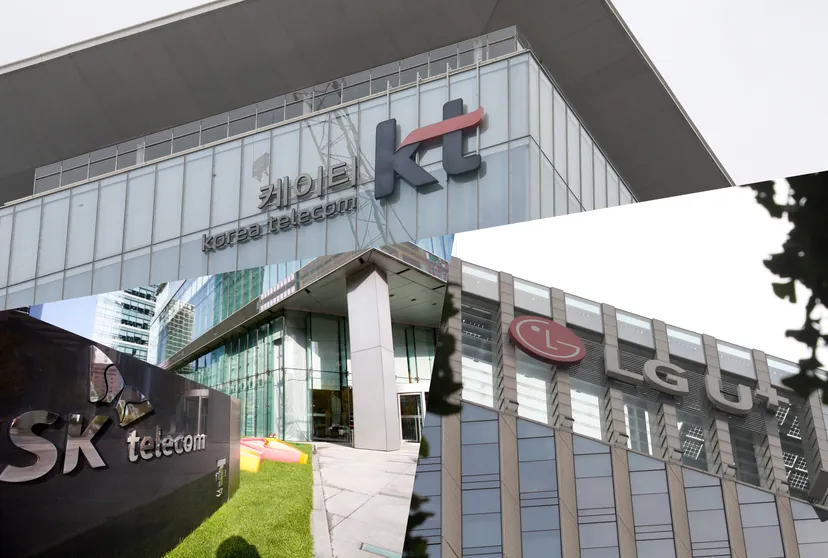
SKT and LGU+ See Improvements, While KT Holds Steady Despite Base Effects
With KT announcing its second-quarter results on the 12th, the first-half earnings reports for the three major carriers—SK Telecom, KT, and LG Uplus—have concluded. KT’s second-quarter consolidated revenue stood at 6.6799 trillion KRW, with an operating profit of 648.3 billion KRW. Because the second quarter of last year included profits from subsidiary real estate sales, which significantly boosted results, this year's operating profit saw a decline due to the base effect.
However, the company showed improvement compared to the first quarter, driven by continued growth in its data center and real estate businesses, as well as improved performance from its content subsidiaries. On a separate basis, revenue was 4.5235 trillion KRW with an operating profit of 389 billion KRW. While wireless service revenue fell by 1.8% year-on-year due to customer loyalty programs, the subscriber base remained stable, with 5G penetration reaching 83.2% of total handset subscribers by the end of the second quarter.
Previously, on the 5th, SK Telecom announced consolidated second-quarter revenue of 4.3591 trillion KRW and an operating profit of 566 billion KRW. Revenue increased by 0.5% year-on-year, and operating profit surged by 67.3% as the burden of customer compensation and related costs from last year's USIM information leak disappeared. Although profit increased by 5.3% compared to the previous quarter, mobile communication revenue fell by 1.9% year-on-year due to the spread of budget mobile carriers and intensifying plan competition, indicating that growth in the core telecom business itself is still hitting a wall.
LG Uplus recorded a record-high quarterly operating profit of 344.5 billion KRW, an increase of 13.1% year-on-year and 26.5% compared to the previous quarter. Although operating revenue fell by 3.9% to 3.6949 trillion KRW due to weak handset sales, service revenue—a key indicator of core business competitiveness—increased by 2.0% to 3.0765 trillion KRW.
Mobile revenue rose by 0.9% to 1.6602 trillion KRW, and total mobile connections grew by 5.2% to reach 31.467 million lines. The 5G penetration rate reached 84.9%. A 5.4% year-on-year reduction in operating expenses, including marketing and labor costs, also contributed to the profitability improvement.
In tandem with the recovery in profitability, shareholder returns are also on an upward trend. KT finalized a dividend of 600 KRW per share for the second quarter and plans to complete a 250 billion KRW share buyback by early September. SK Telecom paid 830 KRW per share for two consecutive quarters. LG Uplus decided to increase its interim dividend by 8.0% year-on-year to 270 KRW per share and announced plans to purchase and cancel an additional 90 billion KRW worth of treasury shares.
All Three Carriers Expand AI Data Center Infrastructure Investment
The achievements of the AI data center and AI transformation (AX) businesses, which the three companies have been focusing on, are now showing in their financial results.
SK Telecom's second-quarter AIDC revenue surged by 92.5% year-on-year to 136.2 billion KRW, showing the fastest growth among the three. LG Uplus's AIDC revenue also increased by 28.9% due to rising demand for colocation services. KT's AI transformation (AX) business revenue grew by 22.3%, supported by AI adoption demand, particularly in the financial sector, and the growth of KT Cloud. According to KT, it secured 22 financial sector AX projects in the first half of this year and currently operates AI Contact Centers (AICC) for four of the top five commercial banks in Korea.
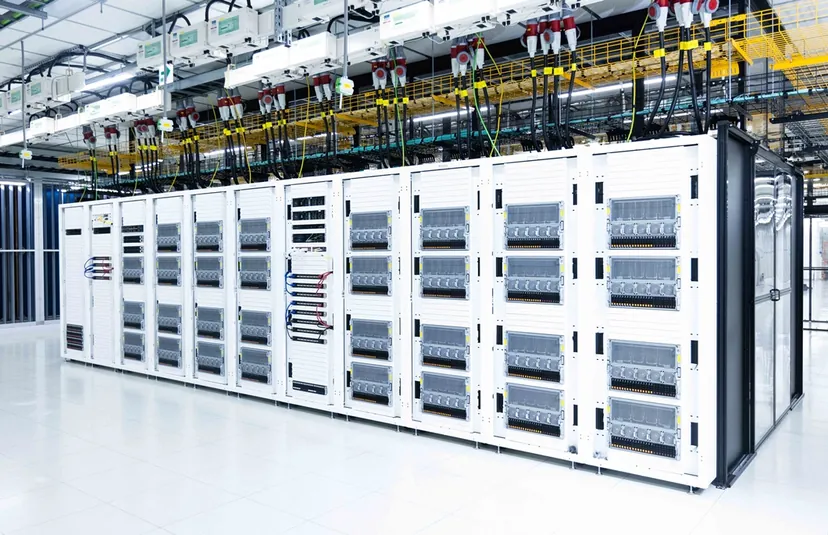
Regarding investment plans, all three companies identified AI infrastructure expansion as their top priority. SK Telecom established a dedicated AIDC development subsidiary, 'SK Hyper,' last month. It plans to increase its data center capacity to 5 gigawatts (GW) by 2029, and to 15GW by 2035 in the long term. LG Uplus is investing a total of 2 trillion KRW for the second phase of its Paju AIDC construction, with a goal of winning 5 trillion KRW in related orders by 2030. KT announced that it will secure an additional 1GW of AIDC power capacity and 90Tbps of submarine cable capacity by 2031.
While the three companies share the same direction of breaking through the growth limits of their core telecom businesses via AI and B2B, their methods of financing are different.
LG Uplus maintains that it will continue investing without additional external financing through an asset-light model that combines leasing with Design, Build, and Operate (DBO). Yeo Myung-hee, CFO of LG Uplus, stated during the earnings call, "In addition to our own centers, we are parallelizing light models such as leasing and DBO to improve capital efficiency and alleviate cash flow burdens. Accordingly, we plan to maintain AIDC within our mid-to-long-term target range without separate external financing."
SK Telecom has opted for a method that lowers financial risk by securing clients, such as global big tech firms, first and then building data centers in phases. Park Jong-seok, CFO of SK Telecom, stated, "In the first half, we solidified our foundation based on stable earnings from the telecom business, while also establishing a framework for the rapid expansion of the AI data center business."
KT is pursuing an 'AX Platform Company' strategy, aiming for a consolidated Return on Equity (ROE) of 9-10% by 2028 by clearing out low-profit businesses and liquidating non-core assets. Min Hye-byung, KT's CFO (Senior Vice President), explained, "We achieved profit growth compared to the previous quarter through our transition to an AX platform company and efforts to improve profitability."
With domestic 5G penetration exceeding 80% and growth through subscriber acquisition hitting a ceiling, the axis of competition among the three major carriers is shifting rapidly from attracting subscribers to AI monetization.
Some analysts suggest that the key to turning AI infrastructure investment into actual profit lies in utilization rates and securing long-term orders.
Kim A-ram, an analyst at Shinhan Investment Corp., analyzed, "It is difficult to expect a revaluation of market value based solely on data center expansion plans. Revenue visibility will only improve once long-term contracts with CSPs (Cloud Service Providers) and corporate clients, as well as utilization rates and financing plans, are confirmed."