

[BizHanKook] The top scorer of this year's certified tax accountant exam has admitted to cheating using generative artificial intelligence (AI) and electronic devices, and has turned himself in to the police. As the examinee confessed to the acts despite the exam's organizing body having reviewed invigilator statements and scoring data without finding any suspicious activity, critics argue that serious flaws in the national qualification exam management system have been exposed. With the College Scholastic Ability Test (Suneung) approaching on the 19th, attention is focused on measures to ensure the fairness of the upcoming exam.
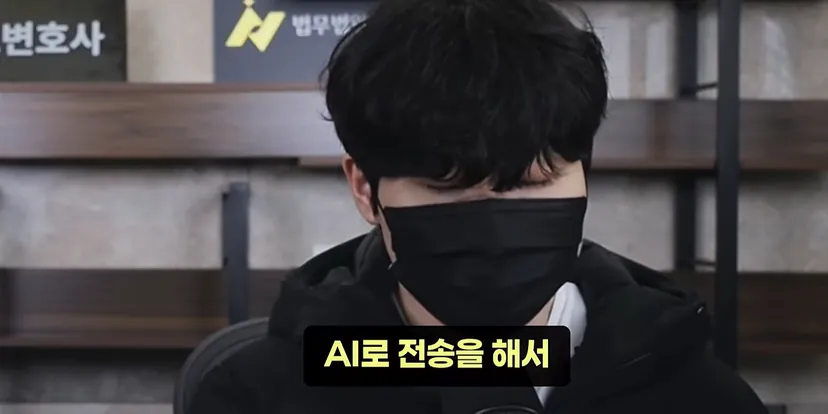
On the 15th, Han Won-seok, the top scorer of the 63rd Tax Accountant Exam, appeared on the YouTube channel of his legal representative, Lee Don-ho, a representative attorney at Law Firm Nova, and stated, "I committed malpractice during the tax accountant exam. I sincerely apologize for causing harm to many people due to my wrongdoing."
Han admitted, "I cheated in the first and second rounds of the tax accountant exam using electronic devices and generative AI," adding, "My top-scoring result was not achieved through legitimate effort." He also confessed to cheating in the same manner during the 61st Certified Public Accountant (CPA) first-round exam, which took place on March 2.
He apologized, saying, "I told stories in my interview and passing testimonials that were not true. Even after suspicions were raised, I denied my actions with lies. Both the act of cheating and the attempt to cover it up are entirely my responsibility."
Han has submitted a statement of voluntary surrender to the Seoul Metropolitan Police Agency and plans to hand over the remaining relevant data and equipment as evidence. He has expressed his willingness to explain his methods if requested by the organizing body. However, he did not disclose specific details to prevent the recurrence of similar cheating methods.
Previously, Han scored 397.5 out of 400 points in the first round of the tax accountant exam held in April. He missed only one question out of 160, even achieving a perfect score in the Introduction to Tax Law, a subject where the average score was only 30.18.
Due to the exceptionally high score, suspicions of cheating using AI smart glasses were raised online. Doubts grew when it was noted that his study materials in his published success story showed little sign of use, and his handwritten notes contained typos, such as writing "woncheong-jingsu" instead of the correct "woncheon-jingsu" (withholding tax). Although Han denied these allegations in media interviews at the time, he has now admitted to the cheating.
The issue is that the Human Resources Development Service of Korea (HRDK), the exam's organizer, failed to detect the cheating. The HRDK had established guidelines for managing electronic and communication devices for national exams this May, and prior to the second-round tax accountant exam in July, it even educated invigilators on procedures for checking smart glasses and identifying major models.
Despite this, Han's cheating went unnoticed. In an explanatory press release on the 13th, the HRDK stated that after checking with the four invigilators present during Han's exams, they found no suspicious behavior or irregularities. They explained that no such details were recorded in the test-taker log at the time, and no anomalies were found in the first-round grading data.
There were also no CCTV cameras installed in the specific examination room, which limited the ability to verify the situation on video.
The HRDK plans to expand the use of CCTV in exam rooms and introduce radio detectors currently being developed by the Korea Radio Promotion Association once field testing is complete. However, concerns remain that it is not easy to detect cheating involving electronic devices and generative AI solely through visual checks or current smart-glass-focused monitoring methods.
Cheating using AI devices has already been detected in various other exams.
In the regular TOEIC tests held on May 10 and 31, one candidate was caught at each exam wearing AI smart glasses. They were disqualified, and their eligibility for future exams was suspended for four years.
Between May and June of the same year, five cases of candidates wearing or using smart glasses were caught during national technical qualification exams, including those for Fire Equipment Engineer, Information Processing Engineer, Electrical Industrial Engineer, and Gas Craftsman. With a candidate caught wearing smart glasses during the Gas Engineer practical exam on the 25th of last month, the total number of confirmed cases this year has reached six.
College entrance exams were no exception. Last month, students were caught wearing or possessing smart glasses during rolling admission essay exams at Yonsei University and the University of Seoul. At Yonsei University, a student was caught switching to smart glasses during the exam after having worn regular glasses before the start.
The same problem occurred in regular university exams. During a midterm exam at the Hongik University College of Business this semester, a student wearing smart glasses was caught by the professor.
As cheating using AI devices continues across professional qualification exams, language tests, and university entrance and internal exams, the need for a comprehensive audit of the entire exam management system is growing.
There is also concern about the potential for cheating using AI devices like smart glasses during the 2027 Suneung, which is now just four days away.
On the 29th of last month, the government announced a response plan for smart-glass-related cheating in the Suneung, including the deployment of dedicated personnel at each exam site and a rapid response system linked to the Ministry of Education and local offices of education.
The Seoul Metropolitan Office of Education also conducted training on device identification for 239 dedicated smart-glasses monitors on the 11th. The method involves checking external features such as the camera, microphone, and charging port of smart glasses to distinguish them from regular eyewear.
However, since radio detectors dedicated to smart glasses have not been provided for this year's Suneung, most exam sites still rely on the visual inspection of invigilators. There are concerns that it is difficult to identify all types of devices as external designs become more diverse and new products are released.
On the 13th, the government announced that if cheating is detected, it will respond sternly, including invalidating the exam, disqualifying the candidate for the following year, and pursuing criminal charges and investigations. Furthermore, it plans to establish cross-governmental measures by reviewing the entire national exam management system.
The tax accountant exam case demonstrates that even with strengthened invigilation, cheating may still go undetected. The challenge now is to build an effective management system capable of identifying and blocking not only smart glasses but also various combinations of electronic devices and generative AI.