

[비즈한국] Mr. Lee, the husband of broadcaster Yang Jung-won, who was arrested and indicted on charges of reaping billions of won in illicit profits by artificially inflating the stock prices of a KOSDAQ-listed company, was released on bail by a court decision on the 1st. Mr. Lee was arrested on April 22 for allegedly conspiring with former securities firm employees to trade over 28.9 billion won worth of KOSDAQ-listed stocks between December before last and April of last year to inflate share prices. He was released after about five months in custody, while two co-defendants were already released on bail on August 28. All three accomplices are now able to stand trial while not in custody.

Applying for bail after 4-5 months in custody while stalling in court
Legal circles suggest that for major economic offenders who disrupt markets through tens of billions of won in market manipulation and zero-capital M&As, applying for and being granted bail as a strategy to prolong trials is becoming a "new normal."
There is a guideline for first-instance courts to deliver verdicts within six months for detained cases, as detention cannot be maintained for longer than that. If the trial schedule exceeds this, it is common to grant bail or release the defendant upon the expiration of the detention period. When prosecutors viewed a case as a "major crime," they would often add charges to obtain a new arrest warrant and extend the detention for trial.
The issue is that financial crimes like stock manipulation are generally not considered high-profile enough to garner significant media attention, and they often involve complex structures that require lengthy proof during trial.
Naturally, a corresponding strategy has emerged. Defendants actively participate in the trial after being indicted by the prosecution, but apply for bail around the 4-5 month mark once it becomes clear that a verdict cannot be reached within the detention period due to the trial schedule. The prerequisite for this strategy is to actively contest the case in court to stall and prolong the trial. This is precisely what is becoming the "new normal."
The courts also have their perspective. While active trials once a week are possible if a verdict within the detention period is prioritized, it is standard for cases with less media interest to have trial dates set only about once a month. As a result, the court often chooses to proactively grant bail with conditions like deposits and residency restrictions, assuming the defendant would be released upon the expiration of the six-month detention period anyway.
The issue of prison overcrowding is also a factor. With correctional facilities reaching capacity limits, it has become easier for defendants who have been detained for a certain period to be granted bail. Of the 55 prisons and detention centers nationwide, 30 are over 30 years old and dilapidated, yet the occupancy rate for domestic correctional facilities last year was 127.7%. In other words, 127 people were being housed in spaces meant for 100. Consequently, courts are increasingly encouraging trials without detention rather than custody.
The problem is that once a case shifts to non-custodial status, the trial naturally drags on. Since priority is given to detained cases, trial schedules for non-custodial cases are set much more loosely. It is not uncommon for first-instance verdicts to take over two years. As a result, criminal rings released on bail brazenly jump into other zero-capital M&A deals to plan and execute second and third rounds of stock manipulation.
First-instance verdict takes over 3 years… involved in other M&A deals after bail
A representative case is Mr. A, who was arrested and indicted in the past for the stock manipulation of a KOSDAQ-listed company, J. Mr. A, who was arrested on charges of zero-capital M&A, false disclosure, and market manipulation, was released on bail in February 2024. This was about 10 months after his arrest in April 2023.
However, more than three years have passed, and a verdict has yet to be reached. In the meantime, Mr. A’s name has been mentioned again in M&A deals for KOSDAQ-listed companies such as Company H and Company R. Although not officially listed, he is said to have acted as an intermediary in the deals.
An industry insider remarked, "After being released on bail, Mr. A kept a low profile for a while, but recently he has been intervening in various M&A deals in ways that avoid public disclosure," adding, "We don't know if he will receive a prison sentence in the first instance, but if he continues to stand trial without detention, he is effectively buying another year or two, allowing him to conduct more deals."
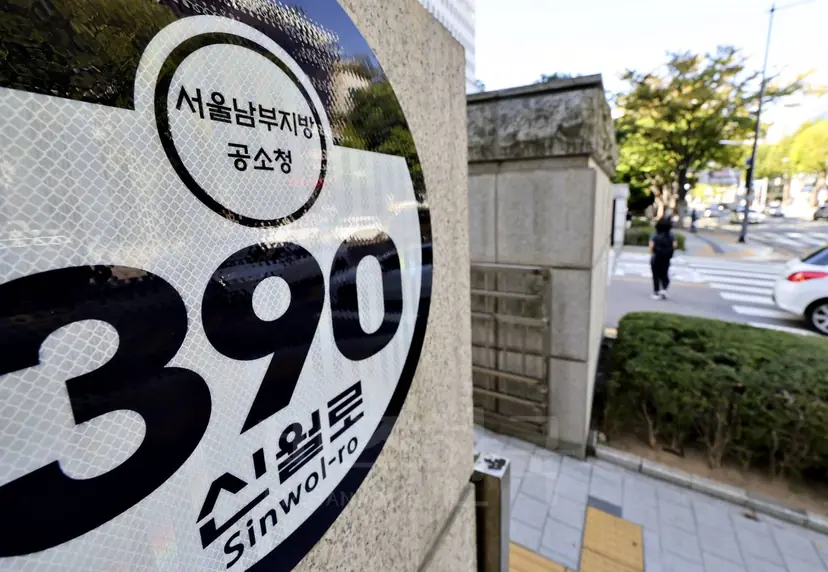
There is also speculation that the abolition of the prosecutors' office and the launch of the Major Crimes Investigation Agency (MCIA) and the Prosecution Service, effective October 2, will create a "favorable structure" for them. This is because the reorganization of the investigative front is inevitable as the Joint Investigation Team for Financial and Securities Crimes at the Seoul Southern District Prosecutors' Office, which served as the command center for capital market investigations in Korea, is dismantled and its duties are transferred to the newly established MCIA. In particular, observers expect that stock manipulators will hire "former Prosecution Service" lawyers from the very stage of arrest warrant applications to stall for time.
An investor related to listed companies' CBs (convertible bonds) predicted, "The prosecution's investigation alone took over a year, and once it moves to the MCIA, it will take even longer to reach an arrest, and there is a high expectation that many charges can be mitigated during the indictment process." He added, "Won't we see a new normal where they create room for disputes at every stage of investigation prolongation, case transfers, and deliveries resulting from the dissolution of the prosecution?"