

[비즈한국] A while ago, social media was buzzing with a controversy over a bestselling author engaging in "sajaegi" (bulk purchasing to artificially inflate sales rankings). The fact that one could manufacture a bestseller by purchasing a measly(?) 1,600 copies felt downright bitter. Then again, perhaps even that is something to be grateful for. According to last year's National Reading Survey, the comprehensive adult reading rate hit an all-time low of 38.5%. That means more than six out of ten people haven't read a single book in a year.
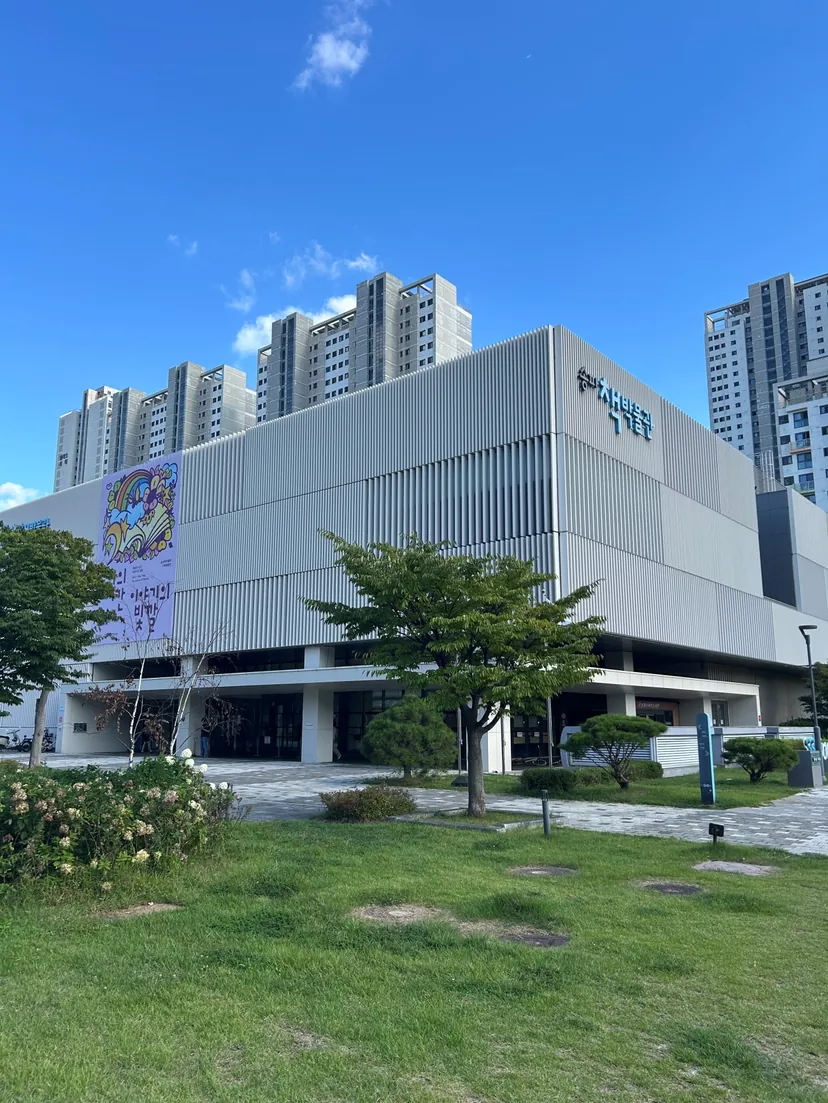
To confess, I don't read much these days either. While I technically fall within that 38.5%, I can count the number of books I’ve read this year on one hand. Killing three or four hours on my smartphone is a breeze, so why is it so hard to read a book? Is it perhaps because of the compulsion that one "must sit up straight and focus" to read? That’s why I went looking. I wanted a space where I could read with a relaxed mind. That’s how I discovered the "Songpa Book Museum" and "Seoul Book Bogo." It might sound like an excuse for someone who doesn't even frequent their local library, but I’ve always been the type who needs to set the mood—starting with gathering stationery—before I can properly study.
The Songpa Book Museum is the first public book museum in Korea established with books as its theme. Far from the stuffiness typically associated with a museum, it is a space where anyone can encounter books comfortably and easily. The description, "A space where books and people meet, a space that connects books and people," is immediately understood from the moment you enter the first floor. Unlike a typical library where you go through procedures to sit at a quiet table, here you are greeted by shelves packed with books, chairs, and sofas as soon as you walk in. The "Eoullim Hall" at the center is the museum's signature space; it features a giant stair-like structure stretching from the first to the second floor where visitors can sit freely and read books from the shelves lining the hall. In the colorful box-shaped nooks scattered throughout, you can even find children comfortably lying down to read. It’s no wonder 310,000 people visit every year.
The second floor houses permanent and special exhibition halls that shed light on the history and culture of books, as well as a media library where individuals can wear headphones to watch media. Being a museum, you can also take a docent-led tour of the permanent exhibition hall. These are held every Tuesday to Sunday at 2 PM, with additional sessions at 10 AM on Fridays and Sundays; I highly recommend them as they offer fun and insightful nuggets of information. The first exhibition hall displays tools related to books used by scholars of the Joseon Dynasty, the second hall traces the development of books and bestsellers through the modern and contemporary eras, and the third hall, titled "The Author's Room," showcases personal belongings of eight writers, including Kim Hoon, Chung Yu-jung, Lee Byung-ryul, Ha Seong-ran, and Hwang In-sook. I was particularly struck by the Chinese restaurant delivery box belonging to author Kim Hoon. He scavenged the box, which had been abandoned on a beach, and used it as a bookshelf to store his manuscripts—what a successful life that box has led!
Beyond serving as a library for reading and a museum for learning about books, this place also functions brilliantly as a venue for education. Various experiences await both children and adults. You can try your hand at editing in the publishing editor's room via a monitor, or make your own bookmark using a letterpress printing process. Various family education programs are available on weekends, such as "Fill Lee Deok-mu's Book Room!" where you can experience traditional bookbinding, or the toddler-friendly "We are Book Chefs!" making it a great place to visit with children. A lecture on book culture featuring poet Oh Eun is also scheduled for September 29.
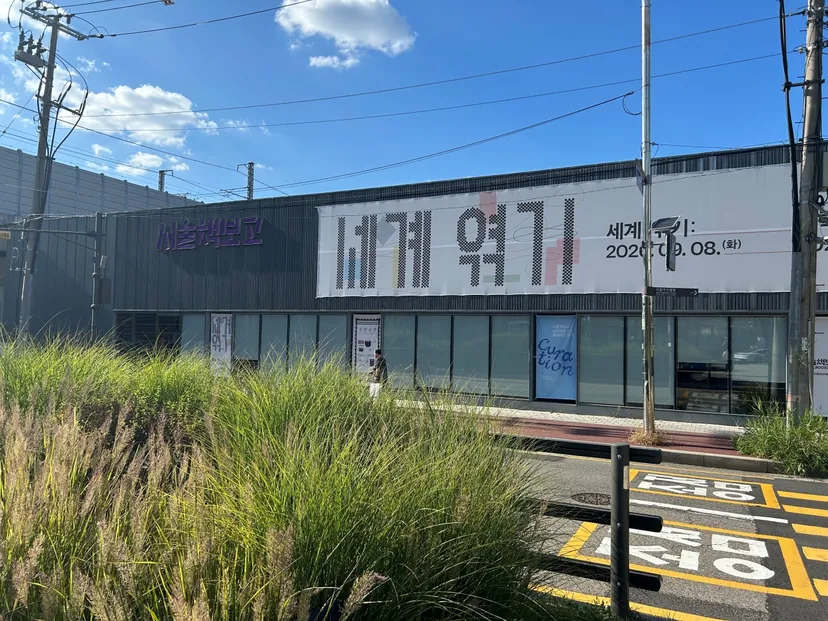
If you want to read comfortably like at the Songpa Book Museum but also crave a more curated aesthetic, Seoul Book Bogo is the perfect choice. This is a complex cultural space operated by the Seoul Metropolitan Government, created by remodeling a logistics warehouse that had been vacant for 10 years. It opened in March 2019 and operated mainly as a secondhand bookstore until 2024, but from late May 2025, it shifted into a book culture space centered around "pop-up shelves" and "curated shelves." Its unique appearance, featuring 32 shelves and arched passages, has been featured in various pop culture media, including the drama "Hotel Del Luna," making it a popular spot for the younger generation looking for dates and activities.
A key feature of this place is how it is structured to allow visitors to experience books in various ways, with pop-up shelves, experiential reading spaces, a book cafe & lounge, and transcription spaces. Reading areas are hidden here and there, and the beanbag zone where you can lie down and read is particularly popular. It is also enjoyable to browse books selected according to themes and tastes, such as publisher-specific shelves or shelves recommended by authors and influencers. The "Taste Shop," which displays cute goods and objects, is also worth a look.
Special exhibitions and book talks are also major reasons to visit. Along with a transcription area, an event is currently running where if you write a letter, you will receive it back at Christmas. On October 1, a book talk commemorating the publication of "The Unending Song" by author Choi Jin-young, who celebrates the 20th anniversary of her literary debut, will also be held. If you visit once and think you’ll want to return, be sure to add the Seoul Book Bogo KakaoTalk channel. You’ll receive a total of four discount coupons on the 1st of every month: two for book discounts and two for drink discounts at the in-house cafe, Neugut.
Although the comprehensive adult reading rate is dismal, a sliver of comfort lies in the "Text Hip" trend (a cultural trend where reading is used not just for gaining knowledge but as a method of self-branding to reveal one’s tastes and values), which seems to be keeping reading rates high among the younger generation. The reading rate for people in their 20s is 75.3%, and for those in their 30s, it’s 66.4%, both higher than other age groups. And really, what does it matter if it’s "Text Hip"? Once you start reading, you can find yourself genuinely immersed at any moment. Looking at the Songpa Book Museum and Seoul Book Bogo, the future of our reading population looks bright. As autumn, the season of reading, arrives, if you want to read to your heart’s content, these places are well worth a visit.