

[BizHanKook] In product manufacturing, design is a crucial element. In an era where technological levels have largely leveled up, design serves as a factor that amplifies a buyer’s desire to purchase. The scope of industrial design is also broadening; the importance of design is being highlighted not only in common electronic appliances but also in buildings and robotics. Furthermore, public interest in design is expanding. More people are seeking out design culture not just in simple manufacturing, but in their everyday lives as well.
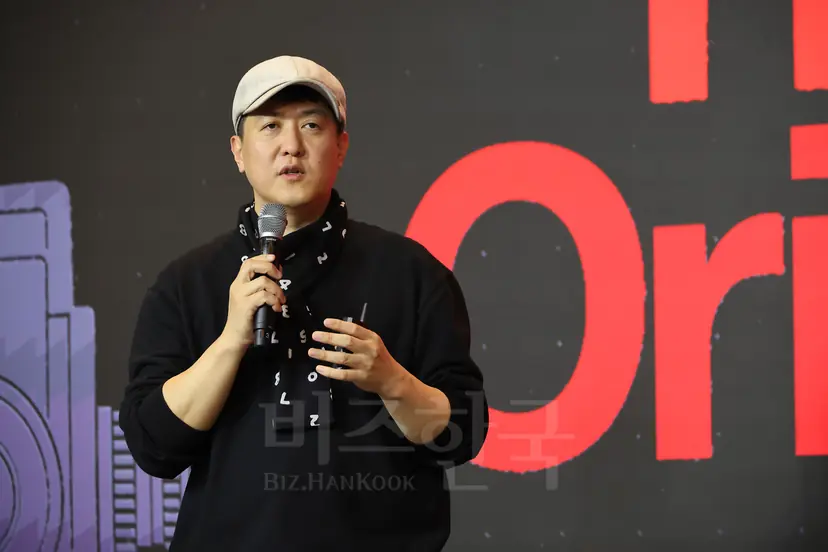
Song Bong-kyu, CEO of BKID, served as the fifth speaker at ‘BrandBiz Conference 2026’ on the 29th, presenting on the topic of ‘Industrial Design as Culture.’ CEO Song addressed the subject through two key directions: first, whether design can move in tandem with ‘Deep Tech,’ and second, whether industrial design itself can become a culture.
Designing a robot hand like a human hand
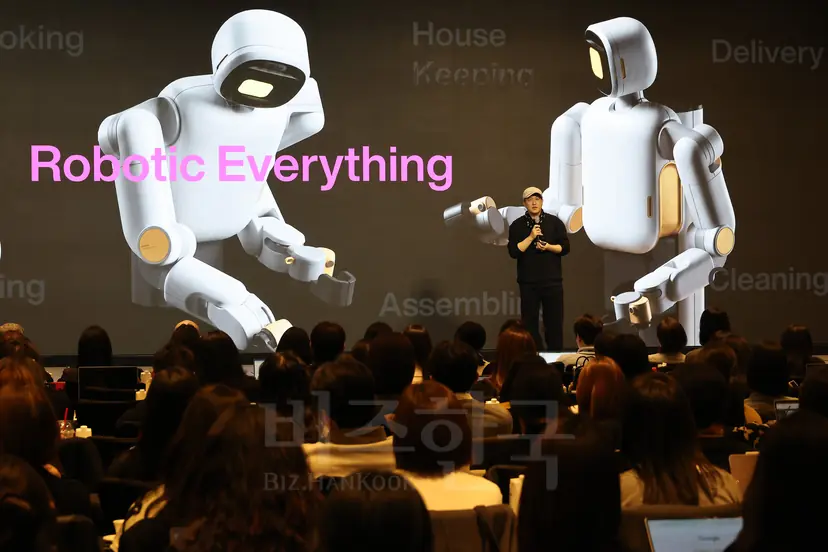
CEO Song revealed that he has recently been working on robot hand designs. The human hand is one of the most sophisticated structures in the body, consisting of 27 bones, 34 muscles, and 20 tendons. Song announced that he is currently developing a category of robots that resemble the human hand.
Making a robot hand similar to a human’s is no easy task. For instance, to pick up a flat coin or a card, fingernails are required. Depending on the situation, one might use the fingertips or the side of the hand to grasp objects. Situations where fingers need to bend backward also occur frequently. For these reasons, designing a robot hand involves a quite complex process.
Robots have become an inseparable part of humanity. CEO Song stated, “I felt it while working on various projects in Shenzhen, China; it seems we have entered an era where everything is becoming roboticized.” He added, “There is a movement to actively introduce robots in all areas, including cleaning and serving. We aim to design such robots.”
Why an industrial designer collects chairs
CEO Song also showed interest in the culturalization of industrial design. He noted, “Back in my undergraduate days, professors in other departments had an artistic temperament, whereas the industrial design department felt more like a workplace.” He continued, “I don’t know if I’m the same, but there are actually many interesting aspects when you delve deeper. I intend to create such interesting things with my colleagues.”
In the basement of the BKID office building in Yeonhui-dong, there is a space of about 40 pyeong (approx. 132 square meters). Here, exhibitions for domestic design studios are held two to three times a year. It is also used as a meeting space for foreign designers visiting Korea. CEO Song expressed his ambition for this space to become a hub for international activities.
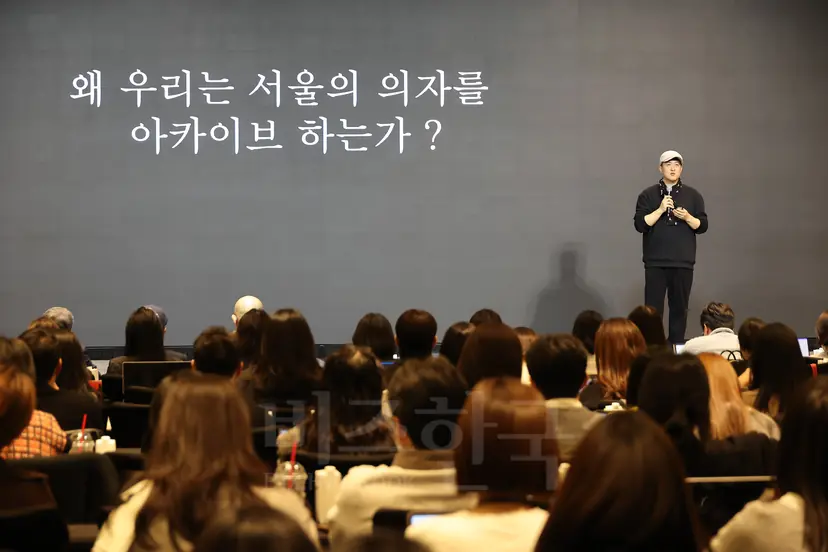
Last year, he also held the ‘Seating Seoul 2025’ exhibition at the Dongdaemun Design Plaza (DDP). It was a project to archive chairs designed in Seoul. CEO Song explained, “People ask why a designer collects chairs, but we were originally furniture designers. We decided to gather chairs that many designers have created with their own unique stories.”
What chairs represent Korea? CEO Song said the position is still ‘vacant.’ However, he cited the red plastic chairs often seen at convenience stores and the drum-style stools found at Korean barbecue restaurants as potential candidates. On October 7th, a ‘Korean Street Market’ opened in Paris, France, selling Korean street foods like tteokbokki. CEO Song’s team created the chairs for this space, reinterpreting the plastic convenience store chair.
From objects to culture
CEO Song explained that design is a participant that can engage in any field. From lifestyle elements like restaurant chairs to technical fields like robot hands, design is a vital component. At CES, the world’s largest electronics exhibition, designers are also gaining the spotlight. CEO Song stated his ambition, saying, “I want to show how wonderful a design spectrum Korea possesses.”
CEO Song concluded, “People might think of industrial designers as just those who design objects, but I think we can expand this to ‘Objects to Culture’ and do meaningful work as members of society.”