

[BizHanKook] Socar has begun diversifying its business by pursuing new ventures such as autonomous driving, long-term car subscription services, and insurance and finance. The company's vision is to go beyond traditional car-sharing and leap forward as a "full-stack mobility" enterprise that encompasses the entire lifecycle of vehicle usage. Regulations surrounding autonomous driving and the ability to secure profitability in these new businesses are considered key variables for future growth.
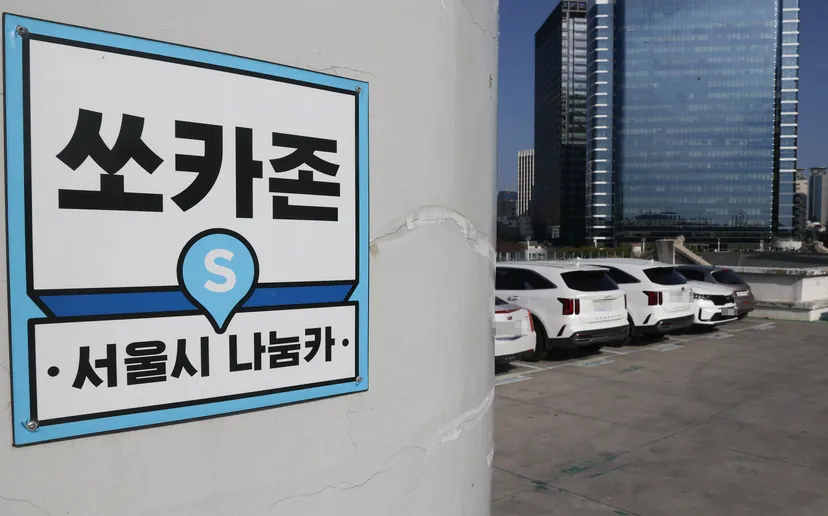
Socar held an extraordinary shareholders' meeting this past June and passed amendments to its articles of incorporation. At the time, Socar added new business objectives including △new car sales, △passenger transport services, △insurance agency and brokerage, △credit finance, △credit and collateralized loans, and △vehicle leasing. Socar stated that it added these objectives to facilitate business diversification. This is interpreted as a move to expand its business territory, which has previously focused on car-sharing, into new domains.
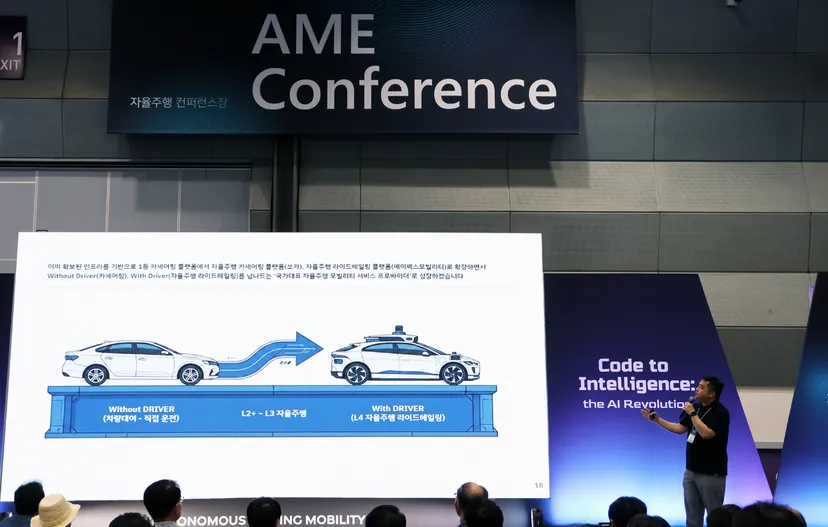
Among the new ventures, the autonomous driving sector stands out. In May of this year, Socar joined forces with Krafton to establish Apex Mobility, a company specializing in autonomous driving technology and services. Socar and Krafton each hold a 50% stake in the joint venture.
Apex Mobility has been moving aggressively since its inception. In August, Socar and Apex Mobility signed a Memorandum of Understanding (MOU) with the Korea Rent-A-Car Association and the Korea Transport Institute (KOTI) to develop the autonomous vehicle rental industry. Subsequently, on November 13, they entered into a strategic partnership with Hyundai Motor Company for "collaboration on autonomous ride-hailing vehicle platforms and autonomous driving data collection."
Apex Mobility is currently focusing on technology development and has not yet reached a stage of generating significant profit. In the long term, it is pursuing autonomous ride-hailing services, as well as fixed-route and Demand Responsive Transport (DRT) robo-bus businesses. The broader strategy is for Socar to handle autonomous-based car-sharing, while Apex Mobility handles autonomous-based ride-hailing services.
Another new business is "SoPick," a service launched by Socar in October. SoPick is a long-term car subscription service that allows users to sign up for a contract period ranging from 12 to 60 months, with the flexibility to swap vehicles without penalty after a minimum usage period of one month. A key feature is the ability to freely use a desired vehicle for exactly as long as needed. Prior to the launch of SoPick, Socar established the subsidiary "MobilBridge" in September to build an operational system.
Lee Jun-no, Head of the New Business Division at Socar, stated, "We launched a subscription product that offers the freedom of having one's own car, while leaving the convenience and joy of ownership intact and minimizing the burden." He added, "By leveraging our know-how from 15 years of car-sharing services, we plan to change the paradigm of the long-term rental market by offering new vehicle models every month at the lowest prices in the industry."
Furthermore, in June, Socar signed a strategic MOU with AXA General Insurance for "data-driven insurance product development and new business collaboration." Socar aims to become a "full-stack mobility" provider, handling everything from car-sharing to insurance and finance in one place. Given the close relationship between cars and insurance, the partnership with an insurance company is significant for Socar.
While Socar is investing heavily in these new businesses, it remains to be seen whether they will lead to actual profit generation. Socar's total liabilities increased by 20.67%, from 458.6 billion won at the end of September last year to 553.4 billion won at the end of September this year. As of the end of September this year, Socar's debt-to-equity ratio stands at 237.57%. While rising debt does not immediately signal financial distress, an increased burden of borrowing could negatively impact financial soundness in the future.
Since autonomous driving is a long-term business, immediate profits are difficult to expect. If the results of Socar's new ventures are delayed, financial costs will inevitably rise. Until the profitability of the autonomous driving business becomes visible, the core car-sharing and SoPick services must carry the weight of Socar's performance.
Moreover, the autonomous driving business faces the variable of legal regulations. Currently, autonomous driving is permitted in designated pilot zones, and in other regions, it requires authorization from the Ministry of Land, Infrastructure and Transport depending on the level of automation. Although there is growing talk in the National Assembly about easing autonomous driving regulations, no legislative changes have been finalized yet.
The Korea IR Council commented on Socar, stating, "Car-sharing demand is highly influenced by short-term variables such as seasonality, as a significant portion of usage is for leisure, recreation, and travel purposes." They further added, "It is necessary to monitor related trends as the growth of the mobility industry could slow down due to changes in the regulatory environment, rapid shifts in mobility trends, and regulations on business expansion for platform companies."