

[비즈한국] Professional management vice chairmen of SK Group have gathered at SK Hynix. Vice Chairmen Seo Jin-woo, Yoo Jeong-joon, and Lee Hyung-hee, who have previously overseen business operations in China, the U.S., and external relations, recently transferred their affiliations from SK Inc. to SK Hynix. Out of the four professional management vice chairmen in SK Group (excluding the owner family), three have now been brought together in one company, with Jang Dong-hyun, Vice Chairman of SK Ecoplant, being the only one remaining elsewhere.
They are not merely changing their affiliations. Since August, they have been conducting in-depth, one-on-one interviews with approximately 250 individuals, including the SK Hynix executive staff (excluding CEO Kwak Noh-jung and outside directors) and division-level managers. They are reportedly listening to opinions regarding on-site business issues, difficulties, organizational structure, and leadership. SK Group explained that this is intended to support the establishment of SK Hynix's management direction and vision through executives with diverse experiences.
As the group's top-tier professional managers move to SK Hynix all at once ahead of the year-end regular reshuffle and next year's business planning, the stature of SK Hynix within the group is drawing renewed attention. Riding the wave of the AI boom, SK Hynix is overwhelming other group affiliates in both performance and corporate value, and it appears that SK's workforce and resources are being reorganized around semiconductors.

Three Experts in China, the U.S., and External Relations All Move to Hynix
The three vice chairmen who moved this time are not figures who grew up on the semiconductor production floor. Rather, they share the commonality of being executives with extensive experience in SK Group's global business, strategy, and external cooperation.
Vice Chairman Seo Jin-woo previously served as the CEO of SK Telecom and SK Planet, and has overseen the group's China business. Vice Chairman Yoo Jeong-joon long served as the CEO of SK E&S and also led the group's U.S. business after serving as CEO of SK On. Vice Chairman Lee Hyung-hee served as Head of MNO and Business at SK Telecom and CEO of SK Broadband, before taking on the roles of SV Committee Chair and Communication Committee Chair at the SUPEX Council. He was promoted to vice chairman at the end of last year and joined the SK Inc. vice-chairman ranks.
In particular, Vice Chairmen Seo and Yoo handled SK's key overseas markets of China and North America, respectively, while Vice Chairman Lee led the group's external relations and communication. As SK Hynix goes beyond being a simple memory manufacturer to sign long-term supply contracts with global AI companies and enter the U.S. capital market, the roles required are expanding from production and technology to global business and external networks.
In fact, SK Hynix listed its American Depositary Receipts (ADRs) on the U.S. Nasdaq last July. The funds secured by issuing 17.79 million new shares amount to 39.8905 trillion won. SK Hynix plans to use these funds for production capacity expansion and advanced equipment investment, such as the Yongin Phase 1 Fab, Cheongju P&T7, and extreme ultraviolet (EUV) equipment. The listing ceremony was attended by SK Group Chairman Chey Tae-won, SK Square Senior Vice Chairman Chey Jae-won, and SK Hynix CEO Kwak Noh-jung.
At the time of its second-quarter earnings announcement, SK Hynix stated that it had completed negotiations for long-term supply agreements (LTA) with about 10 customers, including key accounts. This explains the background behind the move of the vice chairmen—who have experience in China, the U.S., and external cooperation—to SK Hynix at a time when competition over AI memory is expanding beyond simple product development to include securing big-tech customers, global investment, and supply chain issues.
Earned 47 Trillion Won Last Year, but 98 Trillion Won in the First Half of This Year Alone
The most clear indicator of SK Hynix's status within the group is its performance. Last year, SK Hynix recorded revenue of 97.1467 trillion won and an operating profit of 47.2063 trillion won. Revenue increased by 46.8% and operating profit by 101.2% year-on-year, marking its highest-ever performance. Last year's annual operating profit even surpassed the total operating profit of Samsung Electronics, which was 43.6011 trillion won.
The pace of growth has accelerated further this year. SK Hynix's operating profit for the first quarter of this year was 37.6103 trillion won, and for the second quarter, it was 60.5426 trillion won. It earned 98.1529 trillion won in the first half alone. This is more than double the operating profit achieved in the entire previous year, recorded in just six months. Revenue for the first half also reached 131.895 trillion won, surpassing the 100 trillion won mark for a half-year period for the first time.
The gap is even more apparent when compared to other major affiliates. SK Innovation posted operating profits of 2.1622 trillion won and 3.4873 trillion won in the first and second quarters of this year, respectively, totaling about 5.65 trillion won for the first half. SK Telecom's operating profit for the first half was 1.1036 trillion won.
While there are limitations to a direct comparison due to different business structures, it is clear how significant a proportion SK Hynix holds in the group's current profit generation.
Financial capacity has also changed from the past. SK Hynix's cash and cash equivalents at the end of the second quarter stood at 88 trillion won, an increase of 33.6 trillion won from the first quarter. Total borrowings decreased to 18.6 trillion won, bringing net cash to 69.4 trillion won. The company has transformed from an affiliate that relied on group support for investments into a company with sufficient cash-generating power to handle investments worth tens of trillions of won on its own.
Out of SK Square's 261 Trillion Won NAV, Hynix Stake Alone Accounts for 257 Trillion Won
The rise in SK Hynix's corporate value directly affects the group's governance structure. SK Square is the largest shareholder, holding approximately 20% of SK Hynix. In 2021, SK Telecom underwent a spin-off into the telecommunications company SK Telecom and the semiconductor/ICT investment company SK Square, and in the process, the stake in SK Hynix was transferred to SK Square.
Currently, the net asset value (NAV) of SK Square is virtually dependent on the value of its stake in SK Hynix. As of September 16, the NAV disclosed by SK Square totals 261.8 trillion won. Of this, the value of the SK Hynix stake alone is 256.99 trillion won. This accounts for approximately 98.2% of the total NAV. The scale is fundamentally different from other investment assets such as Tmap Mobility (1.46 trillion won), SK Shieldus (1.02 trillion won), and SK Planet (610 billion won).
This is also reflected in SK Square's performance. SK Square's operating profit for the second quarter of this year was 19.2354 trillion won, more than 13 times higher than the previous year's 1.4011 trillion won. The operating profit for the first half was 27.5137 trillion won. SK Square cited the strong performance of SK Hynix, reflected through the equity method, as the biggest reason for the sharp rise in earnings. In essence, one company, SK Hynix, now defines the majority of the asset value of the investment firm SK Square.
Hynix, Acquired for 3 Trillion Won, Becomes the Group's Centerpiece in 14 Years
The relationship between SK Group and Hynix dates back 14 years. In February 2012, SK Telecom acquired 146.1 million shares, combining old and new shares of Hynix held by creditors, for 3.3747 trillion won. The stake was 21.05% at the time. Hynix was a company that had been looking for a new owner for a long time after entering joint management by creditors in 2001.
At the time, SK Telecom even borrowed 2.5 trillion won through a syndicated loan via Kookmin Bank and Woori Bank to acquire Hynix. For SK Group, it was an investment that involved significant financial burden. At the time of the acquisition, SK presented a blueprint to create a new ICT growth system by combining telecommunications and semiconductors. In March of the same year, the company name was changed to SK Hynix.
Fourteen years later, the relationship has changed significantly. Hynix, which was incorporated as a new growth engine for SK Telecom, has now risen to become the core growth axis for the entire group. In 2021, SK Telecom split into the telecommunications company SK Telecom and the semiconductor/ICT investment company SK Square, and the SK Hynix stake was moved to SK Square. Since then, riding the AI semiconductor boom, SK Hynix has become the company generating overwhelming profit among all group affiliates.
The recent movement of the vice-chairman group is an extension of this change. It is unusual to appoint three professional management vice chairmen to SK Hynix simultaneously. SK Group explained that this measure was taken considering the importance of the semiconductor industry and the uncertainty of global management. It is reported that the three vice chairmen will assess the organization and business status through interviews with Hynix executives and review mid-to-long-term management tasks.
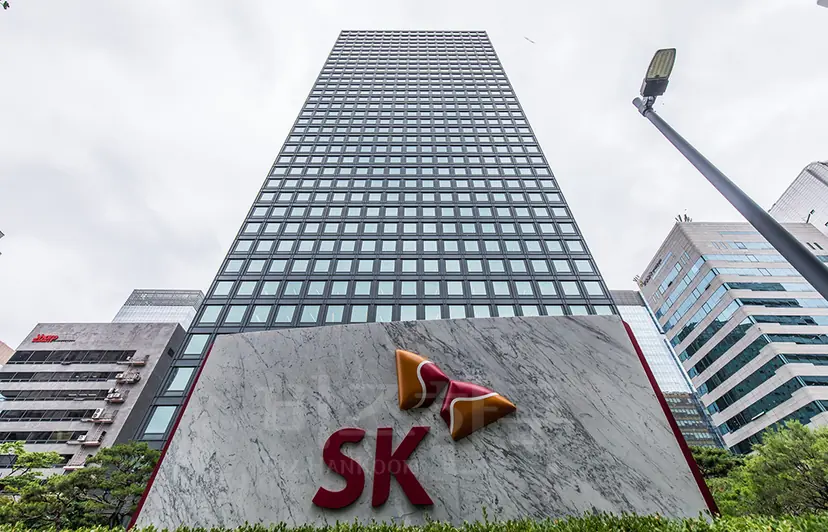
Plans to move SK Hynix's Seoul-based organization to the SK Seorin Building in Jongno-gu, Seoul, where the group headquarters is located, are also being discussed within the group. Currently, SK Hynix has some organizations, such as global marketing, at the Mirae Asset Center 1 in Jung-gu, Seoul.