

[비즈한국] SK Hynix management and labor are continuing negotiations for this year’s wage and collective agreement without narrowing their differences on key issues. Following the fourth plenary session held on the 30th of last month, where the labor union reaffirmed its refusal to accept management's proposals for "wage adjustments during deficits" and "paying part of performance bonuses in stocks," no concrete details have been disclosed since the fifth round of negotiations held on the 4th. With both sides exercising extreme caution in their public statements due to the sensitivity of the negotiation phase, attention is now focused on the future outcome of these talks.
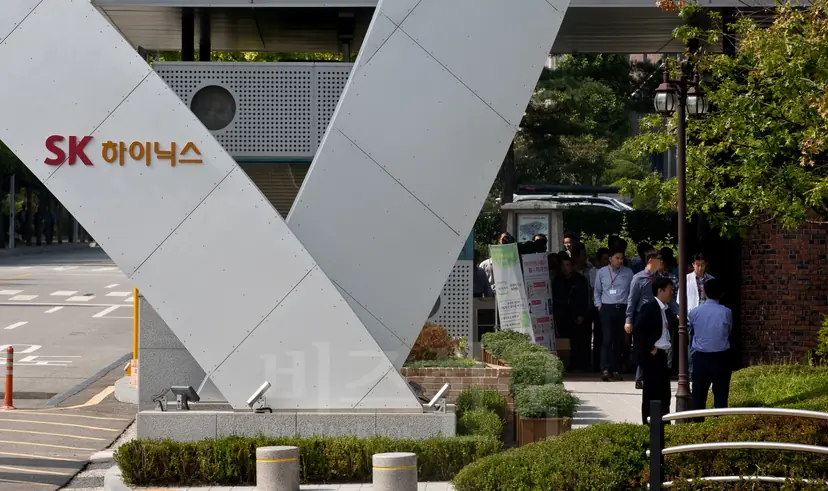
On the 4th, SK Hynix management and labor held their fifth plenary session. However, specific details regarding the results of the negotiations were not released.
The three labor unions involved—the SK Hynix Technical and Administrative Staff Branch of the Korean Metal Workers' Union, and the SK Hynix Cheongju and Icheon unions under the Federation of Korean Trade Unions—are all refraining from external communication and remaining silent on the negotiation progress. The prevailing atmosphere is one of caution against unnecessary interpretations or the escalation of conflict while negotiations are ongoing.
In the previous fourth plenary session, the methods for paying performance bonuses and the restructuring of the wage system emerged as the primary points of contention.
According to minutes released by the union, the company maintained its proposal to pay more than half of the performance bonuses in company stock, with restrictions on selling them for a certain period. Additionally, it proposed a restructuring of the wage system that would allow for temporary wage adjustments in the event of a deficit.
It is understood that the company's position is based on the need to establish a long-term, sustainable compensation system that accounts for the volatility of the memory semiconductor industry. Notably, SK Hynix recorded an annual operating loss of 7.7 trillion KRW in 2023 during the memory market downturn.
Conversely, the union has strongly opposed the plans, arguing that wage adjustments during deficits could effectively lead to pay cuts and that paying performance bonuses in stock undermines the purpose of the agreement reached with much difficulty last year. The union has indicated that it may consider collective action if the company does not present a revised proposal.
Given this atmosphere, both sides are expected to maintain a cautious stance for the time being.
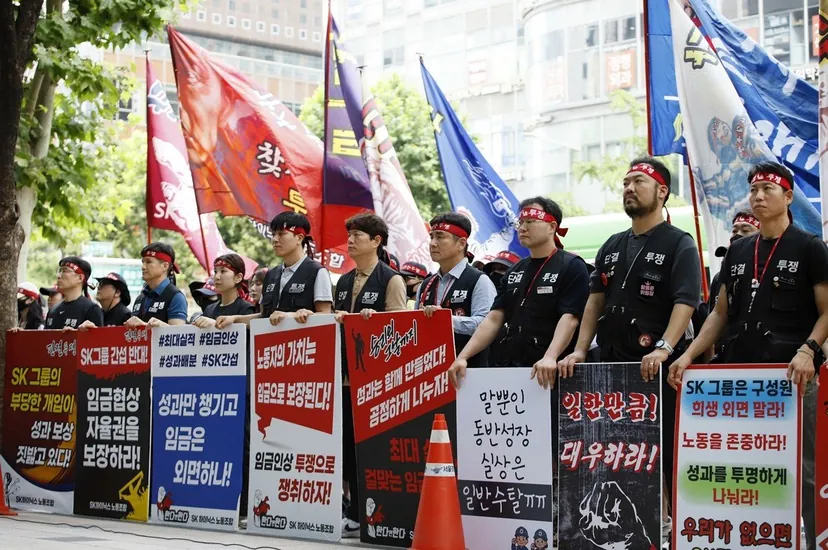
These negotiations are also linked to the continuity of the performance bonus system established last year. In the 2025 wage and collective agreement, labor and management agreed to abolish the ceiling on Profit Sharing (PS), which is funded by 10% of operating profit, and to maintain this for 10 years. The payment structure consists of 80% in cash for the current year, with the remaining 20% deferred over two years.
However, with the company proposing a new method this year to pay part of the performance bonus in stocks, the continuity of that agreement has returned to the negotiation table.
Market observers suggest that the outcome of these negotiations could have a significant impact beyond SK Hynix, influencing discussions on performance compensation systems at other domestic companies. Since similar demands have surfaced at other firms following the introduction of profit-linked bonus systems last year, analysts suggest that if an agreement involving stock payments is reached, the practice could spread across the industry.
For companies, paying part of bonuses in stock has the advantage of reducing the burden of large-scale cash outflows and securing funds for long-term investment. On the other hand, for employees, the drawbacks include exposure to stock price volatility risks and potential limitations on the practical utility of bonuses if the stock cannot be sold for a set period.
Meanwhile, there is ongoing controversy over whether profit-linked performance bonuses can be subject to labor disputes following the amendment of the Trade Union and Labor Relations Adjustment Act (the "Yellow Envelope Act") implemented in March.
At a seminar on "Operating Profit N% Performance Bonuses" and the Yellow Envelope Act held at the National Assembly Member Office Building on the 4th, Professor Park Ji-soon of Korea University Law School noted, "The Supreme Court has clarified that management performance bonuses are not wages for labor performance, but rather a post-hoc distribution of corporate profits."
He added, "Profit-linked performance bonuses differ in nature from welfare, which is supplementary and complementary to wages in terms of both calculation methods and payment scale. While it is possible for a company to operate them through autonomous agreements with the union, extending them to the scope of labor disputes is a separate matter entirely."