

[비즈한국] In Hwanghak-dong, Jung-gu, Seoul, a design innovation project is underway at Sinjungang Market with the goal of becoming the "second Gwangjang Market." While many merchants agree on the need to improve the aging arcade and facilities, they are concerned about disruptions to their business during the construction process. There are also voices calling for the parking problem to be addressed simultaneously.
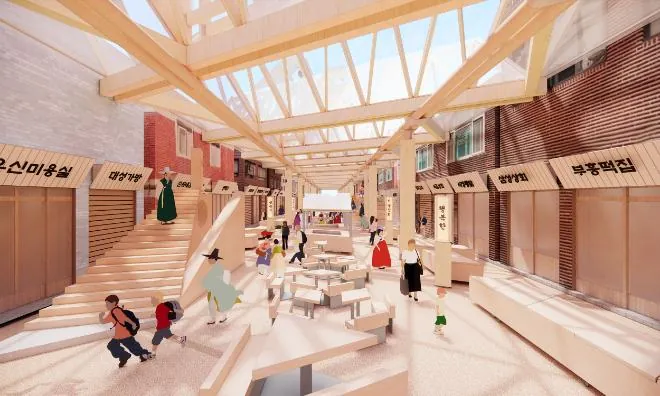
The Seoul Metropolitan Government is promoting the "Design Innovation Traditional Market" project to enhance market competitiveness through customized designs that reflect the locality and history of traditional markets. Seoul plans to invest approximately 15.4 billion won to reinforce the old arcade and reorganize the entrances to 16 alleys within the market, as well as pedestrian paths. The arcade will be improved with a wooden structure and enhanced natural lighting to create a brighter and more open space than it is now.
An "open roof" in the form of an entrance gate will be installed in the 16 alleys connected to the market. It is a structure designed to make it easier for outside pedestrians to find the alleys and enter the market. A tiered space where visitors and merchants can sit and rest will also be provided. Construction is scheduled to begin this September and be completed in June 2027, with the Seoul Metropolitan Government handling the design and investment review, while Jung-gu manages the actual construction.
When visited around 2:00 PM on the 12th, Sinjungang Market had a relatively quiet atmosphere. Visitors walked along the central aisle looking around the market, while merchants prepared for afternoon business or took short breaks. A design innovation project information board installed in front of the central restroom in the market was also noticeable.
Many merchants met at Sinjungang Market agreed on the necessity of the design innovation project, noting that it could improve the aging market. A person named A, who runs a vegetable shop, said, "I welcome the fact that it will improve the overall aging market." Owner B of a nearby restaurant, who has been in business for 40 years, also said, "I have high expectations, thinking that if the project goes well, many young people will come to visit."
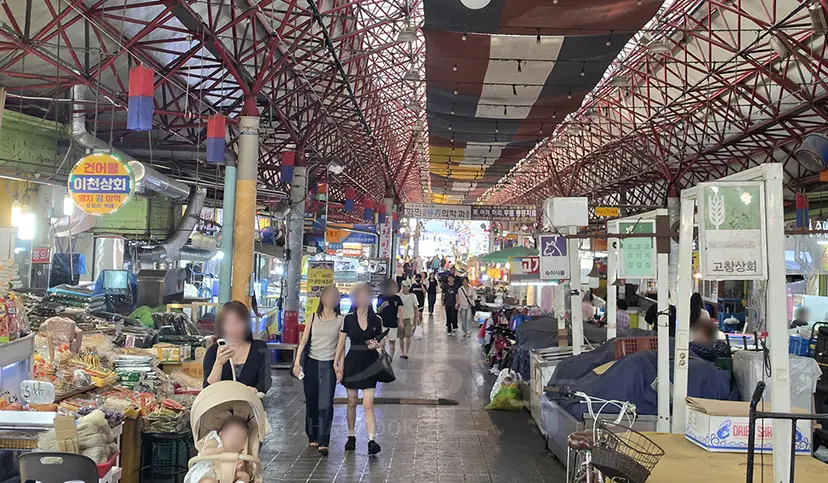
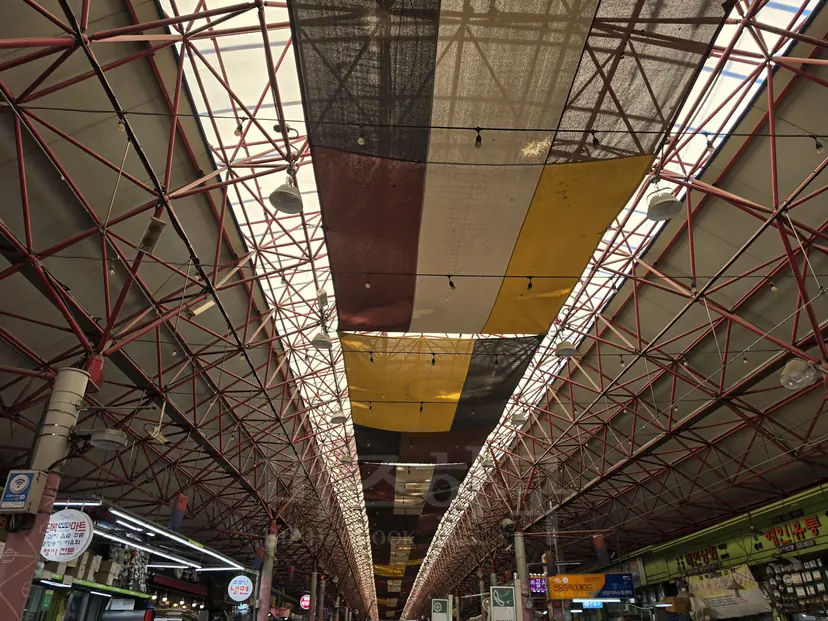
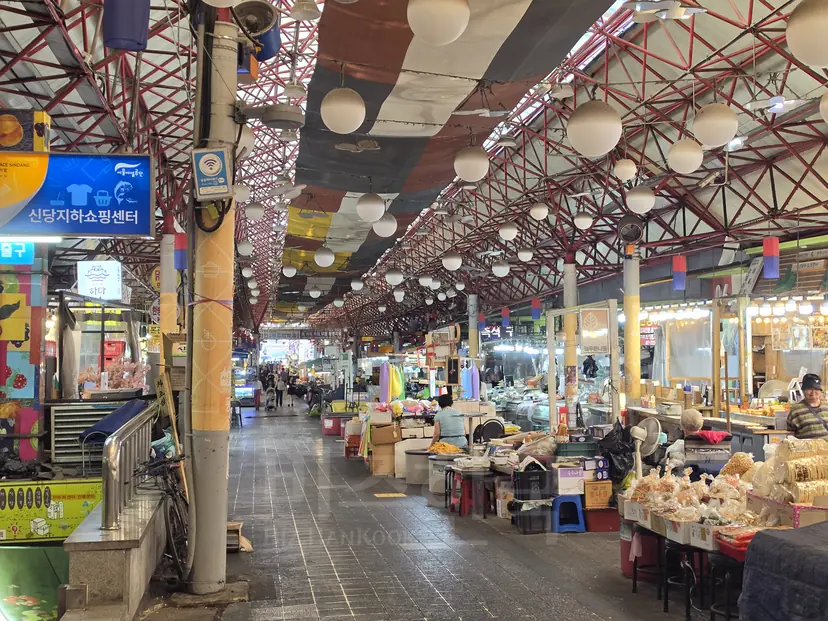
A tour of the market that day revealed signs of aging in many places. The arcade covering the market ceiling was yellowed and dusty, and dust had accumulated on the iron structures. Some merchants said they suffer from inconveniences such as water leaking from the ceiling when it rains.
Although the need for facility improvements was confirmed on-site, construction is another burden for the merchants. Concerns about a decrease in customers or the inability to operate during the construction period continued. A grocery store merchant who has been doing business in the market for 50 years said, "Improving the facilities is necessary, but I am worried that the construction will disrupt operations. I hope it ends as quickly as possible." A business owner selling traditional Korean sweets nearby added, "September is Chuseok, and I'm worried that if construction starts, it will affect my business."
In particular, merchants who have experienced market environment improvement construction in the past were more worried. In 2004, the Seoul Metropolitan Government carried out an environmental improvement project at Seoul Jungang Market to remove old tents and install an arcade and lighting about 274 meters long. A mart merchant expressed concern, saying, "It was difficult to do business properly during the construction period back then as well," adding, "Business isn't exactly thriving right now, so if we add construction to the mix, will customers even come?"
Street vendors doing business in the middle of the construction section sighed even more deeply. A street vendor who has been working in the center of the market for 30 years said, "As long as I do business in the middle, I have to stop working entirely if construction happens," adding, "Visitors who leave for other places during construction do not return." Another merchant selling twisted donuts (kkwabaegi) on the central aisle also worried, "Even if they divide the area and construct in sections, won't there be a lot of dust? Will customers still come?"
To reduce operational disruptions, Jung-gu is considering a plan to divide the construction zone into at least four areas and proceed sequentially. The goal is to minimize business closures by constructing in phases rather than all at once. They are also consulting with the merchant association on a plan to provide separate detours so that delivery vehicles and construction vehicles do not overlap.
A Jung-gu official said, "We are continuously holding council meetings with the merchant association to discuss parts that merchants are worried about or want," adding, "Once a construction company is decided, we plan to further consult on construction methods and continue to provide guidance."
The actual start date is fluid. The Seoul Metropolitan Government aims to start construction in September, but the investment review has not yet been completed. A Jung-gu official explained, "Administrative procedures are proceeding as planned, but the subsequent schedule is fluid because the investment review has not been finished."
Meanwhile, voices were also raised that parking issues should be resolved before the design innovation project for market revitalization. Owner B, who has run a restaurant in the market for generations, asked, "Before increasing visitors, we need to solve the parking problem first," adding, "Who would come here if they came to enjoy the market but had nowhere to park and had to pay a fine for parking for a moment on the side?"
To alleviate the parking shortage in Sinjungang Market and the 'Hip-Dang-Dong' area, Jung-gu is currently constructing an expansion of the nearby Sindang Station public parking lot from the existing 26 spaces to 123 spaces. A Jung-gu official stated, "Once the parking lot is expanded, the parking problem around the market is expected to be resolved to some extent," but added, "It is realistically difficult to secure a separate site and create a new parking lot."