

[비즈한국] Sevenbrau Beer, which filed for rehabilitation last year, is pivoting to self-rehabilitation instead of a company sale. Although Sevenbrau pursued an M&A prior to the approval of its rehabilitation plan and sought out potential buyers, it struggled to secure an acquirer and ultimately shifted its focus to a standalone recovery. With a stakeholders' meeting scheduled for next month, attention is focused on whether Sevenbrau can generate the funds needed to repay its debts and achieve management normalization on its own.
M&A Halted After a Year… Sevenbrau Pursues Self-Rehabilitation
Sevenbrau Beer, which is undergoing corporate rehabilitation, will proceed with hearings and voting on its rehabilitation plan next month. The Seoul Rehabilitation Court has set the date for the stakeholders' meeting to deliberate and vote on Sevenbrau’s rehabilitation plan for November 17.
The stakeholders' meeting will involve a review of the rehabilitation plan and a vote by creditors and other interested parties. If the rehabilitation plan meets the legal requirements for approval and receives court confirmation, Sevenbrau will proceed with debt repayment and management normalization according to the approved plan. Conversely, if the plan is rejected, there is a possibility that the rehabilitation procedure could be terminated.
Previously, Sevenbrau sought management normalization through an M&A before the plan’s approval, but after about a year, it halted this process and shifted to a going-concern rehabilitation procedure. Instead of selling the company, it intends to maintain the existing corporate entity while focusing on debt adjustment and management normalization.
Sevenbrau filed for corporate rehabilitation in May of last year and entered the process in July. Starting in October, it sought external buyers to conduct an M&A prior to the approval of the rehabilitation plan. The "pre-approval M&A" is a method of selling the company before the court approves the rehabilitation plan, with Sevenbrau intending to use the proceeds from the sale to repay its debts. However, as it faced difficulties in finding a buyer, the originally planned sale process saw little progress.
A Sevenbrau official said, "During the pre-approval M&A process, we held multi-faceted discussions with potential investors, but during the delay, our sales improved. Consequently, the company decided to switch to a going-concern rehabilitation procedure and pursue self-management normalization and recovery."
The official added, "We are faithfully fulfilling the rehabilitation procedures in accordance with the steps set by the court. We are in continuous communication with major creditors and are doing our best to achieve a smooth outcome."
The Key to Self-Rehabilitation is Funding… Will the 2.3 Billion Won Win-Win Fund Be a Variable?
As Sevenbrau pivots to self-rehabilitation, the challenge of how to secure the funds necessary for debt repayment has emerged as a core task. Since the company must implement its rehabilitation plan without financial support from an external acquirer, securing stable financial resources has become critical.
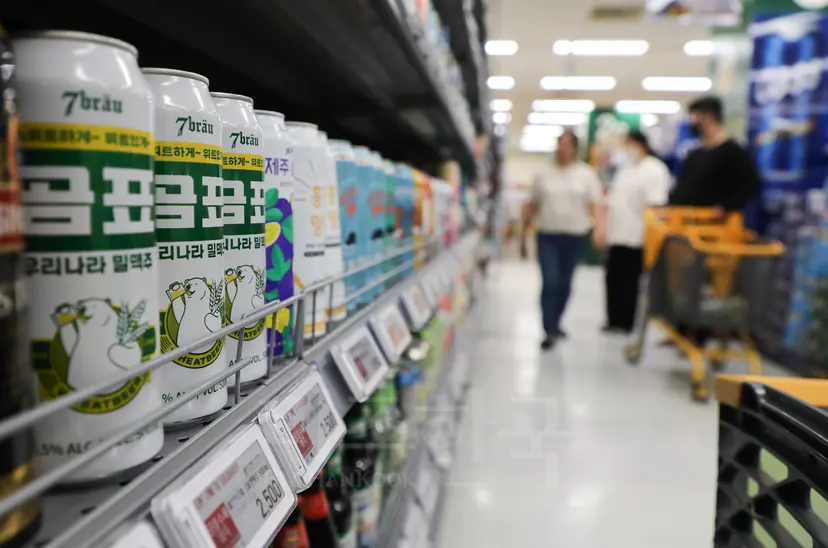
Sevenbrau’s management situation has been difficult. Last year's revenue was 6.8 billion won, a 20% decrease from the previous year (8.5 billion won), and operating losses reached 5.4 billion won. Compared to the 32.7 billion won in revenue achieved in 2022 when "Gompyo Wheat Beer" was popular, it is only one-fifth of that level. As of the end of last year, the company’s total assets were 19.4 billion won, while total liabilities were 30.5 billion won, leaving it in a state of complete capital impairment.
The craft beer market also continues to stagnate. Once popular primarily in convenience stores, the growth of craft beer has stalled due to changing consumer tastes and intensified competition. The industry as a whole is facing deepened management difficulties, with some craft beer companies entering rehabilitation or bankruptcy procedures.
However, Sevenbrau maintains that its sales and profitability have recently been improving. A Sevenbrau official stated, "We are overcoming difficulties by strengthening the branding of existing products, launching new products, expanding exports, and improving our cost structure. We are seeing a gradual trend of sales recovery and improved operating results."
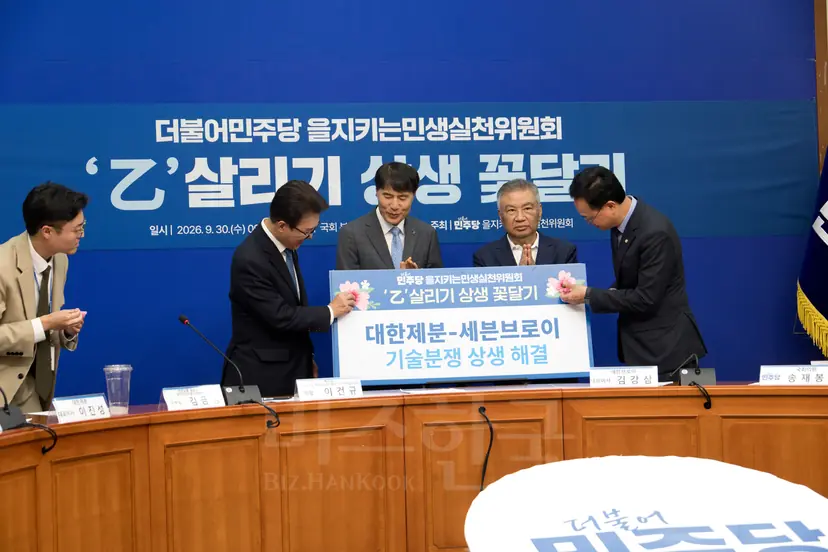
The dispute with Daehan Flour Mills, which had exacerbated Sevenbrau's management crisis, was also resolved this year. Sevenbrau gained attention for the success of "Gompyo Wheat Beer," launched in collaboration with Daehan Flour Mills in 2020, but revenue plummeted after the collaboration ended in 2023. The termination process triggered a conflict between the two sides, leading to legal disputes.
This April, the two companies agreed to withdraw the complaints and lawsuits they had filed against each other through mediation by the Ministry of SMEs and Startups' Technology Dispute Mediation and Arbitration Committee, and further agreed that Daehan Flour Mills would provide a 2.3 billion won win-win cooperation fund.
It is hoped that this fund will help in the normalization of Sevenbrau's management. An official from the Ministry of SMEs and Startups explained, "Daehan Flour Mills is providing this amount in a lump sum, so Sevenbrau can use it in full or in portions. It can cover a significant portion of the costs required for general corporate operations, such as manufacturing innovation, market exploration, product development, and management support."
However, some point out that the usage plan for the fund is crucial if the financial support is to lead to genuine management normalization. Given that Sevenbrau carries accumulated deficits and financial burdens, analysts suggest that the company must use this as a stepping stone for stable revenue and improved profitability, rather than just resolving temporary liquidity issues.
The specific usage plan for the win-win cooperation fund has not been disclosed. Sevenbrau did not reveal the plans for the 2.3 billion won, citing external agreements and confidentiality.