

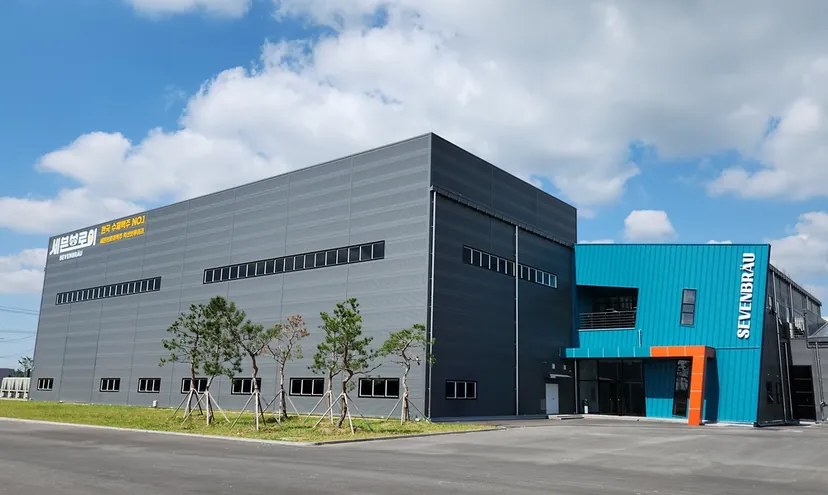
[BizHanKook] Sevenbrau Beer, a craft beer company that entered corporate rehabilitation procedures due to financial difficulties, has secured a foothold for a rebound. Having abandoned the sale of the company in favor of independent rehabilitation, the firm received final court approval for its rehabilitation plan after gaining the consent of creditors. In particular, as the company has pledged to repay 100% of its debt principal to minimize losses for creditors, securing a stable profit base and preparing the necessary funds for repayment have emerged as critical tasks.
Independent rehabilitation instead of a sale… Overcoming a hurdle with plan approval
The Seoul Rehabilitation Court held a meeting of interested parties on the 17th for the review and resolution of Sevenbrau Beer’s rehabilitation plan. The court gave its final approval after the plan was passed with the consent of the creditors. By receiving approval for the rehabilitation plan about three weeks ahead of the court-mandated deadline of December 11, Sevenbrau Beer has successfully cleared a major hurdle toward independent recovery.
According to the court-approved plan, Sevenbrau Beer's acknowledged debt totals 27.6 billion KRW. This is composed of 14.6 billion KRW in secured rehabilitation claims, 8.9 billion KRW in general rehabilitation claims, and 4.1 billion KRW in taxes and other claims. Sevenbrau Beer plans to repay the full principal of secured claims and interest accrued before the start of the rehabilitation process by 2028, and to repay the principal and pre-process interest of general rehabilitation claims in installments over seven years, from 2028 to 2034.
What stands out is that Sevenbrau Beer has prepared a rehabilitation plan to repay the full principal rather than seeking debt forgiveness. In general corporate rehabilitation processes, methods such as partial debt write-offs or debt-for-equity swaps are often used to reduce financial burdens.
The investigation report submitted to the court also concluded that continuing business operations was economically more advantageous than liquidating the company. Sevenbrau Beer's going-concern value was estimated at approximately 17.2 billion KRW, which is 1.4 billion KRW higher than its liquidation value of approximately 15.8 billion KRW.
Sevenbrau Beer stated, “Even at the time of applying for rehabilitation, our assets exceeded our liabilities, but we were forced to file due to unavoidable external circumstances. The investigation report also concluded that a 100% repayment of the debt principal was feasible,” adding, “We are aware that full repayment is not an easy decision, but we have done our best to implement the initially established repayment plan out of consideration for the difficulties faced by our creditors.”
Sevenbrau Beer filed for the commencement of rehabilitation procedures with the Seoul Rehabilitation Court on May 28 of last year, and the court decided to initiate the proceedings on June 12 of the same year. While the company subsequently pursued management normalization by attracting outside investors, it announced through a disclosure on October 2 of this year that it had shifted its strategy to independent rehabilitation instead of selling the company.
With the approval of the rehabilitation plan, Sevenbrau Beer is expected to focus on business recovery and improving its financial structure. Given the commitment to full repayment of the principal, securing a stable revenue base will be the key to future management normalization.
A Sevenbrau Beer official said, “We plan to introduce differentiated products through collaborations with major domestic distributors and re-launch non-alcoholic beer, which had been suspended since the start of the rehabilitation process,” adding, “Based on our advanced facilities and accumulated technical expertise, we will expand our collaboration products and actively pursue domestic and international OEM/ODM businesses.”
From the success myth of ‘Gompyo Wheat Beer’ to financial crisis… Sevenbrau aims for a comeback
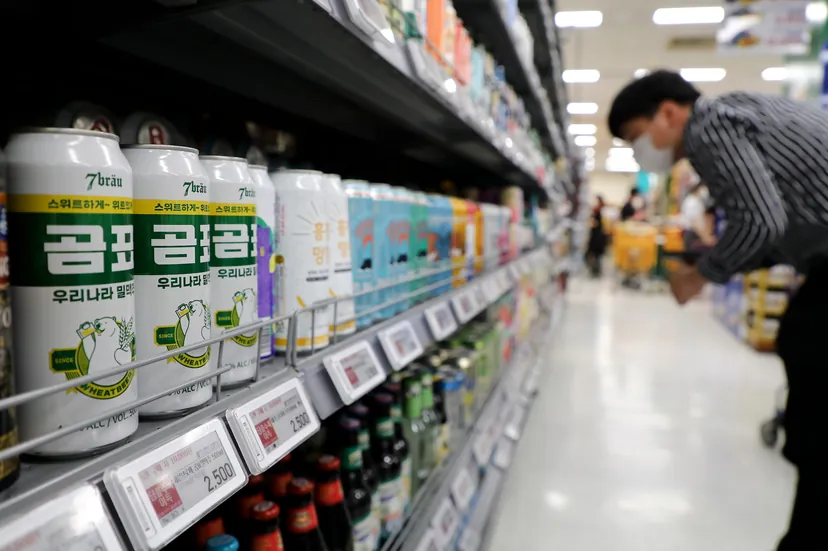
Sevenbrau Beer was one of the most notable players in the domestic craft beer market. The company grew rapidly as ‘Gompyo Wheat Beer,’ launched in partnership with Daehan Flour Mills in 2020, gained immense popularity. Sales expanded, primarily in convenience stores, and the beer reached a milestone of over 50 million cumulative cans sold.
However, the growth was short-lived. Following the end of the partnership with Daehan Flour Mills in 2023, the company could no longer produce Gompyo Wheat Beer, and the two sides engaged in legal disputes over trademark rights and manufacturing technology. Although Sevenbrau Beer continued business with its own brands, a turnaround in performance was not easy.
Sevenbrau Beer's revenue, which reached 32.7 billion KRW in 2022, plummeted to 8.5 billion KRW in 2024 and 6.8 billion KRW last year. Operating profit also turned into a deficit in 2023 after reaching 4.9 billion KRW in 2022, and the company recorded an operating loss of 5.4 billion KRW last year. Unable to withstand the management crisis, Sevenbrau Beer eventually filed for corporate rehabilitation in May last year.
Things began to change slightly this year. The long-standing conflict with Daehan Flour Mills was resolved last April. Through mediation by the Ministry of SMEs and Startups, both sides agreed to drop the lawsuits and complaints they had filed against each other. Daehan Flour Mills also contributed 2.3 billion KRW to a win-win cooperation fund to support Sevenbrau Beer's management stabilization, technology development, and market exploration.
Changes are also appearing on the business front. Sevenbrau Beer is expanding its product line beyond traditional craft beer to include items like highballs and is broadening its sales network through collaborations with distributors. The company also evaluates its revenue trend positively.
A Sevenbrau Beer official explained, “Following the resolution of the dispute, revenue began to recover gradually with the cooperation of major convenience stores and distributors. In particular, the ‘Sunyang Somaek’ released in collaboration with Sunyang Soju has been well-received in the market, accelerating the pace of revenue improvement. Since the second quarter of this year, a performance recovery trend has begun in earnest.”
Sevenbrau Beer's attempt at a comeback is noteworthy given that the entire domestic craft beer industry is struggling. Amazing Brewing Company, which once led the craft beer market, was declared bankrupt in April, and the Busan-based craft beer maker Wild Wave also went bankrupt in June. Y Brewery, which operates the craft beer franchise Bronx, also filed for corporate rehabilitation earlier this year.
The Sevenbrau Beer official stated, “We are grateful to the court for approving the rehabilitation plan and to the creditors who trusted and waited for us. To repay the trust placed in us, we will faithfully and responsibly implement the management normalization plan we have prepared.”