

[비즈한국] Although the Seoul Metropolitan Government has unveiled a blueprint for the complex development of the Nambu Terminal area, it has been confirmed that NT Industry, the terminal operator, inquired about the procedure for returning its operating license in July, citing financial difficulties. As the number of intercity and express bus passengers and routes continues to decline, leading to worsening business conditions across the industry, the operational burden on Nambu Terminal is also increasing.
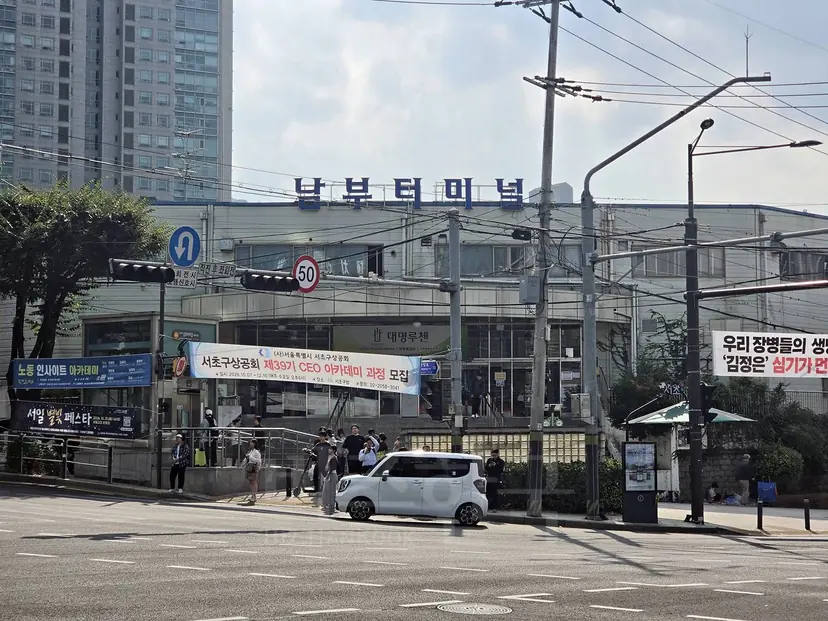
The intercity and express bus industry is struggling with the combination of declining passenger numbers and route cuts. According to the Ministry of Land, Infrastructure and Transport, the average daily number of intercity bus passengers dropped by half from 540,000 in 2019 to 270,000 last year. The number of routes decreased by 4.7% from 3,335 to 3,177. During the same period, the average daily number of express bus passengers also fell by 30% from 83,000 to 58,000, while routes were reduced by 21% from 208 to 164.
COVID-19 had a significant impact on the decrease in intercity and express bus passengers. As travel volume plummeted due to social distancing and other measures, the number of bus passengers dropped sharply, and the industry reduced the frequency of operations and routes in line with the decline in demand. Although social distancing was later lifted, demand has not recovered to previous levels. As the reduced frequency and routes were not sufficiently restored, passenger inconvenience persisted, creating a vicious cycle where this led to further passenger declines and additional route cuts.
The expansion of high-speed railways such as KTX and SRT also impacted the bus industry. As the high-speed rail network expanded to major cities, the role of rail in long-distance travel grew, putting intercity and express buses at a disadvantage in terms of travel time and convenience. Recently, price competitiveness has also weakened. Following the integrated operation of KTX and SRT in September, existing KTX fares were lowered by an average of 10% and seat supply was increased, whereas the upper limit for intercity and express bus fares was raised by 9% starting the 1st of this month.
The decline in passengers and routes is also having a negative impact on terminal operations. Since terminals generate revenue based on foot traffic through ticket sales and store leases, the business model weakens as bus operations decrease. Furthermore, if the operational cuts are prolonged, the commercial district and operating conditions of the terminal are bound to wither.
Nambu Terminal, which once served as a gateway connecting small and medium-sized cities in the Chungcheong, Gyeongsang, and Jeolla provinces and acted as a major transportation hub in Seoul, has not been able to escape this trend.
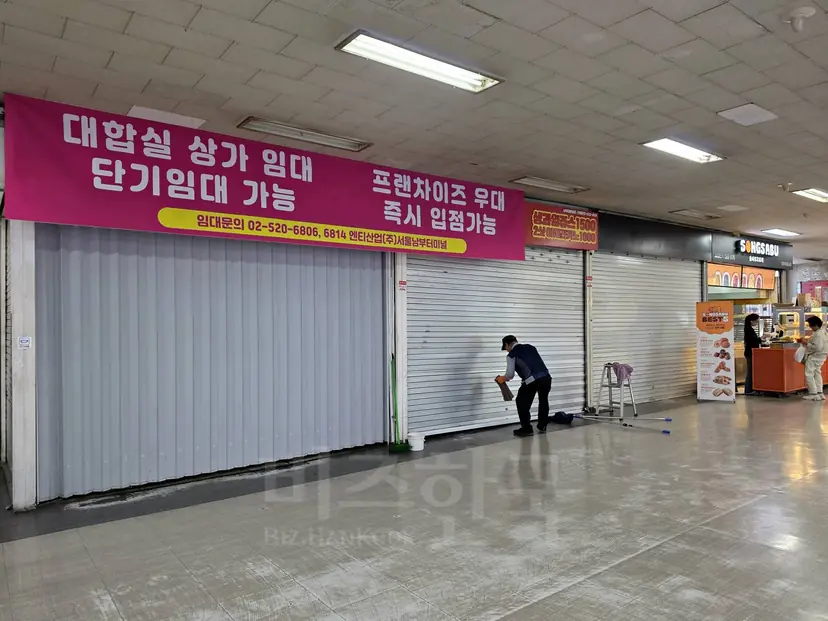
When visiting the Seoul Nambu Terminal arcade in Seocho-gu on the 12th, there were more closed shops than open ones. Only six businesses, such as a snack bar and a convenience store, were operating, while many others had their shutters pulled down. Some shops had banners posted by the operator, NT Industry, advertising space for lease. One empty shop was being used as a storage area for a nearby convenience store, without even removing its original sign.
A snack bar owner, identified as A, said, "The number of customers has been continuously decreasing since I first started working here. I feel like revenue has dropped by 20 to 30%." A transportation industry official also noted, "There are fewer routes and fewer customers than before. In some cases, buses depart with only two or three passengers on board."
Amid these circumstances, the terminal operator, NT Industry, inquired with the Seocho-gu office in July about the procedures for returning its terminal business license, citing management difficulties. The inquiry was subsequently transferred to the Seoul Metropolitan Government.
The Seoul Metropolitan Government has also come up with revitalization plans to address the stagnation of the Nambu Terminal area. In April, the city announced the "Integrated Plan for the Revitalization of the Nambu Terminal Area" to restore vitality to the region and strengthen urban competitiveness. The core idea is to reorganize the area, centered on the Nambu Terminal, into a complex hub combining transportation, commercial, and cultural functions. The plan includes modernizing the current ground-level terminal and introducing office, tourist accommodation, cultural, and residential facilities. The city plans to negotiate based on this integrated proposal should a private developer propose a development plan in the future.
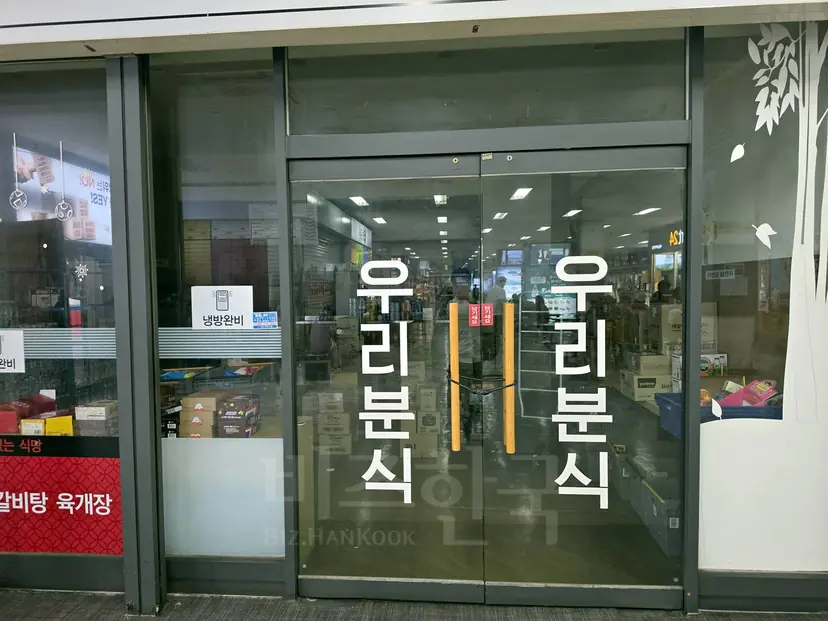
However, there have been no visible changes so far. According to the Seoul Metropolitan Government, there is no concrete business plan submitted by the private sector regarding the development of Nambu Terminal yet. A city official stated, "Since Nambu Terminal is private land, the development plan must be established and negotiated by the private sector. We have consulted with the private sector in the past, but there are no specific matters regarding a development plan currently under discussion." It was also confirmed that there were no additional inquiries regarding the license return beyond the initial formal request.
No clear changes regarding terminal operations or development have been detected on-site. Even in September, after NT Industry inquired about the license return, a new shop opened. Terminal workers also mentioned that they have not received any information from the operator regarding the license return.
Some point out that the development of Nambu Terminal should not remain in the planning stage for too long. During an administrative audit of the Seoul Metropolitan Government last year, Seoul City Council member Ko Gwang-min warned that the project could drift for a long time and urged the preparation of a concrete execution plan. In September, he reiterated his stance that the area should be developed into a hub linked with cultural, commercial, and transportation functions, and stated he would pursue budget allocation and urban planning support for the project.