

[BizHanKook] The semiconductor boom is boosting growth projections for the South Korean economy. Fueled by the artificial intelligence (AI) craze, rising semiconductor demand and export prices have led to significant corporate earnings and an increase in national income. However, an analysis suggests that most of these gains are accumulating in corporate accounts first, and it will take time for the wealth to trickle down into household consumption and government spending.
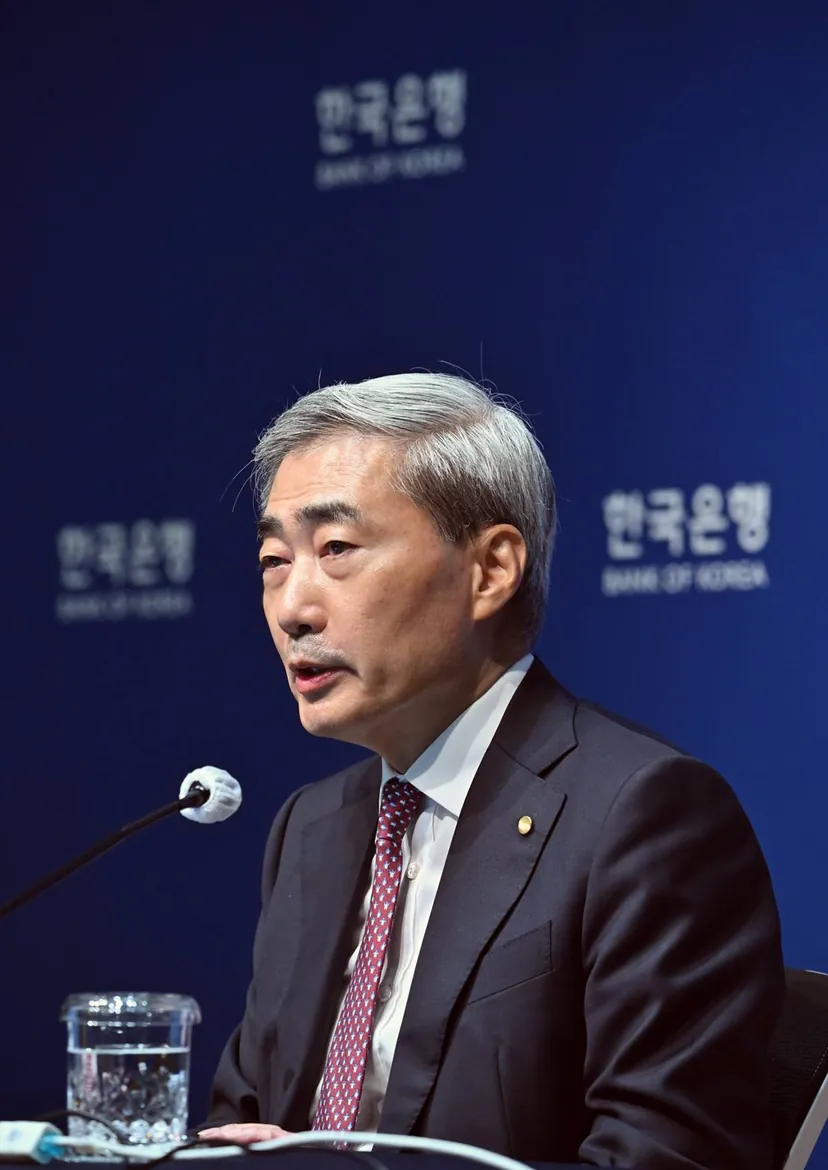
According to the issue note "Distribution and Expenditure Propagation Paths of Semiconductor-led Income Improvement," published on the 29th by the Bank of Korea's Research Department (Deputy Director Lee Jae-ho, Manager Lee Young-ho, and Researcher Chu Sung-yoon), the total income of the South Korean economy in the first half of this year grew by 21.9% compared to the previous year. This is more than four times the 4.8% average growth rate of the past three years (2023–2025). In the second quarter, it reached 26.4%, the highest level since the third quarter of 1979 (27.7%). This is driven by an increase in semiconductor export volumes and a sharp rise in prices. These figures include price inflation and differ from real growth rates adjusted for price fluctuations. The issue note reflects the personal views of the authors and does not represent the official stance of the Bank of Korea.
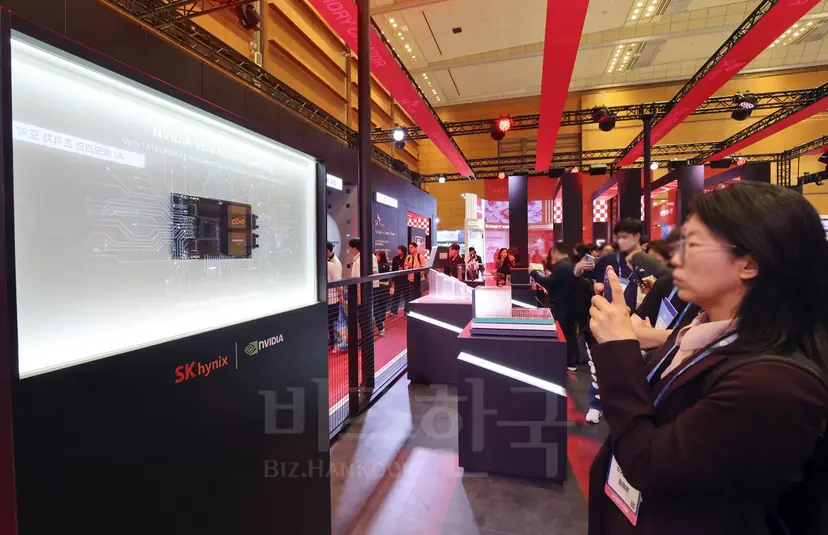
90% of the Increased Wealth Goes to Corporations
The issue note estimates that the "excess value added" created by corporations this year, which exceeds the growth trend of the past 10 years (2016–2025), is approximately 576 trillion won. This amount, calculated by comparing it to the growth trend that would have existed without the semiconductor boom, accounts for about one-fourth of the total value created by companies this year. Of this amount, the labor share (such as wages) is 55 trillion won (about 10%), while the corporate share (profits) is 520 trillion won (about 90%).
The explanation is that because it is difficult to increase or decrease wages and employment in the short term, the suddenly increased wealth first returns as corporate operating surplus—the remainder after paying wages and taxes. Even in the past (2000–2024), corporate profits fluctuated far more significantly than wages during economic upswings.
After companies pay dividends and taxes, the final distribution is 328 trillion won (57%) for corporations, 177 trillion won (31%) for the government, and 41 trillion won (7%) for households. The remaining 30 trillion won (about 5%) leaks out to financial institutions and overseas.
Corporations Accumulate; Household and Government Effects Expected Next Year
Of the 328 trillion won returning to corporations, an estimated 62 trillion won (19%) will be invested in factories and equipment this year. The remaining 266 trillion won (81%) is primarily being accumulated as cash and deposits. Last year marked the first time in 10 years since 2016 that the total amount corporations saved exceeded what they spent.
The government plans to create a "Future Response Fund" worth 162.3 trillion won using the additional tax revenue (based on the 2027 budget proposal). Of this, 45.4 trillion won will be used for government projects and household support. The remainder (12.5 trillion won for reducing national debt issuance and 104.4 trillion won in reserve funds) will not be spent immediately. Historically, there has been a clear trend where government spending increases the year after corporations pay corporate taxes, which is two years after the profit is generated.
The household share primarily consists of IT industry performance bonuses and stock dividends. Since bonuses are usually paid early the following year, the amount flowing into consumption this year is limited to around 1% of the total increase (about 5 trillion won), with the full effect expected to appear from next year onward. Temporary income also has a lower propensity to consume compared to average income like salaries. Research using the Korea Labor & Income Panel Study (1998–2023) indicates that for every 10,000 won increase in income, average income leads to about 2,900 won in consumption, whereas temporary income leads to only about 900 won.
Will Accumulated Cash Lead to Investment? Growth Forecasts Upwardly Adjusted
The issue note suggests that the cash accumulated by corporations is more likely to lead to investment than in the past. An analysis of 309 listed companies showed that firms whose year-end cash increased by 10% tended to increase their plant and equipment investment by 1.5–1.7% the following year. However, it is difficult to conclude that higher cash levels are the sole driver of increased investment, and the scale of the increase is not large. Even during 2015–2016, companies accumulated wealth, but it did not sufficiently lead to investment due to long-term global economic sluggishness and low expected returns. This time, the assessment is that there is a stronger reason to invest due to increased profits from expanding AI demand and large-scale factory construction plans.
In its economic outlook on the 26th, the Bank of Korea raised its real economic growth forecast (excluding price effects) for this year from 3.3% to 3.9%, and for next year from 2.9% to 4.1%. The reasons cited include strong semiconductor exports, related investment expansion, and a recovery in consumption (mainly from next year) driven by improved income. Based on the issue note's analysis, exports and equipment investment are driving growth this year, while the effects of consumption and government spending are expected to materialize from next year.
On the same day, the Monetary Policy Board raised the base interest rate by 0.25 percentage points, from 3.00% to 3.25% per year. The reasons cited were the strengthening economic upturn, expected inflation rates exceeding target levels, and the continued risk of undermining financial stability. Consumer inflation in October was 2.8%, and the Bank of Korea projects inflation for this year and next to be 2.7% and 2.4%, respectively.
Semiconductor Reliance is a Risk Factor
The Korea Development Institute (KDI) forecasted on the 18th that growth will reach 3.8% this year and 3.9% next year. The forecast for next year was raised by 1.7 percentage points from the previous 2.2%, with about two-thirds of that growth expected to come from semiconductor factory construction and equipment investment. The warning is that as reliance on semiconductors increases, the growth rate could become highly volatile depending on global AI investment trends. Factors such as delays or reductions in U.S. AI data center investment and rising energy prices due to worsening Middle East tensions were cited as risks.
The issue note also points out that since 46% of domestic manufacturing facility investment is in the IT (computer/electronics) sector, investment could fluctuate significantly based on the semiconductor cycle. Furthermore, because semiconductor equipment is highly dependent on imports and overseas investment is increasing, the spread of economic benefits to other industries may be slower than expected even if investment increases.
Ultimately, whether the semiconductor boom becomes a sustainable engine for the South Korean economy depends on how smoothly the gains accumulated in the corporate sector are recycled into domestic investment and consumption. The issue note suggests that, alongside expanding production infrastructure, training professional talent, and strengthening supply chains for materials, parts, and equipment, the government must also support non-IT, service industries, and vulnerable households to ensure the benefits of the semiconductor boom reach the broader economy.