

[비즈한국] “Please make an offer.”
This is a message frequently received by Moon (24), a K-pop idol fan, whenever she tries to secure a concert ticket. Since it is difficult to book tickets for popular shows, she often searches for transfer posts. However, it is rare for sellers to list a price. The common practice is for the potential buyer to offer an amount first, and the seller then hands the ticket to whoever makes the highest bid.
Moon has also offered several times the original price to secure her desired seats, such as purchasing a ticket with a face value of 220,000 won for 1.2 million won. Between proxy ticketing and purchasing tickets at a premium, Moon has spent about 10 million won just to see concerts and year-end stages last year. As transactions significantly exceeding face value continue, especially for popular shows, the government has drastically increased the level of sanctions against scalping.
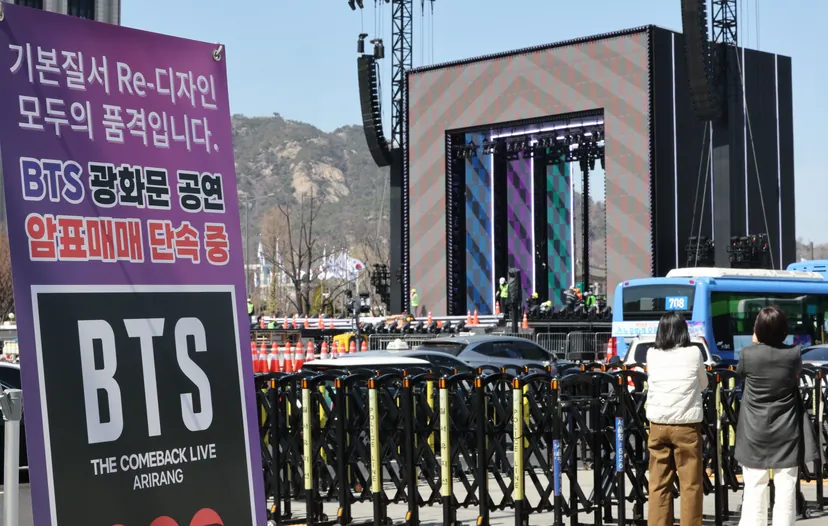
With the implementation of the so-called "Three Anti-Scalping Laws (amendments to the Public Performance Act, the National Sports Promotion Act, and the Installation and Utilization of Sports Facilities Act)," penalties for scalping at performances and sports events have been significantly strengthened. However, critics point out that online scalping remains a blind spot, as many transactions involve private price negotiations, and final buyers who pay the premium—as well as tickets for certain events—fall outside the scope of regulation.
The core of the revised law, which went into effect on the 28th, is that fines of up to 50 times the sales amount can be imposed based on the proceeds from illegal sales. While previous laws focused on punishing scalping involving macro programs, the revised law regulates any illegal sale that meets the requirements set by law, regardless of whether a macro was used. Grounds have also been established to confiscate and forfeit profits derived from illegal sales.
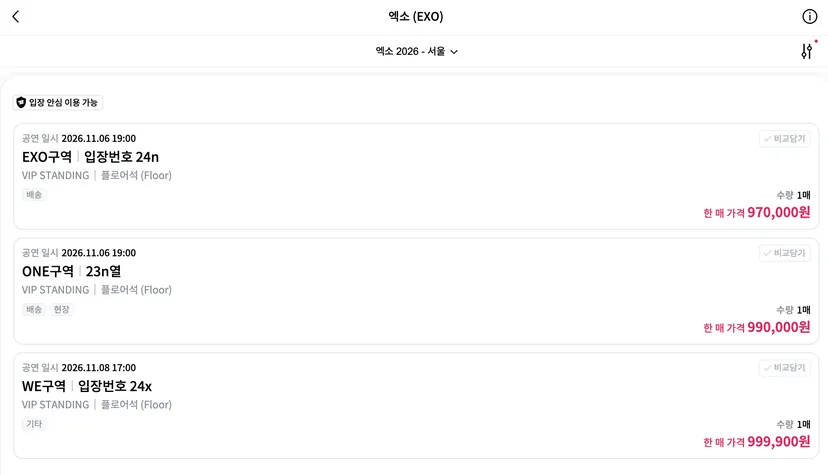
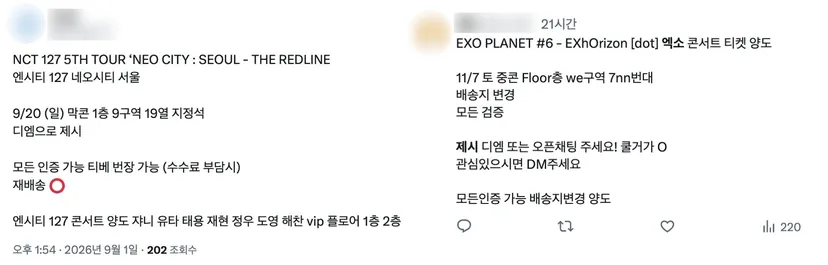
However, even after the penalties were increased, ticket trading at a premium persists. According to Biz Hankook’s investigation on the 3rd, there were 69 posts for 'NCT 127' concert ticket transfers on the secondhand trading platform Bunjang over the past three days. Many sellers did not specify a price and instead asked interested buyers to make an offer first. Some even noted that they would not respond if a low price was offered. For the EXO encore concert tickets sold on the 31st of last month, 87 transfer posts were found on TicketBay. Although the face value was 198,000 won, they were being traded for 990,000 won.
The online scalping report center operated by the Korea Creative Content Agency (KOCCA) was also flooded with reports immediately after the law took effect. According to KOCCA, approximately 2,000 reports were filed with the online scalping report center for the performance sector during the four days from the implementation of the law on the 28th to September 1st. KOCCA plans to forward general reports to platforms and booking agencies at regular intervals and request additional cooperation from relevant authorities depending on the case if signs of habitual or repeated scalping are confirmed.
Prices 'on offer'... How to catch what was actually sold?
The revised Public Performance Act defines "illegal sale" as the act of habitually or professionally selling, or mediating the sale of, tickets at a price higher than the purchase price by someone who has not obtained the consent of the original seller. The Ministry of Culture, Sports and Tourism maintains that in the process of imposing fines, habitual or professional status can be judged based on whether multiple tickets were sold at a price higher than face value, or if even a single ticket was sold at a price significantly higher than face value. For enforcement, the process of verifying who bought a ticket, how much they paid, and how many tickets were resold at what price has become crucial.
The problem is that this information is not revealed in the sales posts themselves. On secondhand trading platforms or X (formerly Twitter), it is common to omit the price, demand an "offer," and then negotiate the amount in private chat. Since multiple potential buyers offer prices privately and the seller chooses one, it is difficult for anyone other than the parties involved to confirm the final transaction price.
It is also difficult to judge whether a seller has repeatedly traded multiple tickets just by looking at the posts. If sellers delete posts or use multiple accounts, tracking the transaction history becomes even more cumbersome. Because it is impossible to confirm an illegal sale based solely on reported posts, additional confirmation of the platform's transaction records or account information is required.
In response, TicketBay stated, "Selling for more than the purchase price does not immediately constitute an illegal sale. To qualify as an illegal sale, it must meet legal requirements such as being 'habitual or professional' in nature." They added that "the specific criteria for judging 'habitual' and 'professional' under the current revised law have not been clearly presented yet."
Buyers paying premiums excluded... Regulations vary by event type
Although the level of punishment for scalping has been strengthened, some remain outside the scope of regulation. Even if a person posts a request for concert tickets, offers two or three times the face value to the seller, or actually purchases the ticket at a premium, the buyer is not punished. This is because "illegal purchase" under the revised law refers to acts of bypassing security measures in the booking process or interfering with fair purchase procedures for the purpose of resale. For this reason, critics point out that even if sanctions on sellers are strengthened, scalping will be difficult to eradicate as long as the demand to buy tickets at high prices persists.
The application of the law also varies depending on the type of event. The revised law targets admission tickets for "performances" and "sports games." It does not apply to all paid events or ticket transactions. Fan meetings, while similar in nature to concerts, do not fall under the definition of "performance" under the Public Performance Act. Therefore, they are excluded from scalping regulations. While they are the same as concert scalping in that they involve securing limited tickets and reselling them at a premium, the application of the law differs.
Regarding this, an official from the Korea Entertainment Producers Association said, "We view this as a stage of spreading awareness that scalping should not be done and continuously refining the system by reflecting opinions and cases that arise during the implementation process." They added, "It is true that it is difficult to confirm the actual sale price when transactions are made by asking for an offer without specifying a price. There are still ambiguous aspects in judging what constitutes 'habitual' or 'professional' under current standards, so I believe additions will be necessary after implementation."
The official added, "We are currently monitoring scalping on domestic and international trading platforms and gathering relevant data to deliver to the Ministry of Culture, Sports and Tourism and the Korea Creative Content Agency. We monitor concert venues three or four times a month to check whether identity verification is being handled properly and if unauthorized ticket transfers are occurring."
A KOCCA official added, "In cases where it is difficult to confirm whether an illegal sale occurred because the transaction amount was not specified, we verify the facts based on evidence submitted by the reporter. We review chat history with the seller and transaction/wire transfer records, and if further confirmation is needed, we can also request relevant materials from platforms and booking agencies."