

[BizHanKook] The illegal loan case involving Yoo Jun-won, CEO of SangSangin Group, which has dragged on for nearly seven years, is nearing its appellate court sentencing. This comes approximately two years after he was sentenced to four years in prison and fined approximately 18.9 billion KRW in the first trial in February 2025. CEO Yoo and SangSangin are also engaged in administrative litigation to cancel the order to dispose of their savings bank shares regarding issues with major shareholder eligibility. Furthermore, as the sale of SangSangin Savings Bank's shares continues to be delayed, both the legal disputes and the sale process are becoming prolonged.
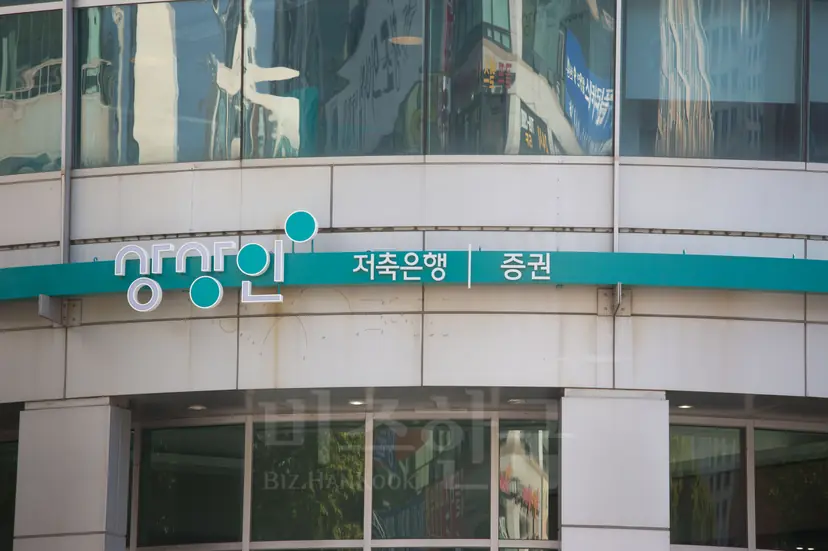
It has been confirmed that the sentencing date for the second criminal trial of CEO Yoo Jun-won and the executives and employees of SangSangin and SangSangin Plus Savings Bank, who were indicted on charges including illegal lending, has been set for January 13, 2027. This appellate court decision comes about six years and six months after the prosecution indicted them on charges of violating the "Capital Markets Act," the "Act on the Aggravated Punishment of Specific Economic Crimes," and the Mutual Savings Bank Act. As the parties involved are generally required to attend the appellate sentencing, CEO Yoo and the others are expected to appear in court.
Previously, on February 18, 2025, the Seoul Central District Court, which presided over the first trial, sentenced CEO Yoo Jun-won to four years in prison, a fine of approximately 18.9 billion KRW, and ordered a forfeiture of approximately 112 million KRW. SangSangin Savings Bank, which was indicted alongside him, was fined 6.436 billion KRW with a forfeiture of 3.218 billion KRW, while SangSangin Plus Savings Bank was fined 11.888 billion KRW with a forfeiture of 5.944 billion KRW.
This case relates to CEO Yoo Jun-won and SangSangin-affiliated savings banks providing high-interest collateral loans to KOSDAQ-listed companies. From April 2015 to December 2018, the KOSDAQ-listed companies involved in the case disclosed as if they had attracted investment by issuing convertible bonds (CBs), but in reality, they were receiving high-interest collateral loans through SangSangin-affiliated savings banks.
The first-instance court stated, "The fact that the convertible bond issuers relied entirely on loans received after providing collateral to the savings banks, while failing to disclose the provision of such collateral, constitutes fraudulent unfair trading," adding, "Fraudulent unfair trading undermines the purpose of the disclosure system and damages market fairness and transparency."
The court further ruled, "SangSangin-affiliated savings banks appear to have designed the structure of convertible bond issuance, lending, and profits, and led the issuance and lending procedures. CEO Yoo determined the convertible bond collateral loans and profits while operating the affiliated savings banks," and "CEO Yoo and others designed the convertible bond issuance and loan structure and continuously committed crimes to obtain large-scale profits." However, they were acquitted of stock manipulation and breach of trust charges due to a lack of evidence.
SangSangin has continued legal disputes regarding the illegal loan case. When CEO Yoo received heavy disciplinary action, including a three-month suspension of duty from financial authorities in December 2019, he filed an administrative lawsuit to cancel the measure but lost the final appeal at the Supreme Court in May 2023. Under the Act on Corporate Governance of Financial Companies, those who receive heavy disciplinary actions such as suspension of duty cannot be appointed as executives of financial companies for a certain period.
As that decision was finalized by the Supreme Court and CEO Yoo lost his eligibility as a major shareholder under the Mutual Savings Bank Act, the Financial Services Commission issued an order to meet the requirements for major shareholder eligibility and an order to dispose of 90% of the shares of SangSangin and SangSangin Plus Savings Bank. CEO Yoo is the largest shareholder of SangSangin (23.65%), and SangSangin holds a 100% stake in the two savings banks.
SangSangin responded with an administrative lawsuit to cancel the order to meet major shareholder eligibility requirements and the stock disposal order, but lost the first trial in December 2024. Although the second trial is underway following SangSangin's appeal, the court has not held a session since last July. The effectiveness of the stock disposal order is suspended until 30 days after the date of the final ruling in the main case.
Meanwhile, attention is also focused on whether the stock purchase agreement surrounding SangSangin Savings Bank will be fulfilled. In October 2025, SangSangin signed a contract to sell a 90.01% stake in SangSangin Savings Bank to KBI Group, which engages in auto parts and industrial materials businesses, for 110.7 billion KRW. The entity leading the acquisition for KBI Group is KBI Kookin Industry, a waste disposal company based in Gumi that previously acquired Raon Savings Bank.
However, the expected completion date for the sale continues to be postponed. On the 2nd, SangSangin disclosed that it had changed the expected share disposal date from November 2 to November 13. This is the sixth time the date has been changed since the original expected disposal date of March 31, 2026.
Regarding this delay, KBI Group stated, "We will continue the acquisition negotiations," and added, "We are narrowing our differences with SangSangin on matters that require further discussion, and we will consult closely according to future procedures."