

[비즈한국] Samsung Electronics has ushered in the era of 100 trillion won in quarterly operating profit, fueled by expanding demand for AI memory semiconductors and rising prices. The surge in AI data center investment has boosted not only HBM (High Bandwidth Memory) but also general-purpose DRAM and NAND demand, with the semiconductor business leading the company's overall performance.
On the 8th, Samsung Electronics announced its preliminary results for the third quarter, reporting consolidated revenue of 195 trillion won and an operating profit of 107.4 trillion won. Compared to the same period last year, revenue and operating profit increased by 126.6% and 782.5%, respectively. These figures also represent a 13.7% and 20.0% increase from the previous quarter. The operating profit surpassed the securities industry's estimate of 105.4137 trillion won by approximately 1.9%. The operating profit earned in this single quarter is about 2.5 times larger than the company's total annual operating profit of 43.6 trillion won last year.
Quarterly Operating Profit 2.5 Times Last Year’s Annual Total
The semiconductor business led the improvement in performance. As AI big tech companies continue to expand data center investments, demand for HBM required for calculations, server-grade DRAM for data processing, and NAND flash for storage has increased. Amid this, as memory manufacturers expand HBM production, supply for general-purpose memory has become tight. With semiconductor production capacity difficult to increase in the short term, major memory firms are allocating resources to HBM production, leading to constrained supply in the general-purpose market as well.
Memory prices continued their upward trend in the third quarter. According to market researcher DRAMeXchange, the average price of PC DRAM reached $26 in September, up $1 from the previous month, while the average price of NAND for memory cards and USBs also rose to $30.6. TrendForce projects that general-purpose DRAM prices will rise by 10-15% and NAND prices by 15-20% in the fourth quarter compared to the previous quarter.
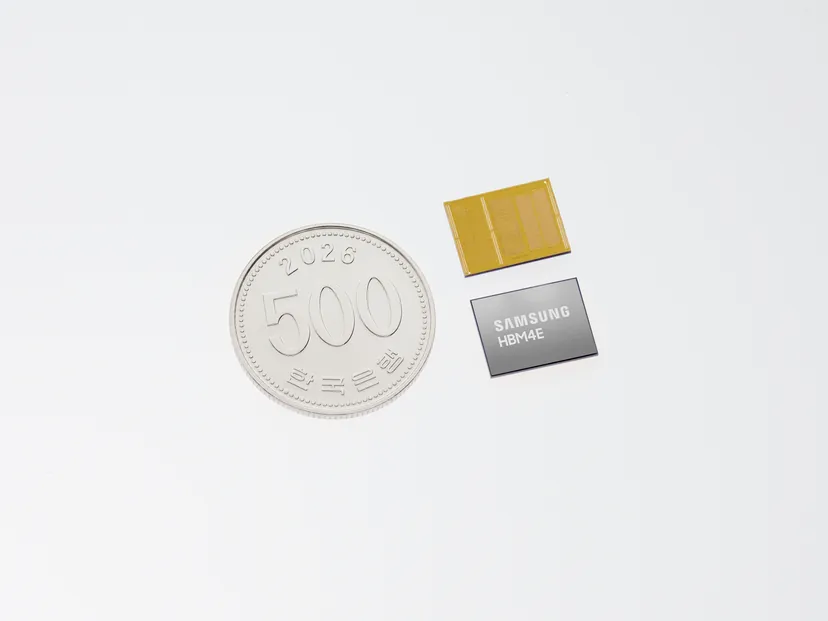
HBM is a memory type that vertically stacks multiple DRAM chips and widens data pathways, helping AI accelerators process large-scale data rapidly. Samsung Electronics became the world's first to begin mass production and shipment of its 6th-generation product, HBM4, last February. It features a combination of 10nm-class 1c DRAM and a base die (the bottom chip that controls data signals between HBM and the AI accelerator) manufactured using its proprietary 4nm foundry process; KB Securities estimated that Samsung’s third-quarter HBM4 revenue more than tripled from the previous quarter.
Market share is also showing signs of recovery. According to Counterpoint Research, the global HBM market share by revenue in the second quarter was 50% for SK Hynix, 33% for Samsung Electronics, and 18% for Micron. Samsung Electronics increased its share by 12 percentage points from 21% in the first quarter, narrowing the gap with SK Hynix to 17 percentage points.
In its second-quarter conference call, Samsung Electronics revealed that requests for long-term supply contracts from customers continue to arrive. If demand for AI memory persists in the medium to long term, the expansion of long-term contracts could influence the production and investment plans of memory manufacturers.
DX Profitability Pressures Despite Record Performance
Unlike the semiconductor business, the Device Experience (DX) division, which oversees smartphones, TVs, and home appliances, faces profitability challenges. The market suggests that the DX division likely recorded a loss for two consecutive quarters due to rising component prices, including memory, and a slowdown in global demand for finished products. While rising semiconductor prices serve as a profit-improving factor for the Device Solutions (DS) division, they act as a cost burden for the DX division, which purchases components to produce finished goods. A slowdown in global set demand and a strong won are also added burdens.
In the HBM competition, Samsung Electronics is working to narrow the gap with SK Hynix while simultaneously expanding its customer base. A business structure that encompasses both memory and foundry offers the advantage of integrating HBM with logic semiconductors, but a challenge remains in closing the competitive gap with TSMC in the foundry sector.
The fact that rising memory prices could increase cost burdens for customers remains another variable.
On the 7th, Samsung Electronics announced details regarding a special management performance bonus for the DS division. The fund is set at 10.5% of the DS operating profit, with bonuses to be paid in late March after the 2027 general shareholders' meeting, to be issued in company stock after deductions such as taxes.
The joint labor union estimated that, assuming an annual DS operating profit of 370 trillion won, an employee with an annual salary in the 80 million won range in the memory division could receive approximately 750 million won. This is a union estimate, not the amount confirmed by the company for individual payouts.
Kim Sun-woo, a researcher at Meritz Securities, stated, "Although an unfavorable environment for performance was created by the rapid strengthening of the won, memory selling prices surpassed the industry average again based on robust sales policies." However, he analyzed that operating losses are likely to expand in sectors other than semiconductors, such as mobile and home appliances.
Samsung Electronics will announce its finalized third-quarter results on the 29th and hold a conference call. Specific management conditions, including detailed performance by business division, memory prices, HBM4 supply expansion, and foundry utilization rates, are expected to be disclosed on that day.