

[비즈한국] Samsung Electronics has unveiled a shareholder return plan worth up to 110 trillion won. As cash flow improves due to the boom in artificial intelligence (AI) semiconductors, the company has significantly increased the share allocated to shareholders. Previously, SK Hynix also announced a 40 trillion won stock buyback and cancellation plan, marking a series of bold shareholder return measures by the nation's leading semiconductor stocks. With recent high volatility in the domestic stock market, attention is focused on whether Samsung Electronics and SK Hynix will lead a rise in the index once again.
On August 21, Samsung Electronics held a board meeting and approved a shareholder return plan for 2026, totaling 90 to 110 trillion won. It is the largest shareholder return measure in the company's history, representing an increase of more than five times compared to the return implemented in 2020 (approximately 20.3 trillion won). The Samsung Electronics board also approved a 15 trillion won stock buyback for employee compensation.
Samsung Electronics has been implementing dividends and share buybacks/cancellations in accordance with its plan to use 50% of its free cash flow for shareholder returns from 2024 to 2026. As free cash flow increased due to the improvement in the semiconductor industry, the scale of returns was also expanded. The company paid out 9.8 trillion won in regular dividends each year from 2024 to 2025, and in 2025, it implemented a 1.3 trillion won special dividend along with 8.4 trillion won in stock buybacks and cancellations. Including this year's shareholder returns, the three-year total reaches 120 to 140 trillion won.
The specific method of return is also drawing attention. Samsung Electronics will first implement approximately 30 trillion won in cash dividends, including regular dividends, in the third quarter of this year. Details will be finalized at the board meeting at the end of October. The remaining return plan will be decided at the board meeting in January 2027, after the 2026 annual financial results are finalized, and will include cash dividends and further stock buybacks and cancellations.
Samsung Electronics stated, "This is to ensure that the company's performance translates into tangible benefits for shareholders, creating a virtuous cycle of company growth and enhanced shareholder value," adding, "We will continue to faithfully implement our shareholder return policies and actively communicate with our shareholders and the market regarding these plans."
The backdrop for such large-scale shareholder returns is the AI semiconductor boom. As the proliferation of AI data centers drives a surge in demand for High Bandwidth Memory (HBM) and high-performance memory, Samsung Electronics has achieved record-breaking results for consecutive quarters. In August (as of the 20th), semiconductor exports reached $26 billion (approximately 36 trillion won), a 199% increase compared to the previous year. With free cash flow significantly improved by the surge in semiconductor exports and memory demand, Samsung Electronics has embarked on record-level shareholder returns and massive capital investments.
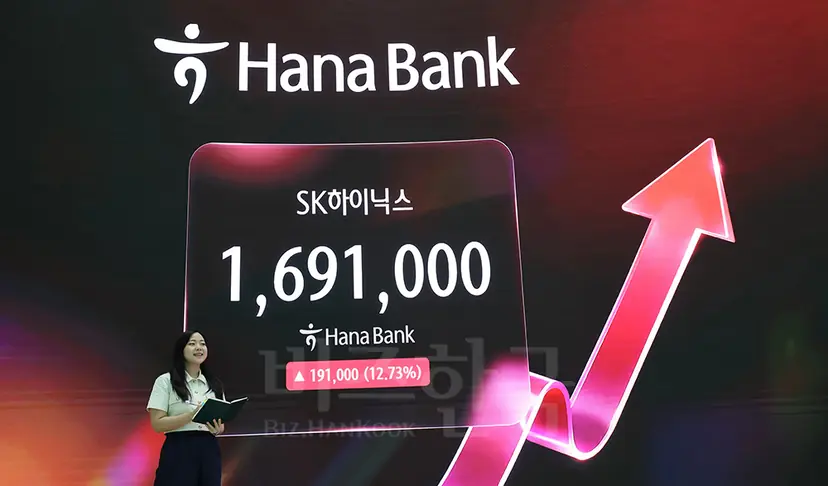
SK Hynix, considered one of the two pillars of the semiconductor industry, also put forward a strong shareholder return policy ahead of Samsung. The SK Hynix board decided on the 19th to acquire and cancel 40 trillion won worth of its own shares. The stocks to be cancelled total approximately 24.07 million shares, which is 3.3% of the total issued shares.
In addition, the company expanded the scale of its previously announced 2025–2027 shareholder return plan. While it was previously specified as within 50% of cumulative free cash flow, the limit was changed to "50% or more." Furthermore, the company announced plans to consider ways to expand fixed dividends and special dividends. Specific dividend amounts and implementation methods will be disclosed alongside the third-quarter earnings report.
The reason the two companies' shareholder returns have garnered market attention is because of their record-breaking scale and the significant weight they hold in the KOSPI. Samsung Electronics and SK Hynix are representative large-cap stocks in the domestic market and directly reflect the semiconductor industry climate. As of August 18, the combined market capitalization of Samsung Electronics and SK Hynix accounts for 27.7% and 21.4% of the KOSPI market, respectively, totaling nearly half of the entire market.
The domestic stock market has recently shown extreme volatility due to the influence of rising global long-term interest rates, surging international oil prices, and volatility in the US stock market. In particular, the KOSPI index plunged more than 5% early in the session on August 19, triggering a sell-side sidecar (a temporary suspension of program trading). However, just one day later on the 20th, the KOSPI index surged 5.89% compared to the previous day, bolstered by SK Hynix's 40 trillion won shareholder return announcement and the strength of semiconductor stocks. In other words, stock price fluctuations of Samsung Electronics and SK Hynix are rocking the entire KOSPI.
On the 21st, Samsung Electronics' large-scale shareholder return plan also had an impact. The KOSPI started lower in early trading on the 21st but rebounded as semiconductor stocks showed strength, eventually closing at 6912.95, up 0.9% from the previous trading day. In contrast, the KOSDAQ plummeted by 4.6%, showing a difference in temperature between the two markets.
Market interest is focused on whether the expansion of semiconductor shareholder returns will lead to long-term stock price appreciation. On the positive side, there is a view that the scale of shareholder returns will grow further based on semiconductor memory demand and company performance. Park Joon-young, an analyst at Hanwha Investment & Securities, forecasted, "I believe SK Hynix’s 40 trillion won stock buyback and cancellation is an early execution of part of its three-year return budget. Based on the creation of massive future free cash flow, there is a possibility that stock buybacks and cancellations exceeding 100 trillion won could become a reality. This will lead to a continuous decrease in the number of shares and an increase in value per share."
Conversely, some analysts suggest that the trend should be monitored further. This is because despite Samsung Electronics announcing a shareholder return plan of up to 110 trillion won on the 21st, its stock price fell by more than 5%. Unlike SK Hynix, maintaining a 50% return of free cash flow and prioritizing employee compensation were cited as points of disappointment. Furthermore, the fact that some retail investors at Samsung Electronics are expressing a preference for stock buybacks and cancellations over increased cash dividends remains a variable.