

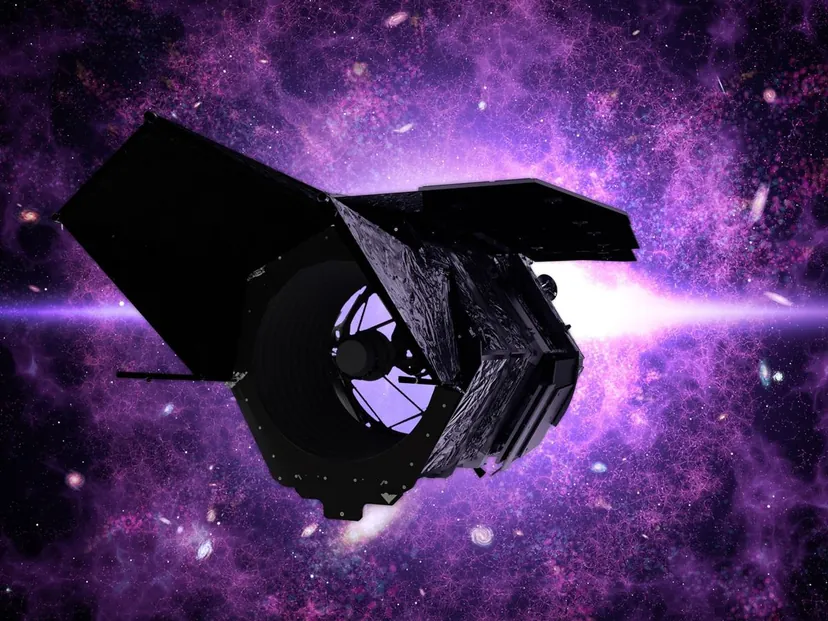
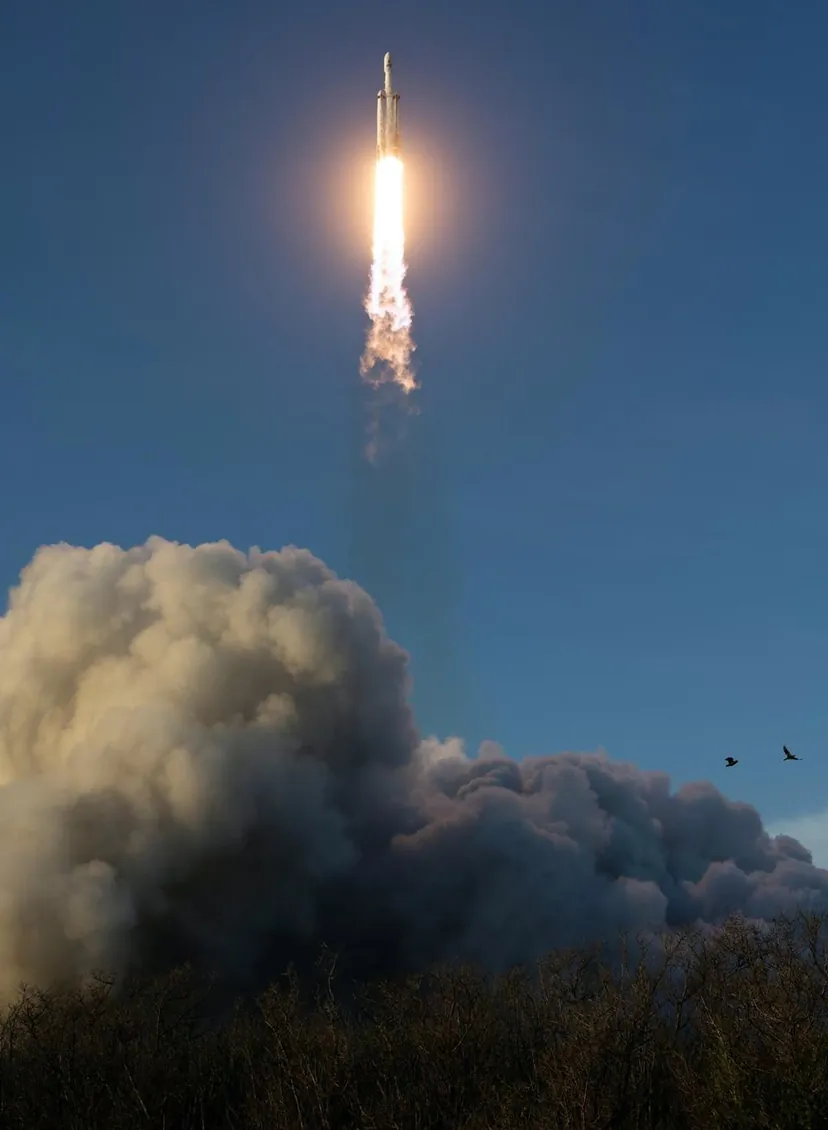
[비즈한국] Another space telescope, set to follow in the footsteps of Hubble and the James Webb, has headed into space. It is the Nancy Grace Roman Space Telescope, which was launched on August 30 (local time) atop a Falcon Heavy rocket from Launch Complex 39A at the Kennedy Space Center in the United States.
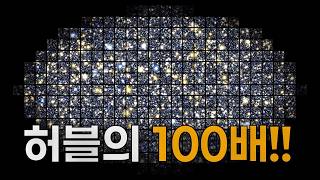
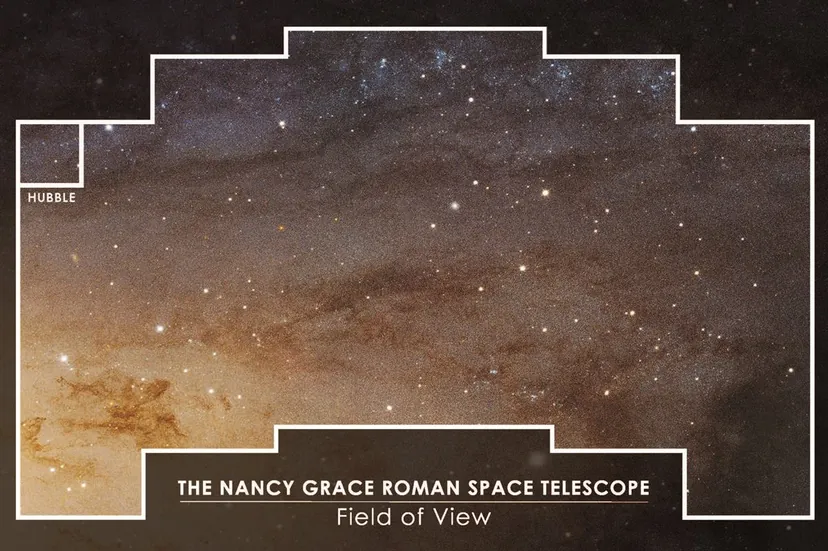
Simply put, Roman is a telescope with an eye the same size as Hubble’s, but it looks at a patch of the sky approximately 100 times wider than Hubble can see. It scans the universe so quickly that it can accomplish in one month what would take Hubble 100 years to observe. Its nature is fundamentally different from existing space telescopes that peer deeply into a single specific celestial object.
Nancy Grace Roman, the Mother of Hubble
Nancy Grace Roman led NASA’s space astronomy program in 1959, back when the very concept of a space telescope was unfamiliar and received with skepticism. She subsequently played a crucial role in securing difficult congressional approval and turning the great dream that would eventually lead to the Hubble Space Telescope into reality. For this reason, she is often called the 'Mother of Hubble.'
The original name for this telescope, now called the Roman Space Telescope, was much more mundane. It was referred to as the WFIRST (Wide Field Infrared Survey Telescope), signifying its mission to observe the infrared universe with a wide field of view. However, after Nancy Roman passed away in 2018, the telescope was named in her honor to commemorate her achievements. The person who contributed to the birth of Hubble is now, in a sense, looking out at the universe under the name of another space telescope.
Seeing a sky 100 times wider with the same mirror as Hubble
The diameter of Roman’s primary mirror is exactly the same as Hubble’s, at 2.4 meters. Compared to the James Webb, which boasts a much larger primary mirror composed of several segments, it might feel like a smaller telescope. However, the core of Roman lies not in the size of the mirror, but in its optical system and observation method.
While Hubble is specialized for peering deeply and precisely into a narrow patch of the sky, Roman is designed to observe a much wider area at once with the same level of precision.
In a typical telescope, gathered light is focused most sharply at the center of the field of view. Conversely, because Roman must capture a very wide field of view all at once, its optical system is configured to maintain uniform image quality even in the vast area surrounding the center. Its detectors are also not simply clustered in the middle of the telescope's field of view but are arranged to efficiently cover a wide focal plane.
Roman’s wide-field camera has approximately 300 million pixels. The size of the sky covered by a single pixel is about 0.11 arcseconds, and the area of the sky that can be captured in a single shot is wider than the full moon. Compared to Hubble’s field of view, this is nearly 100 times larger.
However, simply widening the field of view does not solve every problem. In a narrow field, you only need to ensure the target object at the center of the screen is sharp, but as the field widens, the number of stars and galaxies entering a single frame increases dramatically. Celestial bodies must look sharp regardless of their position on the screen, and starlight must be focused stably across the entire wide focal plane. Roman is packed with sophisticated optical technology precisely to achieve this.
Why is Roman necessary?
Even with various space telescopes like Hubble and James Webb already active, the reason a new telescope like Roman is needed is clear: its role is completely different from that of existing telescopes.
At any given point, the area Roman can observe reaches about 59% of the entire sky. Rather than a telescope like Hubble that observes distant individual objects deeply for a long time, Roman is closer to a survey telescope that rapidly scans the wide sky to discover various celestial objects and phenomena such as supernovae, exoplanets, and galaxies.
Once Roman scans the wide sky and discovers an unusual object, Hubble or James Webb can then observe that target more deeply and clearly. An efficient division of labor becomes possible between Roman, which discovers targets over wide areas, and Hubble/Webb, which peer precisely into specific celestial objects.
In this respect, Roman’s mission is similar to that of the European Space Agency’s Euclid space telescope, which also headed into space recently. Euclid observes a wide sky of about 15,000 square degrees. Roman’s survey area is smaller, but it views the universe with higher spatial resolution.
The Vera C. Rubin Observatory in Chile, which recently began full-scale observations, also rapidly scans the visible-light sky with a massive 3.2-gigapixel camera. The Rubin Observatory has a much wider field of view than Roman, but because it is a ground-based telescope, it cannot be free from atmospheric interference. Instead, Rubin observes the same sky in visible light, while Roman observes in near-infrared. By combining the two sets of data, astronomers can compare the characteristics of numerous celestial bodies that change depending on the wavelength.
The massive cosmic map that Roman will draw will play a vital role in researching the dark matter and dark energy hidden throughout the universe. The first method is gravitational lensing. Dark matter present throughout the universe warps spacetime, subtly twisting and stretching the images of galaxies coming from behind it.
Since we cannot know what a galaxy originally looked like by observing just one, it is difficult to accurately determine how distorted the observed galaxy is. However, the story changes when we observe the shapes of hundreds of millions of galaxies at once and compare them statistically. By analyzing the average direction and degree to which the images of galaxies are bent and stretched, we can trace the distribution of the dark matter that exists between them. Roman’s wide field of view is particularly advantageous for measuring such weak gravitational lensing effects on a large scale.
Reading the history of cosmic expansion through the distribution of galaxies
The second method is mapping the 3D distribution of galaxies in cosmic space.
By measuring the spectrum of individual galaxies with the spectrograph mounted on Roman and finding their redshift, we can estimate their distance. Through this, we can create a massive galaxy map that includes not just the 2D location visible in the sky, but also depth information based on distance.
This map also contains 'Baryon Acoustic Oscillations (BAO),' which are traces created during the period when matter and light in the early universe, just after the Big Bang, were combined. By measuring the average intervals at which galaxies are distributed and tracking how those intervals have changed throughout the history of the universe, we can determine the history of cosmic expansion.
This ultimately provides vital clues for discovering how much dark matter and dark energy exist in the universe and what influence dark energy has had on cosmic expansion.
The third method is repeatedly observing the changing appearance of the universe over time.
Roman observes the same sky at regular intervals. By photographing the same area multiple times, it can discover celestial bodies that appeared or disappeared suddenly within a few days, and also capture changes in starlight that brightens and dims in periodic cycles.
Through such time-series observations, astronomers expect to discover over 20,000 new supernovae. Supernovae are crucial celestial objects for understanding the evolution of the universe. Because they are so bright, they can be observed at very great distances, and specific types of supernovae are used as 'standard candles' to measure astronomical distances. The concept of dark energy itself originated from research that used supernovae to measure distances to far-off galaxies and investigate the history of cosmic expansion.
In particular, these two types of observations—using the spatial distribution of galaxies and supernovae—have taken on even more intriguing significance in modern cosmology. Recent studies measuring baryon acoustic oscillations throughout the universe have raised the possibility that dark energy might be changing over time, with its intensity appearing to diminish. Meanwhile, the issue has been raised that the brightness of supernovae themselves might have changed slightly over the ages of the universe. In this case, it, too, could be linked to the possibility that dark energy is not always constant.
We are at a point where a new debate is beginning regarding the nature of dark energy, one of the greatest mysteries in cosmology for a long time. At this very juncture, the large-scale galaxy maps and supernova observations that Roman will carry out hold particularly significant importance.
Another revolution brought by Roman: Data
A significant innovation of Roman lies not only in its observation equipment but also in how it handles data. Roman is expected to produce an average of about 1.4 TB of observational data per day. The total scale of data accumulated over five years will reach approximately 20 PB (petabytes, 10 to the power of 15). This is a scale far more vast than all the data accumulated by Hubble over the past several decades.
More importantly, this data will not be kept exclusively by a specific research team for a long time, but will be released to astronomers around the world as soon as pre-processing is complete.
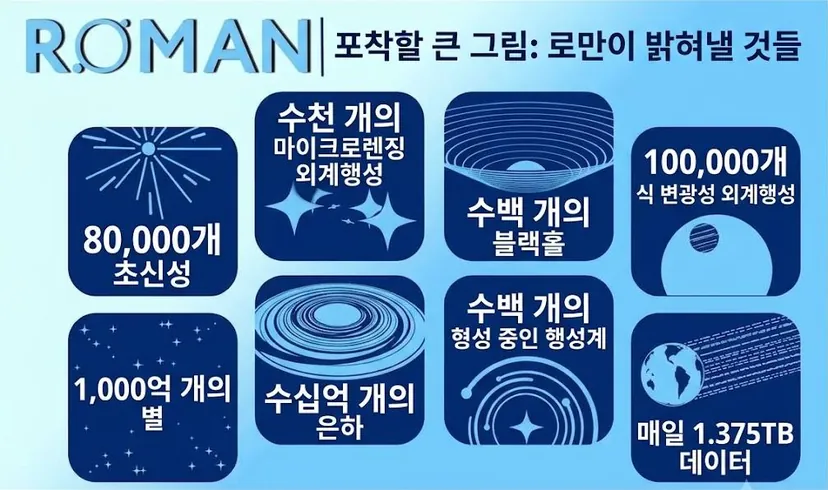
However, because the scale of the data is so massive, the method of downloading and analyzing all the material directly on a personal computer is not practical. Instead, a method where the massive data is stored in one place and researchers connect to a cloud environment to perform the necessary analysis is becoming important.
As the amount of data exceeds the level that humans can review one by one, the role of artificial intelligence and machine learning is also growing. Machine learning tools are being developed that can generate high-precision images similar to actual observations, automatically classify countless galaxies, and find unique celestial bodies whose brightness changes suddenly.
In the past, citizen science projects involving citizens from around the world played a key role in classifying vast amounts of astronomical data. Now, the results of that accumulated citizen science are once again becoming excellent training data, teaching artificial intelligence. It is, in a sense, the beginning of an era where artificial intelligence, having learned the universe classified by humans, analyzes an even vaster universe quickly and efficiently.
A wide and precise new universe
The universe shown by Hubble and James Webb has already left a deep impression on humanity. However, Roman is a telescope of a different dimension from them. While Hubble and James Webb have dug deep and precisely into specific small areas of the universe, Roman looks at a much wider universe all at once with equally precise eyes. A single photo taken by Roman will not contain just a few bright stars or one spectacular galaxy; it will simultaneously record countless stars and galaxies, and will even be imprinted with the distribution of dark matter and the history of cosmic expansion that fills the space between them.
When a new eye for looking at the universe opens, the appearance of the universe as we know it may also change. The next universe that the Nancy Grace Roman Space Telescope will show us will likely be a different vision from the universe that Hubble and James Webb opened up.
Who is the writer Ji Ung-bae? He loves cats and the universe. He dreamed of spreading the beauty of the universe after watching 'Galaxy Express 999' as a child. Currently, he is an assistant professor in the School of Free Major Studies at Sejong University, participating in various science communication activities such as lectures and writing. He has authored books such as 'Regarding the Uselessness of Astronomers,' 'We Are All Born Astronomers,' and 'Strange Questions That Come to Mind When Looking at Space,' and has translated books including 'How I Killed Pluto,' 'Quantum Life,' and 'UFO.'