

[비즈한국] Rolling Stone is on the verge of being delisted. This follows a disclaimer of opinion from its accounting firm, which triggered grounds for delisting. Although Rolling Stone was once a medical company that developed MERS and COVID-19 diagnostic kits, it is now focusing on the oil business. Kang Se-chan, the founder of Zenencell who has recently garnered attention, once served as the head of the R&D center at Rolling Stone. While the company gained prominence during the COVID-19 pandemic, it has struggled to recover its profitability since the onset of the "living with COVID-19" era.
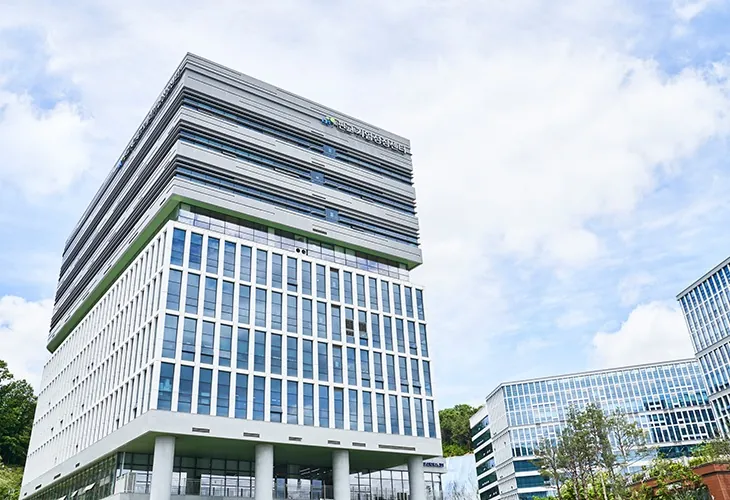
From NanoBiosys to Rolling Stone: A series of major shareholder and name changes
NanoBiosys, a manufacturer and seller of in-vitro diagnostic medical devices and reagents, gained recognition after introducing MERS diagnostic kits in 2015. In 2017, NanoBiosys merged with MiCo BioMed. Regarding the merger, the company stated it was "to actively respond to changes in the domestic and international business environment, increase management efficiency, and create financial synergy to become a comprehensive POCT (Point-of-Care Testing) company in the diagnostic field." Following the merger, MiCo Co., Ltd. became the largest shareholder, and Kim Sung-woo, the founder of NanoBiosys, became the second-largest shareholder. The merged entity was named MiCo NanoBiosys before changing to MiCo BioMed in March 2018.
Previously, in 2017, Kim Jin-wook, the former head of the Corruption Investigation Office for High-ranking Officials (CIO), participated in a paid-in capital increase for NanoBiosys, acquiring 5,813 shares at 8,300 won per share. This led to allegations that Kim had purchased the shares after obtaining insider information about the merger. In response, Kim stated in January 2021 that he "invested at the recommendation of the company, which was in a difficult financial situation at the time."
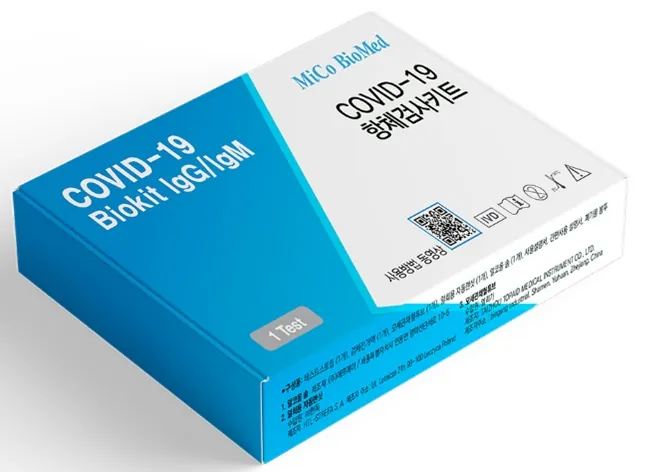
Regardless, MiCo BioMed garnered attention once again in the early 2020s through its COVID-19 diagnostic kits, leading to improved performance. While the company's revenue in 2019 was 4.1 billion won, it jumped to 45.7 billion won in 2020 and 30.3 billion won in 2021. However, it could not sustain this momentum. With the start of the "living with COVID-19" era in 2022, demand for diagnostic kits waned. MiCo BioMed's subsequent revenue fell to 16.1 billion won in 2022, 5.4 billion won in 2023, and 4.6 billion won in 2024, leading to a decline in financial health as it recorded losses.
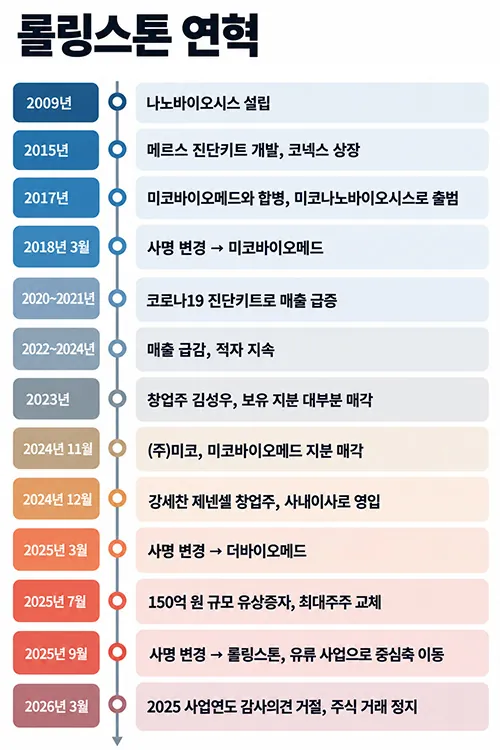
Ultimately, MiCo Co., Ltd. sold its stake in MiCo BioMed to several investors in November 2024. Founder Kim Sung-woo also sold most of his shares in 2023. Consequently, as of the end of 2024, the largest shareholder of MiCo BioMed became the J&Star Investment Association with a 14.09% stake, and the second-largest shareholder became J&Equity Partners with 5.03%. The company was renamed The BioMed in March 2025.
In December 2024, after the change in the largest shareholder, MiCo BioMed hired Kang Se-chan, the founder of Zenencell, as an inside director. At the time, Kang served as the head of the R&D center. Kang had previously led the development of a COVID-19 treatment at Zenencell. However, not only did he fail to develop the treatment, but he was also sentenced to three years in prison with a five-year suspended sentence for charges including the submission of falsified documents during the clinical trial application process. An appeal is currently underway. Zenencell is also under suspicion of having lobbied for clinical trial approval through Kim Seung-won, a candidate for Minister of Justice.
In fact, Zenencell's COVID-19 treatment development had effectively stalled since 2023. Nevertheless, Kang joined another company as a director independent of Zenencell. At the time, the board of MiCo BioMed explained the recommendation of Kang as an inside director by stating, "As a professor specializing in life sciences, he has accumulated expertise based on his experience in the field. Based on this, he is expected to contribute to management stabilization and corporate value enhancement through prudent and strategic decision-making."
Although the company changed its name to The BioMed, performance did not improve. Last July, the company conducted a 15 billion won paid-in capital increase to secure capital. JB Asset Management participated in the capital increase, securing a 38.56% stake and becoming the largest shareholder. After the change in leadership to JB Asset Management, the company was renamed Rolling Stone, and a significant portion of the existing board members were replaced. During this process, founder Kang Se-chan left the company for "personal reasons."
Rolling Stone, now renamed, is focusing on the oil business rather than its original medical-related activities. As recently as 2024, all of the company's revenue was generated from medical fields such as molecular, biochemical, and immunological diagnostics. However, in 2025, 7.8 billion won out of its 10.9 billion won total revenue—or 71.35%—came from the oil business. In the first half of this year, 608 billion won out of 616 billion won in total revenue came from the oil business, accounting for 98.78%. The company has essentially transformed from a medical firm into an oil company.
Rolling Stone's revenue rose significantly by focusing on the oil business. The problem is profitability. After posting an operating loss of 9.9 billion won last year, Rolling Stone recorded another operating loss of 4.2 billion won in the first half of this year. While revenue has recovered to some extent, the company has failed to escape its deficit structure.
Oil accounts for 98.78% of first-half revenue; business structure completely changed
Ultimately, Rolling Stone received a disclaimer of opinion in its 2025 audit report. The auditor, E-Chon Accounting Corporation, stated, "The company failed to provide sufficient and appropriate audit evidence regarding a series of non-recurring transactions, including transactions related to its subsidiary Cheonggyo, payment of due diligence deposits to specific entities, shareholder agreements following the transfer of management rights, and capital contributions to new subsidiaries and subsequent loans." They added, "As we could not confirm that these transactions were conducted under normal commercial terms, we determined that we could not express an audit opinion, considering the materiality of the impact these matters could have on the financial statements as a whole."
A disclaimer of opinion is grounds for delisting. Rolling Stone filed an objection in April of this year. Consequently, the Korea Exchange granted an improvement period until April 10, 2027, during which time stock trading will be suspended.
Regarding concerns about delisting, Rolling Stone announced in June that it had "commissioned an arbitrary audit by Shinhan Accounting Corporation to objectively verify that the reasons for the disclaimer of opinion have been fully resolved," adding, "As a result, we received an audit report with an unqualified opinion on our 2025 financial statements from Shinhan Accounting Corporation." The company continued, "We are actively responding to the main audit and listing maintenance procedures to receive a final unqualified opinion from our official auditor, Deloitte Anjin, and we will perfect the resolution of last year's accounting issues under the current auditor to lead to the swift resumption of trading."
However, Deloitte Anjin also issued a disclaimer of opinion regarding Rolling Stone's semi-annual report for the first half of this year. Deloitte Anjin stated, "We were unable to obtain sufficient and appropriate evidence regarding the opening financial statements of Rolling Stone," and added, "We could not evaluate the impact that potential misstatements in the opening financial statements might have had on the financial position, financial performance, and cash flows as of June 30 of this year."
While Rolling Stone's delisting is not yet finalized, the situation is clearly precarious. Although the company made a name for itself as a diagnostic kit manufacturer through MERS and COVID-19, it is now facing the threat of delisting. Coincidentally, other companies that gained recognition during the COVID-19 era, such as Enzychem Lifesciences and Cellumed, are also facing similar threats of delisting. Attention is focused on whether Rolling Stone can overcome this crisis and successfully restart as an oil company.