

[BizHanKook] As domestic and international stock markets experience significant declines, concerns are mounting over a potential "Black Monday." Following a more than 5% drop in both the KOSPI and KOSDAQ indices on the 20th, semiconductor and artificial intelligence (AI)-related stocks also saw sharp declines in the New York market. Amidst the downturn, domestic retail investors have continued to net buy, drawing attention to the fallout from the selling pressure originating in the U.S.

According to the Korea Exchange, the KOSPI index closed at 4,869.96 on the 20th, down 5.2% from the previous day. Although the KOSPI index had recovered the 5,000-point mark just before the market closed on the 19th after fluctuating, it could not maintain the level the following day. On the 20th, a sell-side sidecar was triggered in both the KOSPI and KOSDAQ markets, with the KOSDAQ index falling 5.7% from the previous day to 645.68. On a weekly basis, the KOSPI index dropped 7.9% and the KOSDAQ index fell 7.7%.
The decline in the domestic market is underpinned by the slump in semiconductor-related stocks. On the 20th, Samsung Electronics' stock price closed at 180,900 won, down 8.1% from the previous day. On the same day, SK Hynix fell 7.0%, closing at 1.1 million won. Samsung Electro-Mechanics, a company related to AI and semiconductor components, saw its stock price plummet by 13.3% (from 885,000 won to 767,000 won) in a single day on the 20th.
The New York stock market, which opened after the domestic market closed, also saw a massive sell-off of tech stocks, leading to a plunge in indices. On November 20 (local time), the Nasdaq Composite Index ended the day at 22,617.73, down 5.3%. Compared to November 13, a week earlier, this is a drop of more than 10%. The S&P 500 Index (6,910.39) and the Dow Jones Industrial Average (48,147.33) also struggled, falling 3.7% and 1.9%, respectively, from the previous day.
The slump in semiconductor stocks also impacted the New York market. On the 20th, the Philadelphia Semiconductor Index fell 10.7% to 8,408.59 from the previous day. This was driven by significant drops in major stocks such as Nvidia (-14.0%), Micron (-13.9%), AMD (-13.2%), and Broadcom (-12.2%). The Philadelphia Semiconductor Index is a gauge composed of the top 30 semiconductor-related companies listed on the U.S. stock market. The stock price of Anthropic, which listed on November 19 (local time), also fell by more than 8% just two days after its IPO, contributing to the downward trend.
Factors behind the market crash include a cooling of investor sentiment in the AI and semiconductor sectors. Although Anthropic, the most anticipated IPO of the second half of the year, received significant attention during its listing, it failed to revive sentiment in the AI field. This is due to rising doubts over whether profits can be realized compared to the exponentially increasing costs of building data centers.
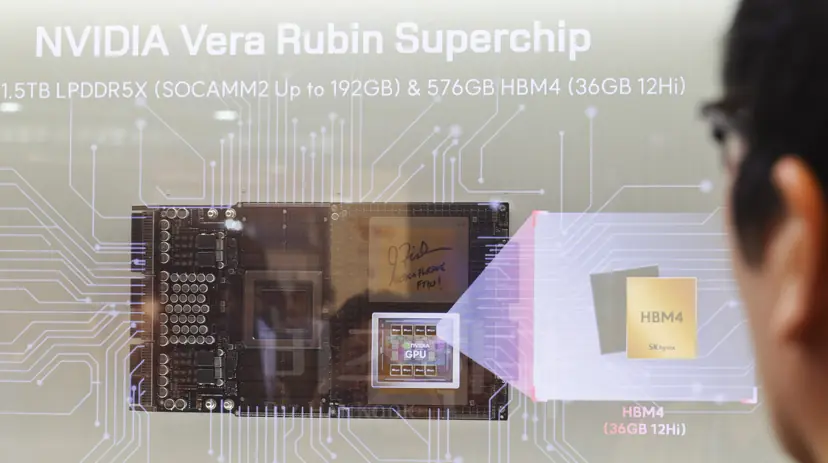
The U.S. government's decision to restrict China's remote access to advanced U.S.-made AI chips for national security reasons, and the requirement for pre-approval when exporting advanced chips to Southeast Asia, also had an impact. Such regulations have led to controls on semiconductor equipment exports to China, which has manifested as a contraction in semiconductor investment. The resignation of former Nvidia CEO Jensen Huang due to a scandal is also cited as a factor in the decline of semiconductor stock prices.
With the market in such a volatile state, expectations that selling pressure could intensify have fueled fears of a "Black Monday." According to foreign media reports including Bloomberg on the 21st (local time), the trading desk at global investment bank Goldman Sachs stated that its panic index had risen to 9 out of 10 points.
Another issue is that while foreign and institutional investors have been exiting the domestic market, domestic retail investors have been engaging in "bottom fishing." Even on the 20th, when the market crashed, retail investors net bought approximately 1.595 trillion won worth of semiconductor and electrical/electronic sector stocks in the KOSPI market. If the stock market decline intensifies, retail investors will inevitably face growing losses.
In response, the opposition party has demanded countermeasures from the government. On the 22nd, Jung Jeom-sik, floor leader of the People Power Party, stated on his personal social media (SNS), "The government should prepare emergency response measures in advance for the anticipated stock market plunge tomorrow."
Lee Jae-man, a researcher at Hana Securities, predicted, "In the 2026 KOSPI market, Samsung Electronics and SK Hynix account for 68% of the total decrease in market capitalization from the peak. The volatility of these two companies is highly likely to determine the overall volatility of the KOSPI. Individual stocks, excluding Samsung Electronics and SK Hynix, have also been adjusted to an extreme level." He added, "However, if the index plummets, market interest rates could also fall. Unless profit forecasts deteriorate significantly, a drop in market interest rates could serve as an opportunity for an index rebound."