

[비즈한국] In an era of constant connection via social media and smartphones, why do we feel increasingly lonely and empty? Here are some new books that offer alternatives to this dilemma.
The Society of ‘Disrespect’ Hiding Behind the ‘Like’ Button
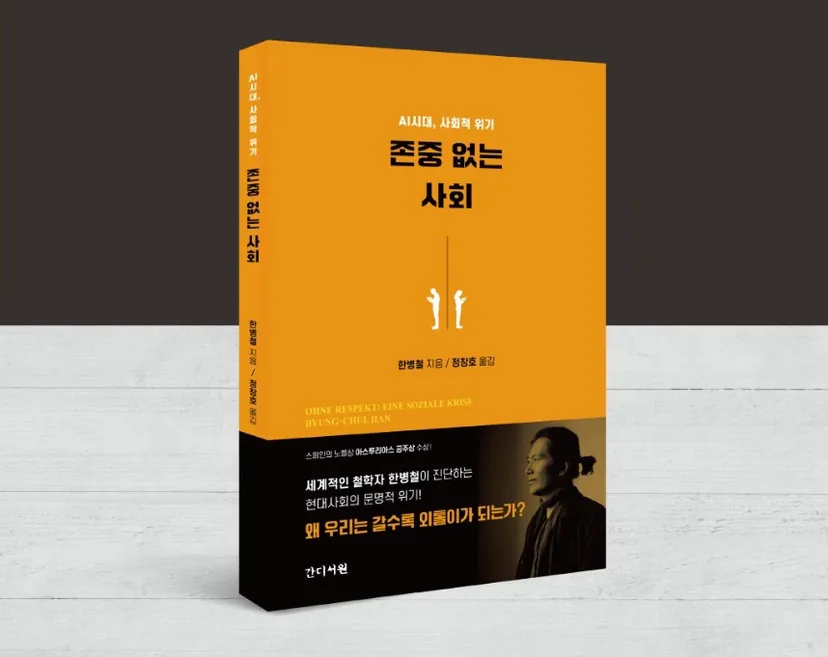
By Byung-Chul Han, Translated by Chang-ho Jeong, Gandhi Seowon
German-based philosopher Byung-Chul Han, who gained global fame for works like "The Burnout Society" and "The Agony of Eros," sharply diagnoses in his new book, "A Society Without Respect," how the neoliberal achievement society destroys human bonds and dismantles society. Today's modern individuals live by voluntarily exploiting themselves to the limit, trapped in the alluring illusion of "self-realization," but beneath it lies a deep contempt for others and profound self-loathing.
The author criticizes that human dignity has been degraded into an infinite competition system where one is not respected for their intrinsic value, but only evaluated by the size of the achievements and capital they have produced. This has caused public spirit in communities to collapse, driving society into a state of "molecular civil war" where people are scattered and unleash indiscriminate anger. He also identifies social media algorithms as a primary culprit that monitors and controls the masses, blocking genuine communion with others and spreading rude directness and hatred.
This book forces us to face the fact that the cause of the isolation and division we experience today is not merely a personality flaw of the individual, but a structural civilizational crisis of "disrespect." Instead of lingering on this desperate diagnosis, the author proposes a thoughtful attitude—the "politics of friendship" and "beautiful forms"—which involves recognizing and listening to others as independent beings rather than defining them as "enemies" to be dominated or annihilated. He argues that only by restoring healthy distance and polite decorum with others can we protect democracy and humanity from a barbaric competitive society.
Reading the World Through the Forest
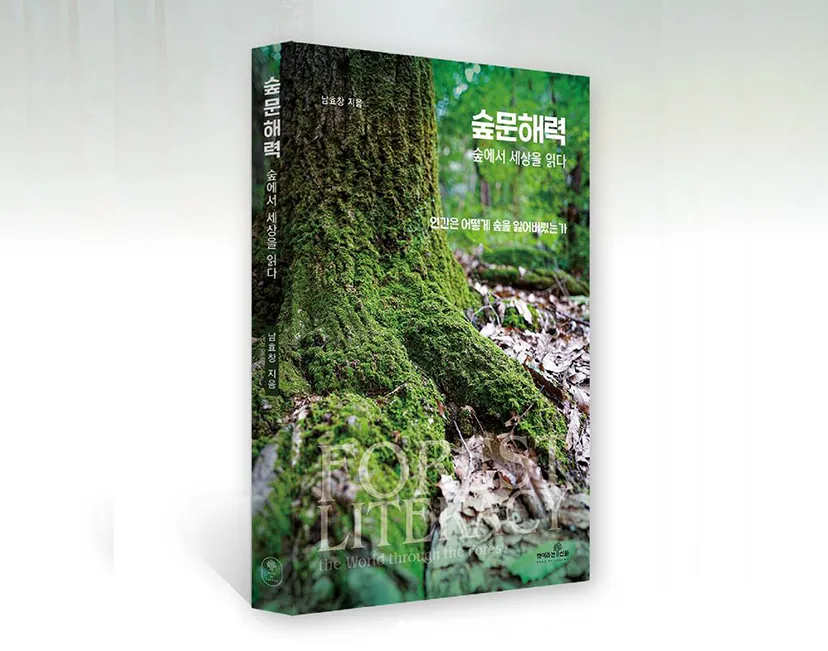
By Hyo-chang Nam, Chaekiraneun Sinhwa
"Forest Literacy: Reading the World from the Forest" is an essay by eco-humanist and forest researcher of 40 years, Nam Hyo-chang. If literacy is the power to read text, "forest literacy" is the power to read the world through the forest. This book seeks to reclaim the sense and relational wisdom we have lost within the giant classroom of life that is the forest. The author views the forest not merely from the perspective of scenery or resources, but as a complete "text" and a "living web of relationships" composed of intricate sentences and paragraphs that are constantly changing.
Modern people are buried in the information and speed of digital devices, pushing nature away as an external object and becoming accustomed to processing life through efficiency and data. However, in the forest, light, wind, scents, and subtle changes gather to create their own seasons without rushing. Reading the forest is not just about memorizing the names of trees or flowers; it is about embodying the deep way of interaction where living things listen to one another and connect.
This book awakens us to why a true sense of "deceleration" is necessary for those living in a modern digital society that prioritizes speed and efficiency. Nature is always there, speaking through small signals; it is just that we have lost the way to read them. By allowing us to re-examine the relationship between the world and humanity through the archetypal learning structure of the forest, it offers deep comfort and opens new eyes for sensing the world to modern people exhausted by their fragmented daily lives.
The author has long served as a researcher and scholar and has led the Forest Research Institute since 2002. In 2024, he opened an indoor healing garden, "Meinbaum," in Chuncheon, Gangwon-do, and is dedicated to the work of healing people through the forest.
A Classic That Awakens Inner Greatness
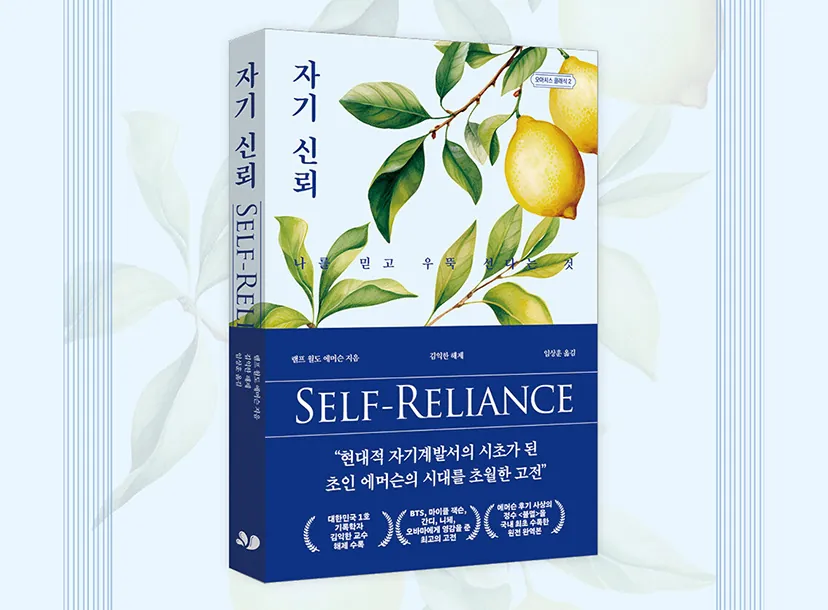
By Ralph Waldo Emerson, Commentary by Ik-han Kim, Translated by Sang-hoon Lim, Oasis
"Self-Reliance," written by American transcendentalist philosopher and poet Ralph Waldo Emerson, is the archetype and origin of modern self-help books. Since it was first published in the United States in 1841, it has been a source of inspiration for countless people for nearly 200 years. Emerson, who proclaims that "only those who believe in themselves can find the answers to life," criticizes the fact that humans are ignoring their infinite potential by being bound by the gaze of others, past institutions, and habitual conventions. He argues that all great figures in history reached their peak because they did not speak like parrots for others, but firmly believed in the voice within their own intimate hearts. Emerson's philosophy, which trusted in human inner potential, influenced Nietzsche's idea of the Übermensch, Henry David Thoreau, who wrote "Walden," and Walt Whitman, the father of modern American poetry. Another of Emerson's books, "Nature," recently became a hot topic after being recommended by RM of BTS.
While "Self-Reliance" has already been published in Korea several times, the edition recently published by Oasis Publishing as part of the "Oasis Classic" series, "Self-Reliance: To Believe in Myself and Stand Tall," includes commentary by Professor Kim Ik-han, Korea's No. 1 archival scientist and self-development mentor. It contains insights into the era that shaped Emerson's life and philosophy, as well as each essay. Furthermore, it includes his later representative work, "Immortality," which had never been translated into Korean before, allowing readers to taste the essence of Emerson's thought.
To modern people, whose mutual trust has collapsed and who are out of breath trying to fit themselves to others' standards, Emerson urges them to break free from the prison of vanity and evaluation set by others, translate the conviction within themselves into words, and become the masters of their own lives.