

[비즈한국] The rental appliance industry, traditionally centered around water purifiers and air purifiers, is expanding its business scope into the robotics sector. As the market enters a mature phase, companies are diversifying their product lines—moving beyond existing environmental appliances to include healthcare and wellness—with the goal of establishing robots as a new growth engine. This strategy is interpreted as an attempt to create a business model that lowers the initial burden of high-priced robotics by grafting existing rental and visiting management systems onto them, while also providing post-purchase maintenance.
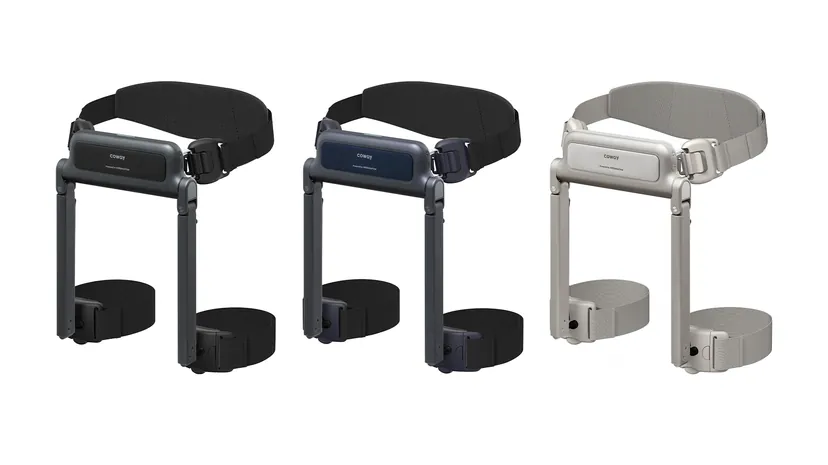
Coway is set to introduce a walking assistance wearable robot as a rental-exclusive product in October. SK Intellyx has entered the market with its wellness robot "NAMUH X," and Cuckoo has unveiled food-tech robots aimed at business-to-business (B2B) markets such as the restaurant industry. While the speed and direction of commercialization vary, the underlying concept—combining high-priced robots with existing distribution and visiting management infrastructure and subscription models to lower the burden on users—remains consistent.
From Walking Assistance to Wellness: Rental Appliance Companies' Robotic Experiments
On the 22nd of last month, Coway unveiled a walking assistance wearable robot in collaboration with global robotics company Wirobotics and began accepting pre-consultation reservations. The wearable product, designed to assist the user's gait, is worn around the waist with leg straps attached. Weighing 1.6kg, it can be worn over everyday clothing and utilized in various walking environments, from casual strolls to climbing stairs and hiking. A dedicated mobile application also provides walking reports.
Coway is offering a "half-price for two months" rental fee promotion to customers who sign a rental contract following a pre-consultation. Following Wirobotics' introduction of a subscription service for its wearable robot, Coway is effectively applying its own fee-based business model by leveraging its internal distribution and management network.
This is an extension of the life-care business expansion pursued by Coway. In February of this year, Coway launched its home medical device brand "Therasol," sequentially introducing urinary incontinence treatment devices and personal low-frequency stimulators. Having already expanded its product lineup to include food waste disposers and wall-mounted air conditioners, the company is now broadening its reach into the senior care segment.
A Coway official stated, "We planned the launch of the walking assistance robot as senior care has gained attention as a promising industry. Since our main customer base consists of women in their 40s and 50s, the product can also be applied to their parents, so we are expecting to create new demand."
Coway is also considering entry into the robot vacuum cleaner market. The plan is to target the home robotics market by leveraging the customer base secured through water purifiers and other products, alongside its nationwide visiting management network. While there has been talk of commissioning production to Chinese firms via Original Equipment Manufacturer (OEM) channels to drive sales and rental businesses, the company stated, "While we are continuously reviewing various product categories to strengthen business competitiveness, nothing specific has been decided regarding the launch of any particular product."
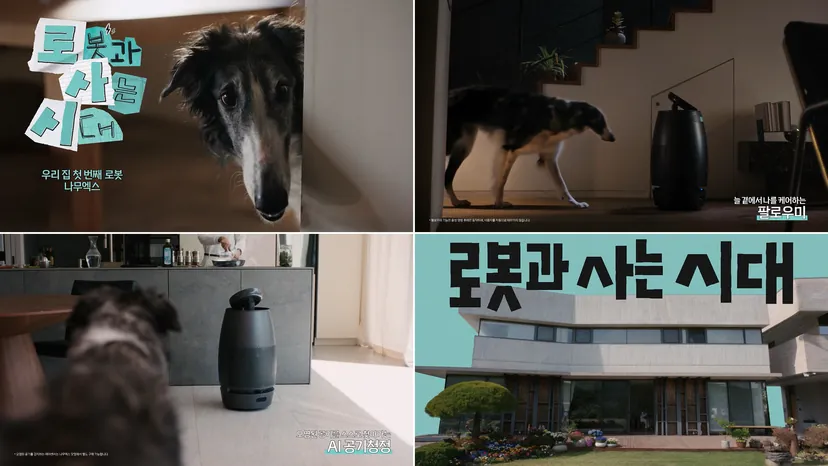
SK Intellyx is developing its business by combining robots with various services beyond simple product sales. Last year, it launched the AI wellness brand NAMUH X and introduced the wellness robot A1. Currently, the company is expanding its services centered on mobile air-purifying robots.
NAMUH X features "Air Solution," which purifies air by detecting contaminants in specific areas through autonomous driving, and "Vital Sign Check," which confirms health indicators using non-contact remote photoplethysmography (rPPG) technology. It also supports voice interaction based on Google’s AI model Gemini and provides real-time information. The company aims to be a platform that can extend services from air management to health, security, and emotional care, such as by integrating mobile security services in cooperation with S-1.
Commercialization efforts are also ongoing. The company was selected for consecutive demonstration projects hosted by the Gangnam-gu Robot Testbed and the Korea Institute for Robot Industry Advancement in July, and it signed a joint research and development agreement for AI mental health and wellness services with KAIST. Last month, it held an official launch event in Malaysia, marking its first foray into an overseas market. It is also reportedly considering plans to expand its robot lineup into the housework domain in the future.
However, the contribution of the new business to earnings has yet to be confirmed. SK Intellyx's operating profit last year was 55.2 billion won, a 44.9% decrease from the previous year. It is possible that the costs associated with the launch of NAMUH X and investments in new businesses affected profitability. SK Intellyx is pursuing new business based on the cash flow generated from its existing subscription business. Its decision to exit the low-profit kitchen appliance business and transfer the gas range, electric range, and electric oven business rights to KyungDong Navien is also part of its business portfolio restructuring.
Diversification Amid Saturation Concerns… Commercialization Still in Early Stages
The background to why rental appliance companies are focusing on robots also lies in the growth structure of the existing market. Industry estimates suggest the number of domestic rental accounts is approximately 21 to 22 million, nearing the total number of households at 22.29 million. With it becoming difficult to maintain growth solely through the expansion of account numbers, companies are aiming to secure new demand through product diversification.
Coway recorded its highest quarterly performance in the second quarter of this year, with consolidated revenue reaching 1.4422 trillion won. Domestic business revenue was 786.8 billion won, up 7.7% from the same period last year, and revenue from overseas subsidiaries was 587.5 billion won, a 24.2% increase. While the domestic business maintains growth, this move is interpreted as an attempt to secure additional demand by broadening the product portfolio in a situation where overseas growth rates are higher. Increased competition, such as the entry of large conglomerates into the rental market, is also cited as a background for business diversification.
Robots are products that require continuous management, including installation, maintenance, and software updates, in addition to initial purchase costs. The price of Wirobotics' walking assistance robot "WIM" was around 2.8 million won at the time of its 2024 launch. This leaves room for the application of a rental model that spreads the burden of a one-time purchase into monthly usage fees and provides after-sales service. The global market research firm Global Market Insights projected that the Robots-as-a-Service (RaaS) market would grow from $2.21 billion in 2025 to $14.56 billion in 2035. There is an observation that the business model of paying a fee to use a robot instead of purchasing one directly could spread.
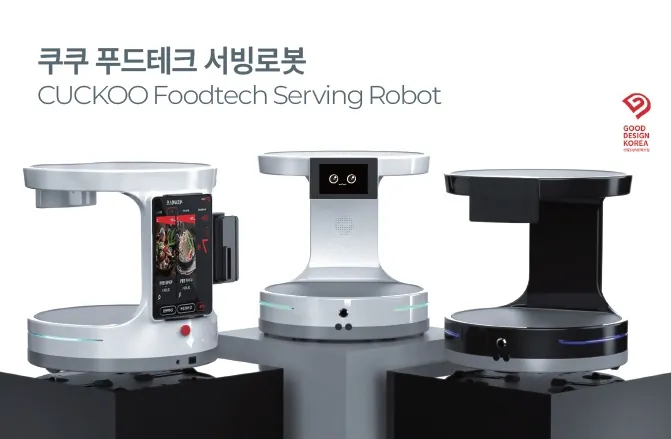
Cuckoo is targeting the B2B market, including the restaurant industry, with food-tech robots. In June of last year, it unveiled serving robots, automated frying robots, electric grills, rotating skewer robots, and automated rice cookers. The serving robot has a load capacity of up to 15kg and allows for store-customized adoption and rental. These product lines target the demand for the automation of cooking and serving. However, Cuckoo Homesys stated in its Q1 report for this year that the related business is not yet in a full-scale operation stage. It appears that time is still needed between the product unveiling and actual commercialization and revenue generation.
The movement toward expanding the robot business can also be confirmed in each company's articles of incorporation. At this year's regular shareholders' meeting, Coway added businesses related to robot manufacturing, sales, leasing, and services, as well as orthopedic and body-correction devices and pet-related devices. Following the addition of serving robot, rice cooker robot, and automated cooking appliance manufacturing and sales last year, Cuckoo Homesys included the provision of robot solutions related to the food and beverage industry and the sales, installation, and maintenance service of automated cooking robots in its business purposes this year.
SK Intellyx also incorporated AI-based product and service development and supply, big-data-related R&D, and service/industrial robot parts manufacturing and sales into its business purposes starting two years ago. Adding business purposes to the articles of incorporation is often a preemptive measure to expand the scope of business in the future. In the robotics field, it is noteworthy that each company is concretizing its business through product launches, demonstrations, and service development.
Nationwide visiting management organizations and service centers are foundations that rental appliance companies can utilize in the robot business. However, unlike existing water and air purifiers, robots require separate service capabilities, such as product-specific operating environments, troubleshooting, and software management. For the robot business to translate into revenue, companies must secure consistent consumer usage demand through product completeness and real-world user experience.
An official from the rental industry said, "A robot is not a product you sell and walk away from; how long you can keep it running without problems after installation determines the revenue. It is difficult to see noticeable numbers within this year, and the outline of the business will likely emerge only after 1 to 2 years of real-world usage data have accumulated."