

[비즈한국] “They told us it would be 5 years away 15 years ago, and again 10 years ago. It feels like 5 years have already passed three times over.”
Choi Soo-young, a member of Girls' Generation, spoke calmly. She described the time she and her father, Choi Jung-nam, Chairman of the Korean Retinitis Pigmentosa Society, have spent waiting for a cure. Her father is a patient suffering from Retinitis Pigmentosa (RP).
For a patient, "5 years away" is not just a research and development timeline. The disease continues to progress while they wait for a treatment. Their field of vision narrows, and their eyesight declines. On the other hand, for researchers and medical professionals, 5 years is the necessary time required to ensure that new treatments are safe for human use.
Ultimately, the problem of developing new drugs for rare and incurable diseases cannot be explained solely by the demand to “develop it faster.” It is necessary to distinguish between the time that is scientifically essential for patients to wait and the time that can be reduced through technological and institutional changes.
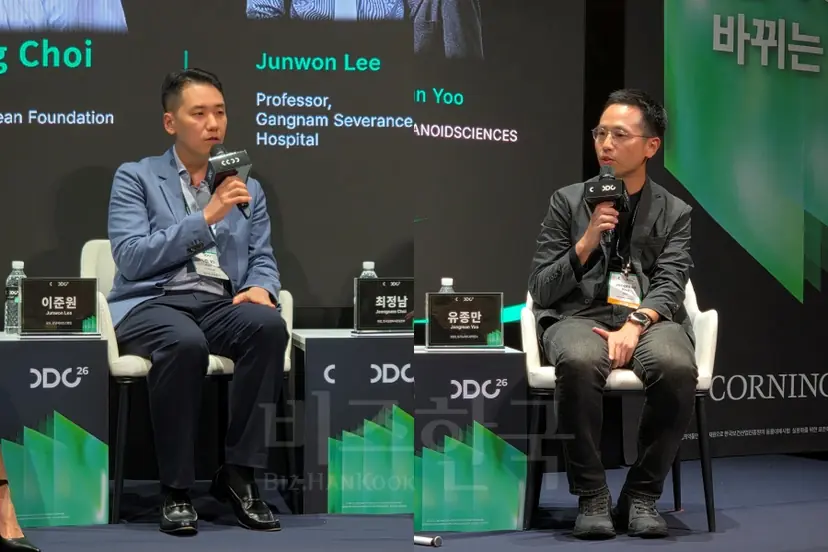
This issue was also raised as a key topic during the “Patients Creating Treatments” session at the ‘Organoid Developer Conference 2026,’ held at the Cha Bio Complex in Pangyo, Seongnam, Gyeonggi Province, on the 18th.

Research Results Accumulate, but Treatments Remain “5 Years Away”
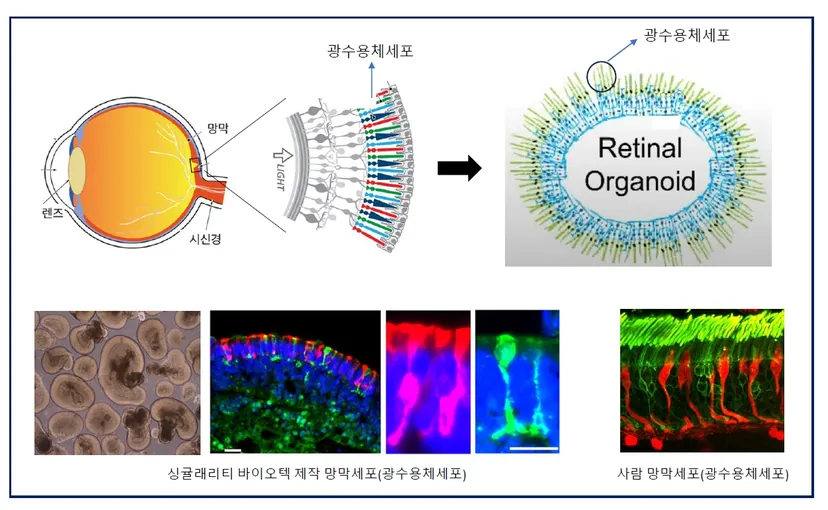
RP is a progressive genetic disease where retinal photoreceptor cells are gradually damaged, leading to a loss of visual field and acuity. Currently, there is no fundamental cure for the disease itself for most patients.
Lee Jun-won, a professor of ophthalmology at Gangnam Severance Hospital, explained, “There is currently no way to radically cure RP itself. If cataracts or macular edema are present, we can treat those, or help with low-vision rehabilitation, but that is the extent of it.”
Entertainer Lee Dong-woo, who was diagnosed with RP in 2003, said, “Even though 20 years have passed and there have been research achievements, from a patient’s perspective, it still feels like a distant story.”
There is a large gap between research results and actual treatments. Even if effectiveness is confirmed in cell or animal experiments, one must go through preclinical and clinical trials to verify if the same effectiveness and safety occur in humans.
Professor Lee Jun-won cited the gene therapy ‘Luxturna’ for hereditary retinal diseases as an example. It took about 16 years from the confirmation of therapeutic potential in animal studies in 2001 to receiving U.S. Food and Drug Administration (FDA) approval in 2017.
Professor Lee stated, “Because safety, not just efficacy, is critical for human application, we must go through processes such as cell research, preclinical trials, and phase 1, 2, and 3 clinical trials.”
From a patient's perspective, it is frustrating. Lee Dong-woo said, “Safety is not an area that patients can verify themselves. The golden time, when we can be treated immediately, is what we look forward to most.” He added, “A patient’s life feels short, while the time for research feels, conversely, too long.”
Even with Cell Therapy and Organoids, the Time Issue Persists
Recently, in the field of hereditary retinal diseases, including RP, new alternatives beyond existing gene therapies—such as cell therapy, artificial retinas, and organoid-based regenerative therapies—are being researched.
Gene therapy targets a specific causal gene. With more than 344 causal genes known to be related to hereditary retinal diseases to date, even Luxturna targets only patients with RPE65 mutations. The method of developing individual treatments for each gene has limitations in providing opportunities to all patients.
A universal therapeutic strategy that does not depend on specific gene mutations is needed, and Professor Lee identified cell therapy and artificial retinas as key alternatives. Cell therapy attempts to restore function by replacing damaged retinal cells, while artificial retinas compensate for damaged retinal function using electronic devices.
Organoid technology is also gaining attention as a regenerative treatment approach to repair damaged tissues. Yoo Jong-man, CEO of Organoid Sciences, explained that while most existing treatments manage symptoms, organoid-based regenerative therapy aims to restore the damaged tissue itself. He noted that while they are currently prioritizing the development of intestinal organoid-based regenerative therapies, they view the retina as a follow-up development area due to the high unmet medical needs.
However, the emergence of new technology does not eliminate the time needed for verification. On the contrary, because these are technologies being applied to humans for the first time, it is necessary to check for unexpected adverse reactions or long-term effects.
Ultimately, what matters is not “reducing verification,” but rather “identifying which processes take an unnecessarily long time.”
Professor Lee explained that while the process of creating the first treatment is difficult, subsequent technologies may see shortened regulations or procedures based on previous experience. Areas that can be discussed include clinical trial design that considers the characteristics of rare diseases, prompt consultation and review by regulatory agencies, and the use of new non-clinical evaluation technologies.
In fact, the Ministry of Food and Drug Safety has been operating the Global Innovative Products on Fast Track (GIFT) system since September 2022. It is a system that designates treatments for life-threatening or serious diseases for fast-track review to reduce approval time. The goal is to reduce the standard review period by 25%, from 120 days to 90 days. It applies a rolling review process where prepared data are reviewed first, and some data not directly related to safety are supported for submission after market release according to relevant regulations.
Ultimately, it is necessary to distinguish between the time needed for scientific verification and the time that can be reduced in administrative and review processes within the total waiting time for patients.
The use of GIFT is also continuing in the field of rare and incurable diseases. The Ministry of Food and Drug Safety is applying the fast-track review system to rare disease treatments, such as designating onasemnogene abeparvovec for spinal muscular atrophy as GIFT No. 67 advanced biopharmaceutical in April 2026.
The paths for patients to access new therapeutic technologies are also expanding. The amended Advanced Regenerative Bio Act, which went into effect on February 21, 2025, newly introduced an advanced regenerative medical treatment system. Previously, advanced regenerative medicine was focused on clinical research, but now, regenerative medical institutions can submit treatment plans for regenerative medical technologies—whose safety and efficacy have been confirmed through prior clinical research—to be reviewed by the Advanced Regenerative Bio Deliberation Committee and used for treating patients with serious, rare, and incurable diseases. This has opened a different path for treatment access compared to having to wait only for drugs that have received product approval.
For rare and incurable diseases where treatment alternatives are scarce, this can be seen as an institutional mechanism to reduce the gap between the time waiting for final new drug approval and the patient's point of treatment access.
Professor Lee also stated that institutional changes considering the patients' situations are necessary. However, “fast approval” and “approval with less verification” should not be viewed as the same thing. The key is to reduce the time spent in repetitive or delayed research and development processes while maintaining the necessary safety and efficacy verification.
To avoid repeating the “5 years away” cycle that has recurred for 15 years, the way research, clinical trials, and regulations are connected needs to change as much as the new treatment technology itself. Chairman Choi Jung-nam emphasized, “All the technologies that are going to come out have already emerged, and in this stage of creating even eyes through cell therapy, the important thing is the battle to safely turn them into treatments.”