

[비즈한국] There are 1,389 rare diseases managed by health authorities. As diseases become ultra-rare or extremely rare, it becomes increasingly difficult to find treatments or information about the condition, and even meeting another patient with the same illness is not easy.
For these patients, patient advocacy groups go beyond simple social clubs. They share the experiences of those who have walked the same path before, and they aggregate scattered problems to present them to medical staff or the government. They also take on roles such as connecting researchers with patients and demanding institutional improvements.
The activities of patient groups for Retinitis Pigmentosa (RP) and Hypophosphatasia (HPP) illustrate the role that patient organizations can play in the realm of rare diseases.
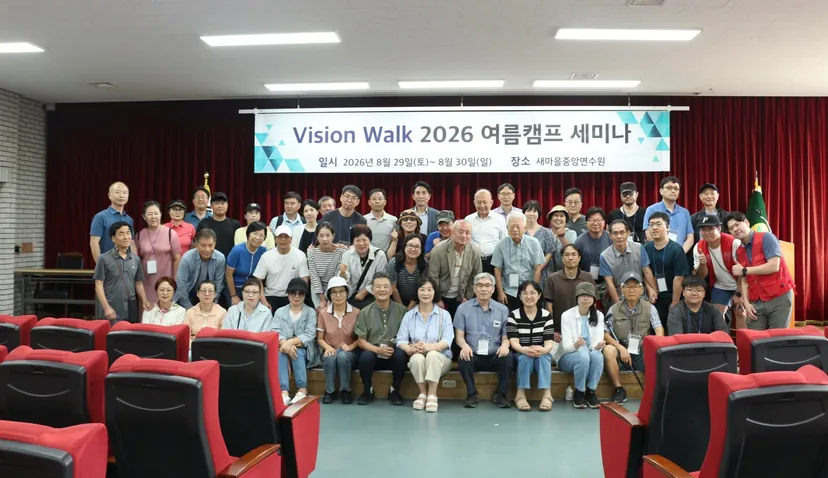
About 100 RP Patients Gather from Across the Country… “Just Seeing Each Other Is a Source of Strength”
About 100 RP patients and their families from all over the country—including Seoul, Busan, Daegu, Incheon, Gwangju, and Jinhae, Gyeongnam—gathered for a two-day summer camp held in Seongnam, Gyeonggi-do, on August 29.
It was different from the heavy and somber atmosphere I had expected before visiting. Although it was a gathering of people living with progressive visual diseases, the participants, who had not seen each other for a long time, greeted one another, laughed, and chatted. As they shared meals and programs, they naturally exchanged details about their daily lives and treatment experiences.
RP is a genetic disorder in which the function of photoreceptors in the retina gradually declines. As the disease progresses, the field of vision narrows and visual acuity decreases, potentially leading to blindness; however, current treatment options are limited.
The camp went beyond mere socialization. Lectures on global treatment development trends and cell/gene therapy technologies were held, and patients asked direct questions about their own genetic mutations and future treatment possibilities. It was a space where patients and families could access the latest treatment information and communicate directly with researchers.
Choi Jeong-nam, head of the Korean Retinitis Pigmentosa Society, said he had considered not holding the event this year. He had looked into taking a year off due to the burden of operations, but ultimately decided that the space where patients can face each other must continue. Choi said, “I believed that seeing the faces of our ‘family members’ even once is the greatest strength we can give each other.”
Jeong Jin-hyang, Secretary General of the Korea Organization for Rare Diseases (KORD), also cited escaping isolation as the reason why advocacy groups are necessary for rare disease patients. Secretary General Jeong emphasized, “An important role of an advocacy group is to take the difficulties that a single patient used to face alone and bring them out into the open to make them problems that can be solved together.”
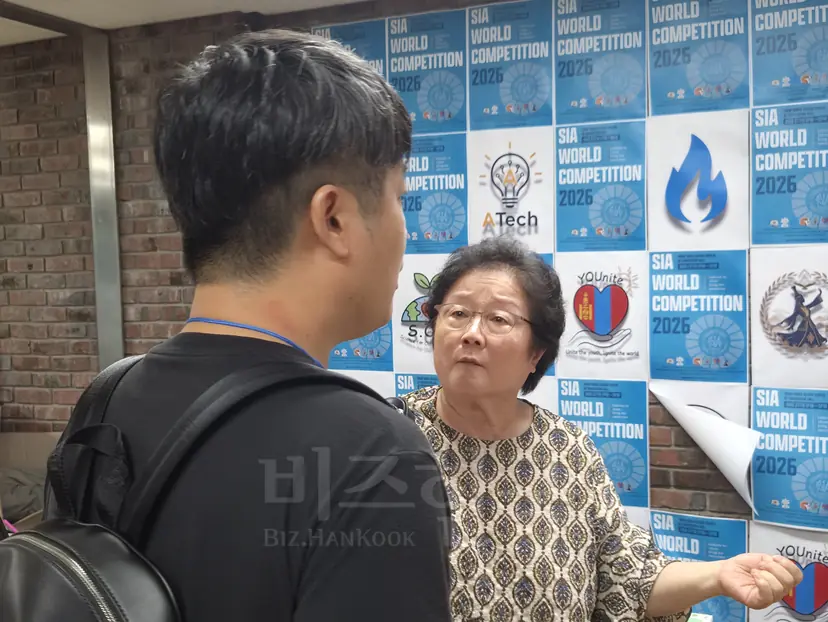
“I Took a Test to Maintain the Special Calculation Status, and My Vision…”
As patients gathered in one place, the difficulties individuals faced in medical settings naturally surfaced.
Choi Geum-sik, an RP patient from Gwangju, brought up the experience he had during the re-registration process for the special calculation system (a system that lowers out-of-pocket medical costs). Choi recently underwent an electroretinogram (ERG) at a hospital. ERG is a test that measures the electrical response of the retina to light stimulation to verify retinal function.
Choi claimed that his ability to distinguish colors and his vision had declined after the test. “I took the test to keep my special calculation status, but since then, it’s been hard to distinguish colors and my vision has dropped,” he lamented. “I’m scared that I might have to take the test again.”
The special calculation system is a policy that reduces the burden of health insurance copayments for patients with high medical costs, such as those with rare diseases. For rare disease patients, the out-of-pocket rate for treatment of that condition is lowered to 10%, and the standard application period is 5 years. To re-register, the patient must still have the disease at the end of the application period, be receiving ongoing treatment, and meet the registration criteria for that disease again; medical records from within one year of the application date are recognized. ERG, visual acuity and field tests, fundus exams, and genetic tests are used for the diagnosis of retinitis pigmentosa.
However, the causal relationship between the vision changes Choi complained about and the ERG test has not been medically confirmed. Nevertheless, since there is pressure on patients already diagnosed with a progressive disease to retake tests to maintain their special status, critics point out the need to clarify the scope of required tests and identify alternative methods during the re-registration process.
Secretary General Jeong stated, “There is a need to reduce the testing burden that rare disease patients face during the special calculation re-registration process. We will deliver the voices of the patients to the government and propose institutional improvements, such as whether a doctor’s note can serve as a substitute.”
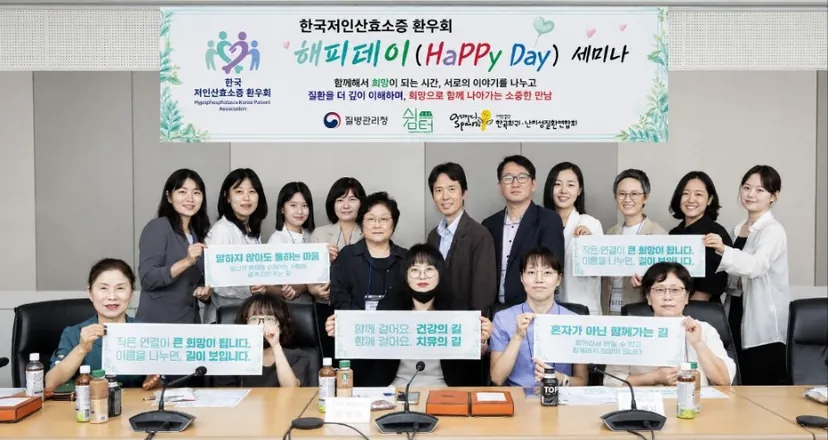
HPP Patient Group Invites Medical Staff to Study Together
Another role of patient advocacy groups is to narrow the information gap between patients and medical staff.
Hypophosphatasia (HPP) is a rare genetic disease that causes problems with the mineralization of bones and teeth. It is estimated that there are only about 50 patients in Korea. For adult patients, it is possible for symptoms like fractures or musculoskeletal issues to be mistaken for common conditions like osteoporosis.
The HPP patient group has been organizing sessions where patients and their families can learn about the disease by inviting medical staff from various departments, including pediatrics, rehabilitation medicine, endocrinology, and pediatric dentistry. They ask medical staff directly about how to understand their symptoms and what to check for in the actual treatment process.
There have been cases where issues raised by patient groups and medical staff led to institutional changes.
In HPP, there can be a phenomenon where primary teeth fall out at an early age without trauma or severe tooth decay. If this is considered a simple dental problem, the disease may go undiagnosed. Accordingly, the patient group and medical staff have raised the need to check for the premature loss of primary teeth during the infant oral examination stage.
As these concerns were raised, an item to check for the premature loss of primary teeth was reflected in the oral examination questionnaire for infants. While a questionnaire item alone cannot diagnose HPP, it is significant that it has provided a clue for medical staff and guardians to suspect the disease and lead to precise diagnostic testing.
Professor Kang Jeong-min of the Department of Pediatric Dentistry at Yonsei University Dental Hospital said, “Primary teeth falling out before age four without trauma or tooth decay is an important sign that HPP should be suspected. If this can be checked at the oral examination stage, it can help reduce the ‘diagnostic odyssey’ where patients wander between multiple medical institutions and lead to precise testing at an earlier stage.”
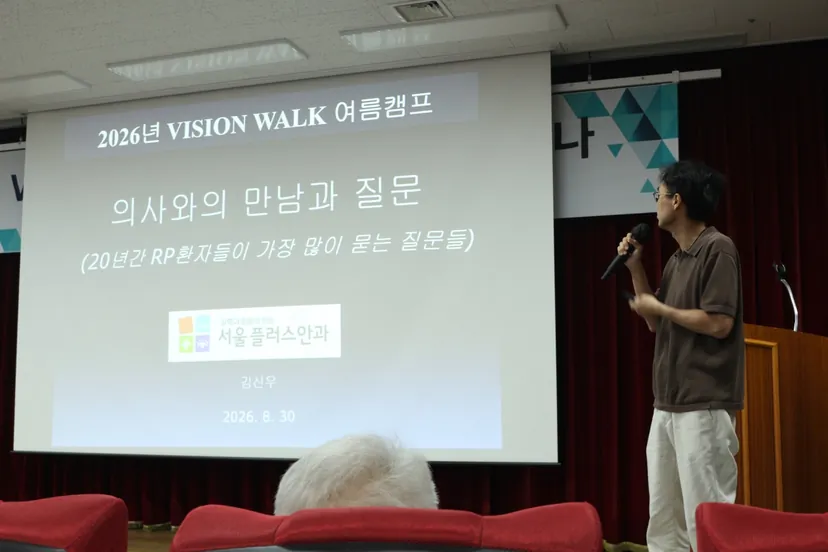
Developing from a Mutual Comfort Group into a Link for Medicine, Research, and Policy
In rare diseases, a small number of patients does not just mean a small market size. It means that there is less medical staff experience and accumulated research data on the disease, and it also means that the patient’s experience is difficult to be sufficiently reflected in the policy-making process.
In this gap, the role of patient advocacy groups is growing.
To a newly diagnosed patient, they serve as a gateway to meet others who have experienced the same disease, and to a patient seeking treatment, they become a channel connecting them to medical staff and researchers. When problems repeatedly experienced by multiple patients are identified, they aggregate these and demand institutional improvements from the government.
The case where Chairman Choi Jeong-nam jumped into treatment research alongside patients is an example of the patient group’s role expanding into the research domain.
For patients with ultra-rare diseases, perhaps the thing more urgent than a new treatment is the confirmation that they are not alone.
The encounters that began that way grow into voices that accumulate disease information, connect medical staff with patients, and sometimes change systems. The "another family" met in despair is moving a step beyond comforting each other and becoming a solidarity that moves medicine and policy.