

[비즈한국] The government has decided to adjust the pace of the second wave of public institution relocations to provincial areas. As backlash regarding the targets and criteria for relocation grows, the government plans to finalize its direction around October or November following public deliberation and opinion collection. With the potential relocation of financial public institutions being discussed, financial sector unions are intensifying their opposition, citing concerns over reduced work efficiency and the loss of specialized talent. Conversely, civic groups outside the capital region have criticized the financial sector's resistance as collective selfishness and are demanding the relocations proceed without setbacks.

Minister of Land, Infrastructure and Transport Kim Yun-duk stated during a plenary meeting of the National Assembly's Special Committee on Budget and Accounts on the 24th regarding the timing of the second wave of relocations, "We are currently in the preparation stage, and since we must undergo a process of public deliberation, we expect the timing to be around October or November." He added, "It is not possible for all 350 institutions to relocate, so we are reviewing which locations are viable."
The government did not include the second wave of public institution relocations on the agenda for the Cabinet meeting on the 25th. It appears that the intense backlash from the target institutions, combined with deep deliberation over the selection criteria, has complicated the process. While the timeline has been postponed and the possibility of more institutions remaining in the capital has increased, financial sector unions intend to continue their collective actions until discussions are officially canceled.
On the 27th, Yoon Seok-gu, chairman of the Korean Financial Industry Union, stated during a press conference held ahead of the September 4 general strike, "Although discussions on moving public financial institutions to the provinces have been postponed under the guise of 'public deliberation,' the struggle has only just begun. We will continue our struggle until the discussion on relocation is completely scrapped, not just postponed."
The financial union argued, "We agree with the need for balanced regional development and the decentralization of the capital-concentrated system. However, a method that physically splits the financial industry functions already established is unacceptable. We must enhance Seoul's competitiveness as a financial hub and strengthen the financial foundation to support small and medium-sized enterprises (SMEs), small business owners, and regional industries, centering on regional banks and local financial institutions."
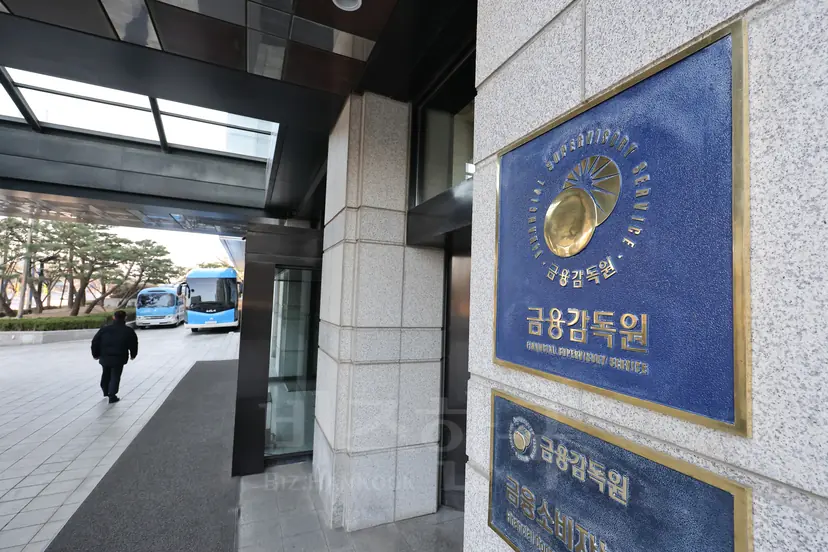
In particular, with the potential relocation of the Financial Services Commission (FSC) and the Financial Supervisory Service (FSS) to Sejong City, the opposition from relevant institutions has become particularly fierce. Other institutions affiliated with the FSC, such as the Korea Deposit Insurance Corporation (KDIC), the Korea Inclusive Finance Agency, and the Credit Counseling & Recovery Service, are also being mentioned as potential relocation targets.
The unions of the Financial Supervisory Service and the Korea Deposit Insurance Corporation released a joint statement on the 24th opposing the regional relocation. They emphasized, "The entities protected by the KDIC and the subjects of the FSS's inspections are concentrated in the capital region. The financial companies and infrastructure that are the subjects of our work are also in the capital area. Financial supervision detached from the field loses timeliness and realism, leading to inefficiency. In times of crisis, the physical distance between institutions means delayed decision-making."
The acceleration of the departure of young staff and specialized talent was also emphasized as a ground for opposition. Both unions asserted, "If relocated to the provinces, only one in four employees would continue working. Many of the working-level staff are finance and legal experts who have navigated historical crises like the savings bank incident. For the younger generation, having the location of a company they worked hard to join changed against their will is not merely a matter of a changed commute; it is a much bigger issue."
The Korea Inclusive Finance Agency, a relatively small institution with fewer than 400 employees, also expressed opposition. On the 20th, the Korean Financial Services Union revealed that in a survey of the agency’s members, 79% opposed the relocation, 85% expressed concern over talent drain and hiring difficulties, and 44% stated they would consider quitting or changing jobs if the relocation is confirmed.
The union emphasized, "A uniform and mechanical classification that ignores the functions, scale, personnel structure, and policy execution characteristics of each institution must be stopped immediately. Prior to selecting targets, an independent and objective impact assessment regarding suitability, talent loss, business gaps, and public harm for each institution must be conducted and the results fully disclosed."
As opposition grows not only from private financial firms but also from public institutions and state-run banks, it remains to be seen whether the government will change its stance after the opinion collection process. During the plenary meeting of the budget committee, Minister Kim Yun-duk said, "Since all heads of local governments have changed following the local elections, we are listening to their opinions, centering on the newly elected officials. We also need to listen to the opinions of the labor unions, so we plan to finalize this through a public deliberation process." However, financial union chairman Yoon Seok-gu stated at the press conference on the 27th that they "have had no dialogue or received any proposals from the Ministry of Land, Infrastructure and Transport."
Meanwhile, regional civic groups have voiced criticism, labeling the financial sector's pushback as "collective selfishness." On the 25th, a coalition of civic groups from the Gangwon, Yeongnam, Honam, Jeju, and Chungcheong regions, advocating for balanced development, issued a statement urging the government to push forward with the second wave of public institution relocations.
The coalition stated, "The unions of the three major state-run banks and the FSS must immediately cease their groundless opposition and collective actions. We define their resistance and collective action against the government's relocation policy as extreme collective selfishness. They have already enjoyed benefits and privileges just by remaining in the capital until now, and their attempts to prolong this by opposing policy have no persuasive merit."