

[Bizhankook] Can citizens truly know where dangerous facilities are located? Bizhankook’s investigation revealed that out of every 10 facilities nationwide with Grade D or E safety ratings—which indicate confirmed safety issues—6 were private facilities. However, the current Special Act on the Safety Control and Maintenance of Establishments limits the scope of public disclosure for safety information regarding private facilities based on the nature of the facility. For general private facilities other than multi-use buildings, safety ratings, major defects, and maintenance history are difficult for the public to verify.
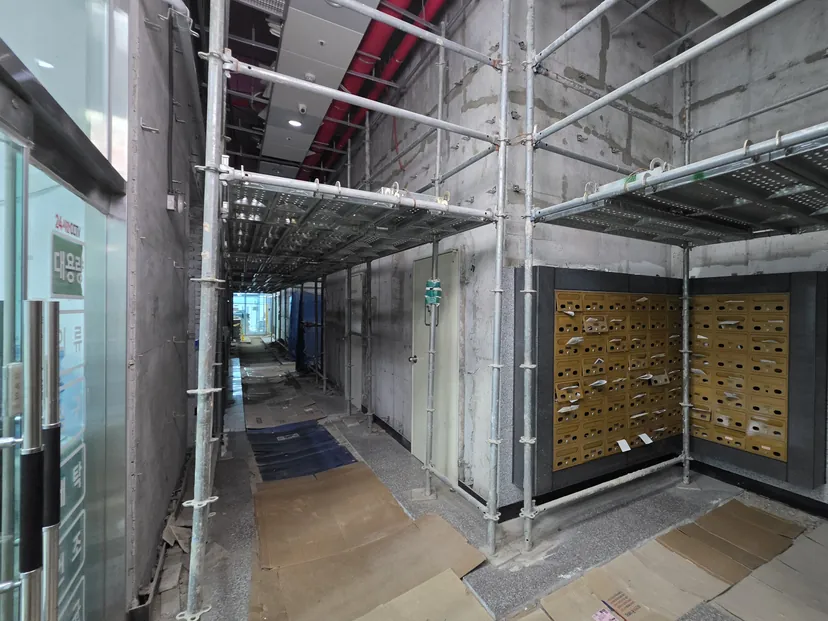
Public Facilities Disclose Safety History… General Private Facilities Disclose Only ‘Specifications’
According to the ‘Status of Facility Safety Ratings’ obtained by Bizhankook through a request for information disclosure to the Korea Authority of Land & Infrastructure Safety, there were 513 facilities with Grade D or E ratings nationwide as of the end of June this year. There were 457 Grade D facilities, which require urgent repair or reinforcement and a review of usage restrictions due to defects in major components, and 56 Grade E facilities, which require immediate prohibition of use, reinforcement, or reconstruction due to serious defects. Of the D and E grade facilities with confirmed safety issues, 307 were private facilities, accounting for 60% of the total.
However, information on the majority of these hazardous private facilities was not disclosed. Bizhankook requested the Korea Authority of Land & Infrastructure Safety to disclose the names, history of inspections and diagnoses, safety ratings, and follow-up measures for D and E grade facilities. The Authority, however, did not disclose information for 307 (60%) out of the 513 total facilities. This included 13 out of 206 public facilities (6%) and 294 out of 307 private facilities (96%).
An official from the Korea Authority of Land & Infrastructure Safety explained, "Facilities under public management have their safety ratings disclosed; however, among facilities under private management, those that are not subject to mandatory disclosure, such as certain multi-use buildings, only have their technical specifications disclosed, not their safety ratings. While the overall status of safety ratings was made public, the status of individual specific facilities was excluded from the list because they could not be disclosed."
The Special Act on the Safety Control and Maintenance of Establishments stipulates that facility information can be disclosed to ensure public safety. Disclosure targets include facility management plans, history of safety ratings, history of major defects, status of emergency safety measures, history of safety inspections and performance evaluations, maintenance history, and technical specifications of the facility. For facilities managed by the public sector, all information prescribed by law falls within the scope of disclosure. If confidentiality is required for security reasons, disclosure is subject to the consent of the management entity.
However, information regarding a significant portion of privately managed facilities is restricted. While the Act allows the disclosure of all safety information, excluding management plans, for social infrastructure under the Public-Private Partnership in Infrastructure Act, multi-use buildings, and retaining walls/cut slopes, it stipulates that for other private facilities, only the technical specifications can be disclosed. Consequently, citizens are unable to examine the safety ratings, major defects, or inspection and maintenance history of these facilities.
Of course, there is a system to notify the public of hazardous facilities on-site. According to the Act, the management entity of a facility where a major defect is discovered or that is designated as Grade D or E must install warning signs at the facility and notify residents through broadcasts, the internet, or other means. However, such individual notices make it difficult for citizens to identify nearby hazardous facilities in advance or check safety information before using them.
“Safety Ratings and Repair History Should Be Disclosed to Allow User Assessment”
Experts point out the need to expand the scope of safety information disclosure for private facilities so that citizens can identify the risks of nearby buildings in advance. Choi Myeong-ki, a professor at the Korea Industrial Site Professors' Association, said, "It is necessary to disclose not only the technical specifications of private facilities but also their safety ratings. The history of repairs and reinforcements should also be made public so that residents or visitors can see it and make their own judgments. If safety ratings are disclosed, people might choose not to sign contracts for buildings with safety issues, and if the property value drops, owners will eventually be forced to undertake repairs and reinforcements."
Professor Choi also proposed linking official building registers with safety information. The intent is to allow people to check safety ratings and management history of buildings, similar to how one checks accident or maintenance records when buying a used car. "If it is recorded in the building register and made available for public inspection, people can verify whether a building is hazardous or not," he explained. The goal is to allow citizens to check safety information via official documents without having to search for a separate system.
Bizhankook is publishing the status of D and E grade facilities as disclosed by the Korea Authority of Land & Infrastructure Safety so that readers can verify the information themselves. The data is based on registrations in the Facility Management System (FMS) as of June 30 this year. Note that this is not a complete list of all D and E grade facilities nationwide, as it excludes general private facilities and those with restricted disclosure due to defense or security reasons. Detailed information, such as the safety rating history, status of emergency safety measures, and inspection and maintenance history of specific public facilities, can be checked by facility on the FMS website.
Status of Grade D·E Facilities
This is a list of Grade D and E facilities nationwide obtained by Bizhankook through a request for information disclosure to the Korea Authority of Land & Infrastructure Safety. The data reference date is June 30, 2026, and facilities