

[비즈한국] The crisis in essential pediatric care goes beyond just the lack of doctors. When a child who has struggled to get a hospital bed suddenly experiences a decline in health, the speed at which that deterioration is detected and addressed is equally critical. In particular, because pediatric patients can worsen rapidly, a hospital-wide safety net is required to detect danger signals before they reach the point of cardiac arrest or the need for intensive care.
This is the role of the Rapid Response System (RRS). It is a patient safety framework in which a rapid response team intervenes early if signs of abnormality appear in a general ward patient to prevent severe deterioration.
However, in Korea, there is a gap in the implementation levels of RRS between adults and children. While 47 tertiary hospitals in Korea operate adult RRS, only 7 out of the 15 centers equipped with a Pediatric Intensive Care Unit (PICU) operate a pediatric RRS. Furthermore, five of those are concentrated in Seoul, leaving only two in the regions outside the capital.
Park Sung-jong, President of the Korean Society of Pediatric Critical Care Medicine (Professor of Pediatric Critical Care at Asan Medical Center), stated at the 'Global Patient Safety Summit in Pediatrics' held at the Josun Palace Hotel in Yeoksam-dong, Seoul, on the 19th: "Even though pediatric acute deterioration can progress much faster than in adults, and early detection and rapid intervention are more decisive in improving clinical outcomes and prognoses, the introduction and support for pediatric rapid response teams remain poor." While pediatric RRS has been in operation overseas since the 1990s, its spread in Korea has been slower than that for adults.
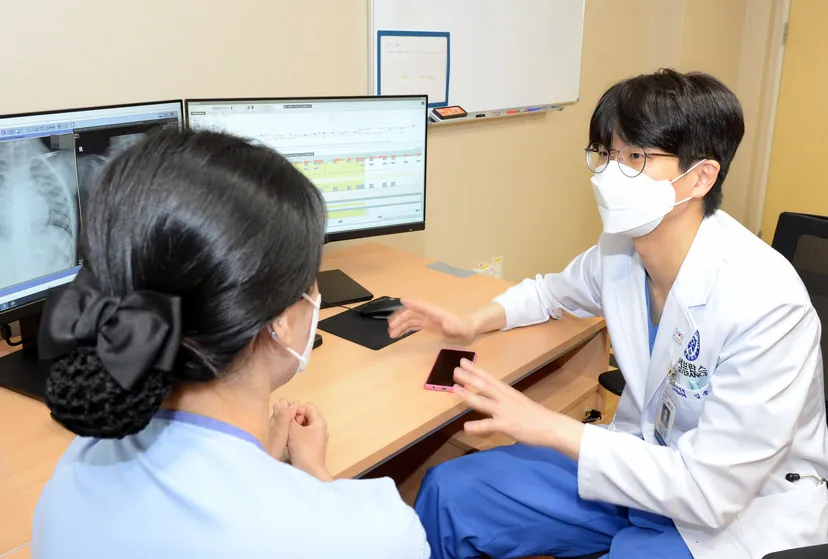
Detection Before Deterioration Is More Important Than Rescue After Cardiac Arrest
The core of an RRS is not merely treating patients who are already critically ill, but identifying danger signals early to secure time for medical staff to intervene.
The challenge is identifying which child among the many in the ward is deteriorating. In particular, because the range of normal vital signs in children varies according to age and growth stage, screening for high-risk patients is complex. This is why, in addition to having RRS personnel, a detection system that determines which patient needs the rapid response team and when is essential.
According to a study by Professor Christopher Parshuram of the University of Toronto, Canada, which analyzed data from over 15,000 pediatric intensive care admissions, approximately 85% of cardiac arrests that occurred during hospitalization were evaluated as preventable. The analysis suggests that strengthening ward monitoring systems can reduce severe deterioration.
4 Out of 10 Sepsis Cases Worldwide Occur in Children Under 5… Early Screening of High-Risk Patients via AI
A representative disease that illustrates the difficulty of early detection is sepsis. Sepsis is a serious condition where an abnormal systemic response to infection leads to organ dysfunction. The problem is that early symptoms are similar to those of naturally resolving viral infections, such as fever, making it difficult to distinguish high-risk patients. Because deterioration can lead to shock or organ failure, it is crucial to continuously observe patient changes and intervene early.
The burden of sepsis is particularly high in children. According to the Global Burden of Disease (GBD) study cited by the WHO, there were an estimated 48.9 million cases of sepsis worldwide in 2017, with 11 million deaths related to sepsis. Approximately 20 million of those cases—41% of total sepsis occurrences—happened in children under the age of 5.
Overseas, digital and AI technologies are being incorporated into RRS. According to Professor Christopher Horvat of the University of Pittsburgh, the U.S., the Children's Hospital of Pittsburgh has built an integrated sepsis response system that includes AI-based high-risk patient screening. The AI analyzes 48 variables—including vital signs, test results, and nursing notes—to calculate risk, and high-risk patients are classified for intensive observation, with alerts sent to medical staff. Rather than the AI confirming a diagnosis, it identifies the patients that medical staff need to examine first, leading to timely intervention.
Professor Horvat explained that since introducing this integrated sepsis response system, severe sepsis cases in the hospital decreased by about 50%, resulting in medical cost savings of over $1 million annually.
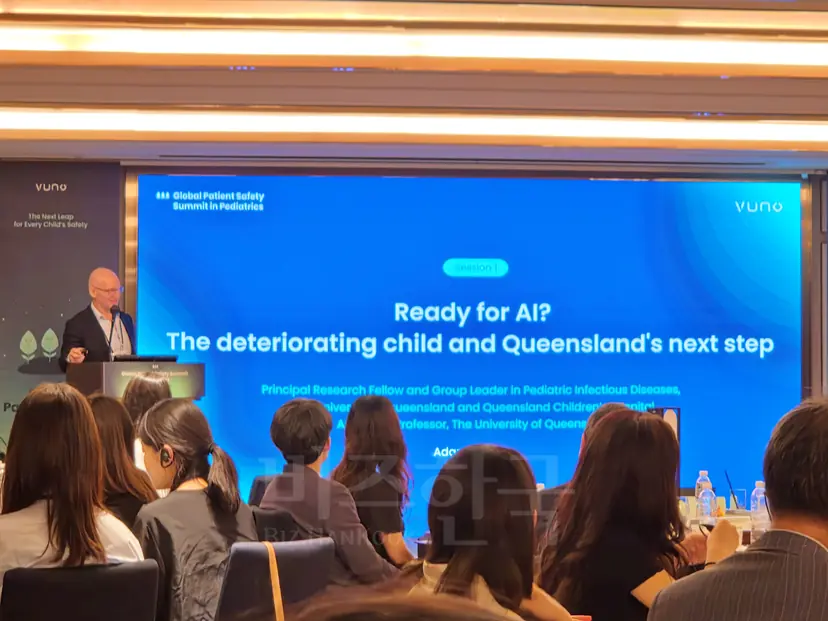
Beyond Predicting Cardiac Arrest to Respiratory Decline… Capturing Pediatric Danger Signals Earlier
AI is also being used in pediatric RRS in Korea. Among current pediatric RRS operating institutions, Asan Medical Center and Severance Children's Hospital are using 'VUNO Med-DeepCARS,' an AI-based cardiac arrest prediction medical device.
VUNO is expanding its technology to capture severe deterioration at a stage earlier than cardiac arrest. According to the company, DeepCARS can currently be used for all ages, including children, and is conducting clinical trials for follow-up prediction models for specific precursors to cardiac arrest, such as sepsis and respiratory failure. In the field of sepsis, 'VUNO Med-DeepiSEPS,' aimed at adult intensive care unit patients, received medical device manufacturing certification this May.
In pediatrics, research has been conducted on the early detection of respiratory decline. Following the development of an AI model to predict the need for invasive mechanical ventilation in neonatal intensive care patients, researchers from VUNO and Pusan National University Yangsan Hospital published follow-up study results targeting pediatric intensive care patients in the international journal 'Heart & Lung' this year.
According to the company, the pediatric model predicted the need for invasive mechanical ventilation up to 8 hours in advance, and its predictive performance (AUROC) in identifying patients requiring mechanical ventilation was approximately 0.88. It was explained that at the same sensitivity level, the number of alarms was reduced by more than half compared to existing models. Reducing 'alarm fatigue,' where unnecessary repeated alarms lead to decreased responsiveness from medical staff, is also a critical challenge for RRS.
VUNO is also participating in the Korean ARPA-H (Advanced Research Projects Agency-Health) project with Pusan National University Yangsan Hospital to develop a model that predicts the risk of clinical deterioration in adult and pediatric patients in real time.
Solving the problem of essential pediatric care cannot be achieved solely by AI quickly finding high-risk patients. Even if AI captures a danger signal, its effectiveness is inherently limited if there are no medical staff or response systems to verify the signal, evaluate the patient, and connect the findings to actual treatment.
Ultimately, in the field of essential pediatric care, the role of AI is not to replace medical staff but to prioritize helping limited medical personnel identify which children need attention first so that none are overlooked. The key is how tightly the hospital's safety net is constructed to identify danger signals earlier, allowing medical staff to intervene promptly.