

[비즈한국] The backlash from the seaweed processing and export industry regarding 'Orion-Suhyup,' a joint venture established by Orion and the National Federation of Fisheries Cooperatives (Suhyup), shows no signs of subsiding. Although the appropriateness of a partnership between Suhyup and a large conglomerate was already questioned during last year's National Assembly audit, the project has proceeded as planned, with the recent commencement of a seasoned seaweed factory. As the industry engages in collective action once again, attention is focused on whether the Orion-Suhyup issue will become a key topic of contention in this year's audit.
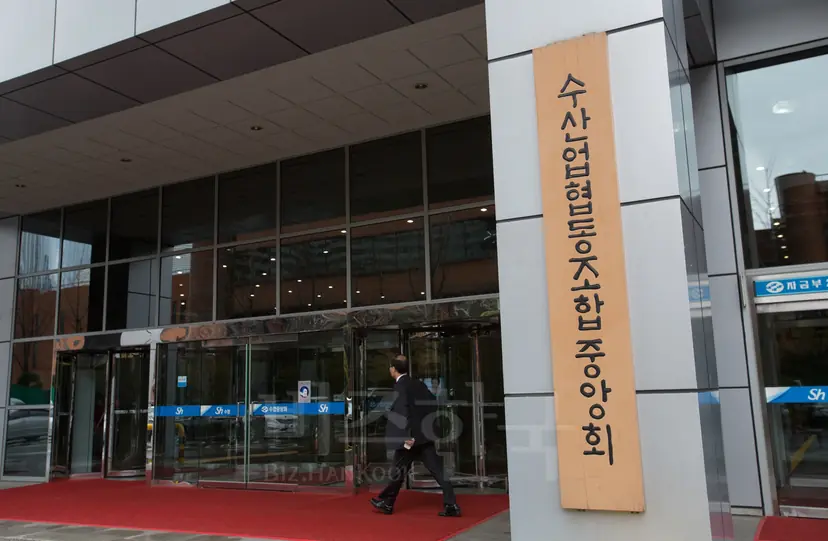
Orion-Suhyup seasoned seaweed factory breaks ground… Industry calls for ‘withdrawal of business’
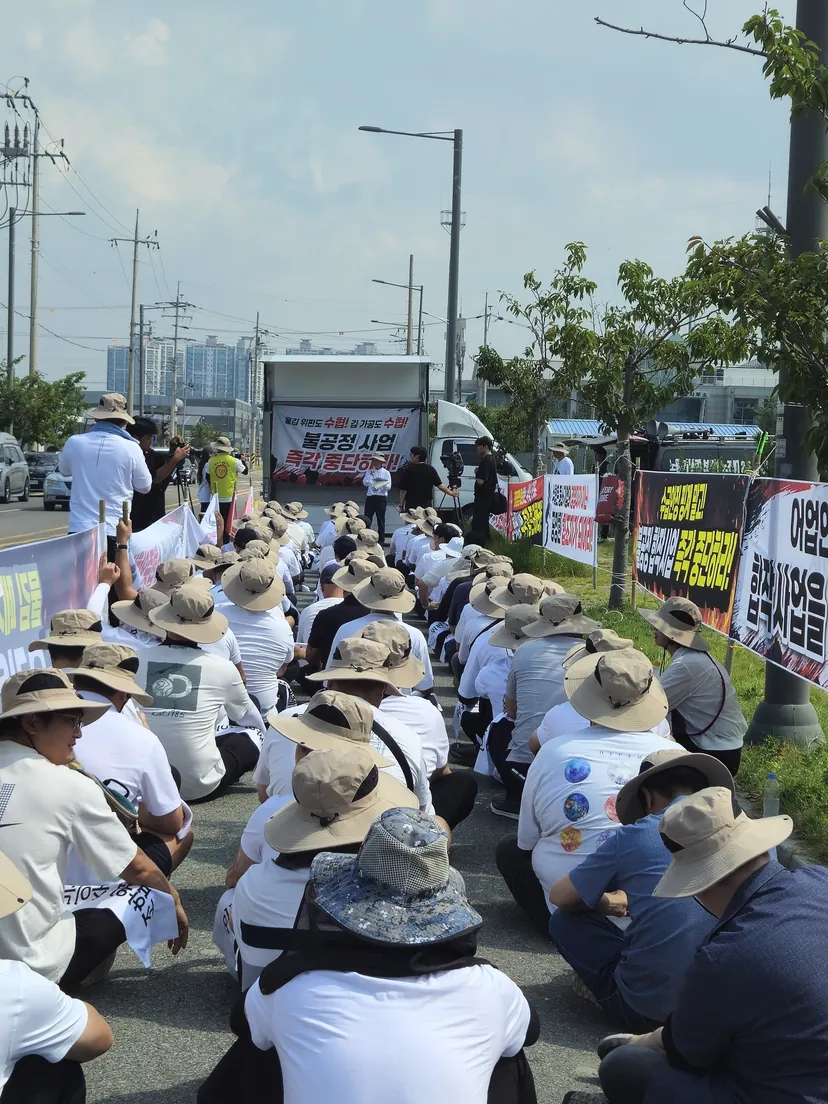
With the construction of the Orion-Suhyup seasoned seaweed factory now in full swing, resistance from the seaweed processing and export sector is intensifying. Originally, Orion-Suhyup planned to hold a groundbreaking ceremony for the factory on August 27 in Mokpo, Jeonnam-Gwangju Integrated Metropolitan City, with attendees including Suhyup Chairman Labour-Jin. However, the event was canceled one day prior due to planned protests by the seaweed industry. On that day, about 70 representatives from the Korea Seaweed Export Association and the Korea Dried Seaweed Producers Association visited the construction site to demand that Orion-Suhyup withdraw from the seaweed business.
Previously, on August 20, around 250 representatives from related organizations, including the Korea Seaweed Export Association, the Korea Dried Seaweed Producers Association, and the Korea Seaweed Processing Cooperative, held a rally in front of the Suhyup headquarters in Songpa-gu, Seoul, calling for the project's cancellation. Recently, they have been escalating their protests by publishing opposing advertisements in major daily newspapers.
A representative from the Korea Seaweed Export Association stated, "We are not against Orion entering the seaweed business on its own. Major companies like CJ CheilJedang, Dongwon, and Daesang are already operating their own businesses," adding, "For fair competition, both Orion and Suhyup should operate independently."
The seaweed business partnership between Orion and Suhyup began in earnest following a memorandum of understanding signed last July. It is understood that discussions for the joint venture started after Suhyup first proposed the collaboration to Orion. Both sides invested 30 billion won each to establish the fisheries corporation 'Orion-Suhyup' with a 50:50 stake. The structure involves Suhyup supplying the raw materials, Orion-Suhyup producing seasoned and snack seaweed, and Orion handling domestic and international sales. The seasoned seaweed factory recently began construction, with completion targeted for the first half of next year.
The reason the industry opposes the establishment of Orion-Suhyup lies in the role of Suhyup. The claim is that Suhyup, which has traditionally supported existing seaweed businesses through raw seaweed auctions, financial assistance, and storage services, faces a conflict of interest by partnering with a specific private company to enter the market directly.
A representative from the Korea Seaweed Processing Cooperative, an organization for seasoned seaweed manufacturers, said, "Suhyup should maintain a neutral role in the distribution of marine products, but the problem is that it is teaming up with a specific large conglomerate to enter the market," adding, "The seasoned seaweed sector has been operated in a way that protects small and medium-sized enterprises, and if Suhyup enters alongside a large conglomerate, existing businesses will inevitably struggle to compete."
The seaweed export industry also argues that Suhyup’s information advantage could undermine fair competition. Through raw seaweed auctions, financing, and storage, Suhyup possesses extensive market information, such as production volume by region, prices, and inventory levels held by individual companies. A representative of the Korea Seaweed Export Association pointed out, "It is difficult to view it as fair competition when Suhyup, armed with this information, enters the market directly in partnership with a specific large conglomerate."
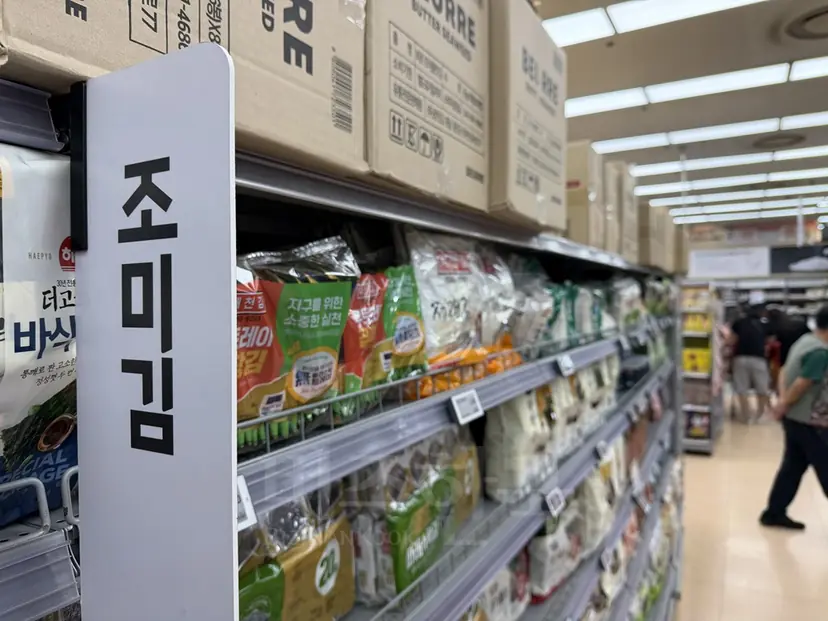
Long-term conflict between Suhyup and the seaweed industry… Will it be discussed again at this year's National Assembly audit?
Suhyup claims that the main justification for its seaweed business is to stabilize the supply and demand of raw seaweed and protect fishermen. The plan is to stably purchase raw seaweed when production spikes to reduce waste, and to process and stockpile it as dried seaweed to help stabilize prices.
Raw seaweed harvested from the sea is difficult to store for long periods and must be processed quickly. However, if production surges all at once, existing processing facilities may not be able to handle the volume, leading to waste. In fact, in January of last year, 5,296 tons of raw seaweed were discarded in Jeonnam, the largest production area in the country. At the time, a supply-demand imbalance occurred where raw seaweed prices dropped while dried seaweed prices rose. Suhyup stated, "We are not participating in the seaweed industry to compete with private processing companies, but to prevent a structure where raw seaweed is discarded when production surges, and to protect both producers and consumers."
Conversely, the industry counters that the massive waste last year was only a temporary phenomenon, making it unconvincing as a justification for Suhyup's entry into the seaweed processing business. They explain that at the time, favorable growing conditions led to a shorter harvesting cycle and a surge in production, and specifically in January, some dried seaweed factories were not yet in full operation, leaving them unable to process the sudden influx of volume.
In fact, when BizHankook checked with the Jeonnam-Gwangju Integrated Metropolitan City Hall, there was no raw seaweed waste recorded in the Jeonnam region in January of this year. An official from the Jeonnam-Gwangju Integrated Metropolitan City Hall said, "In January 2025, mass waste occurred due to a significant increase in production caused by climate change, but there was no raw seaweed waste in January of this year, and some volume was discarded in February and March due to quality issues."
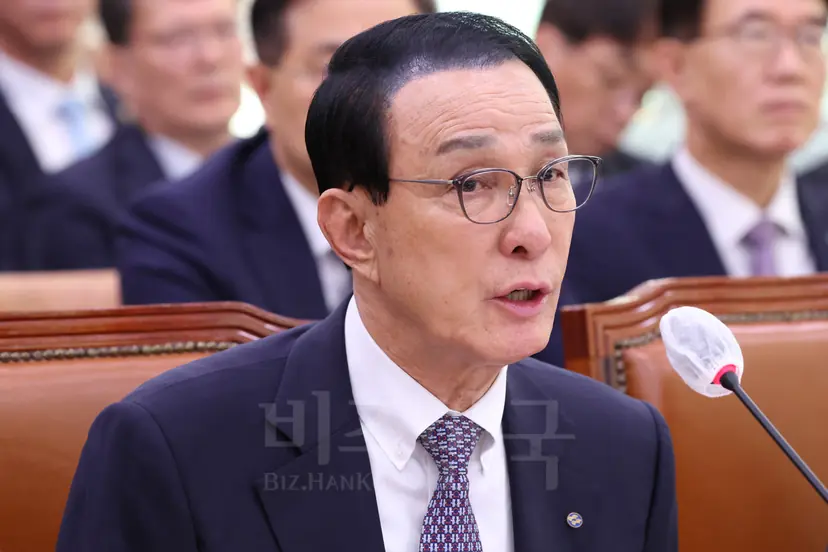
Suhyup stated, "We are willing to talk to the industry, but the positions of both sides are currently parallel," adding, "Debates that prioritize the interests of the existing processing industry over the survival of producers—who are the economically weaker party—do not help the sustainable development of the seaweed industry."
The controversy surrounding Orion-Suhyup was also brought to the table during last year's National Assembly audit. During the audit of Suhyup by the National Assembly's Agriculture, Food, Rural Affairs, Oceans and Fisheries Committee held on October 27, 2025, People Power Party lawmaker Cho Kyoung-tae pointed out the potential conflict between Suhyup’s public interest role and the Orion joint venture, ordering them to come up with a win-win model. In response, Suhyup Chairman Labour-Jin replied, "It is simply about rationalizing production for the producers, and I will ensure that no harm is done."
The industry maintains its position to raise the issue again during this year's audit. A representative of the Korea Seaweed Export Association said, "We are exploring ways to convey the industry's position as much as possible during this year's audit period," and added, "Although (Suhyup) responded last year that they would ensure no harm would come to existing processing companies, the project has since been pushed forward. We need to re-examine whether the current situation is leading to damage to existing businesses."