

[비즈한국] On the morning of September 21, in the western section of the Demilitarized Zone (DMZ) in Paju, Gyeonggi Province, a search team directly under the ROK Army's 25th Infantry Division was caught in an explosion while conducting a search path clearing operation. Three soldiers were injured. Military authorities immediately deployed a helicopter into the DMZ to conduct an emergency medical evacuation. This is the first time in 11 years—since the wooden-box landmine provocation on August 4, 2015—that troops have been struck by landmines during routine search operations in peacetime.
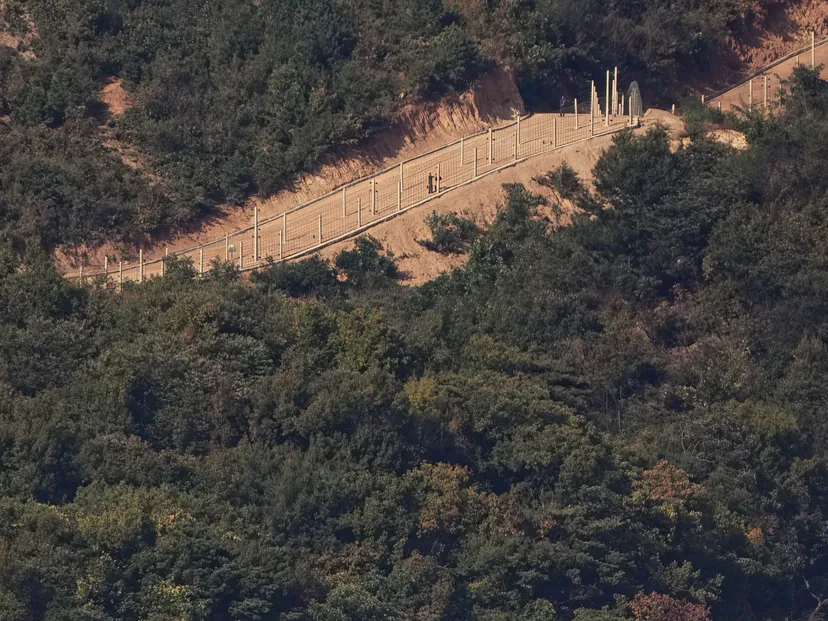
The Joint Chiefs of Staff (JCS) investigation was conclusive. The cause of the explosion was plastic anti-personnel landmines planted by the North Korean military about 10 meters south of the Military Demarcation Line (MDL). There are no records of South Korean mines being laid in that area, and analysis by the National Forensic Service identified brown foreign substances rather than metal fragments. Three explosion and burial sites identified by the United Nations Command and the Joint Intelligence Investigation Team using GPS were all located south of the MDL. The military classified this as a violation of the Armistice Agreement.
The problem is that this provocation hit the most vulnerable point of our military. Border security, including the Guard Posts (GP) inside the DMZ and the General Outposts (GOP) defending the Southern Limit Line, still relies excessively on humans. GOPs have platoons covering 1 to 3.5 km of fencing, while 30 to 50 elite troops from brigade search companies reside in bunkers at GPs, taking turns guarding the area. In a structure where the 260 km-long truce line is guarded in three shifts, night duty is split into early and late shifts, and daylight hours are consumed by fence maintenance and weed removal. Soldiers commonly complain about a lack of sleep. Not a few outposts lack even basic sleeping conditions.
The "demographic cliff" further shakes this structure. The Ministry of National Defense announced a plan to reduce the number of GOP border guards from 22,000 to the 6,000 level. This is not a phased reduction within the current administration's term, but a mid- to long-term plan to completely reorganize the military structure by 2040. The JCS is looking in the same direction. Recently, the JCS reviewed a "GP Unmanned Guard Operation System" that would remove resident troops from frontline GPs in the DMZ and replace them with surveillance equipment, Remote Controlled Weapon Systems (RCWS), and unmanned vehicles. The roadmap aims to convert one GP on the eastern front into a "Future GP" for trial operation by 2029, equip it with cutting-edge surveillance gear by the early 2030s, and transition to an AI-based, manpower-saving system by 2040.
A significant level of unmanned security equipment has already been introduced. Starting with the Army's 25th Division in December 2016, a four-tier surveillance system consisting of optical cable sensors, medium/short-range cameras, Thermal Observation Devices (TOD), and radar was installed at GOPs. When optical cables installed every 50 meters on the fence detect vibration or cutting, an alarm sounds in the control room, and cameras track the area. Since 2022, the "Big 3 AI Pilot Assets"—comprising Foliage Penetrating (FOPEN) radar, AI thermal surveillance equipment, and rail-robot cameras—have been under trial operation at the 5th Division's GOP.

The problem is that the unmanned mobilization of assets to ensure the safety of search operations remains difficult and their performance is insufficient. This incident also occurred during an operation to secure a route for the UN Command investigation team. The new PRS-20K mine detector used in this operation was developed with domestic technology in 2020 and deployed in 2022 by Hanwha Systems, aiming to detect even non-metallic mines by combining Ground Penetrating Radar (GPR) and metal detectors.
However, at a National Assembly audit, Defense Acquisition Program Administration (DAPA) Commissioner Lee Yong-cheol replied, "Under technical manuals and Operational Capability Requirements (ROC), there was no condition for forest areas." In effect, the equipment received a "suitable for combat" rating based solely on performance on flat ground. During this incident, the military cited the fact that "the foliage was too thick to bring the detector within 3 cm of the ground" as the reason for the failure to detect the mines. The equipment was used out of necessity despite clear technical limitations.
Robots were also hindered by the same thicket. The 25th Division had possessed two KR-1 explosive detection and removal robots developed by Hanwha Aerospace for six months, but not a single KR-1 was deployed for the path-clearing operation on September 21. This is less of a problem with the KR-1 itself, but rather a reflection of the inherent limitations in mobility and operational time that standard explosive detection and removal robots face in rough terrain like that of this incident.
Structural limitations become more apparent when looking at the performance figures of similar equipment. The PackBot 510, used by the U.S. military since 2000, weighs 14.3 kg, has a top speed of 9.3 km/h, can climb a 60-degree slope, and is advertised to operate for 4 to a maximum of 8 hours on two BB-2590 lithium-ion batteries. However, actual battlefield operations analysis shows a Mean Time Between Failures (MTBF) of only 6–8 hours and availability rates falling below 50%.
While one person can deploy it within 2 minutes in alleys, buildings, or relatively flat deserts and urban areas, it becomes difficult to even move forward in DMZ thickets tangled with grass taller than a person, mud, and vines, as the tracks get caught and sensors are obscured. The TALON series, also tracked, boasts a speed of 6.6 km/h and over 4 hours of continuous operation, but due to the same tracked structure, the vehicle gets stuck when foliage density increases, and optical/thermal detection ranges drop sharply. Ultimately, while portable and lightweight explosive robots are useful in flatlands, urban areas, and buildings, they struggle to meet operational requirements in rough terrain with steep slopes and dense foliage like DMZ search paths. Given that the KR-1 is a larger and heavier tracked robot, the mobility constraints in forested areas were likely even greater than those of the PackBot or TALON.
Drones, which fly and are less constrained by terrain, also have clear limitations. The first is the power source. Most commercial quadcopters fly for 10–30 minutes and require 90 minutes or more to recharge. In the high winds and extreme cold of the DMZ, flight times are reduced even further. It is difficult to complete a mission to scan for mine traces while traveling back and forth along a 5 km search path with only several minutes of flight time. Tethered drones can stay aloft longer but are limited by cable length, reducing mobility.
Unmanned Ground Vehicles (UGV) are also difficult to operate. UGVs like Hanwha Aerospace’s Arion-SMET and Hyundai Rotem’s HR-Sherpa are designed based on the premise of having established paths. Both vehicles are 1.7 meters wide, requiring at least a 3–4 meter wide compacted surface for a single lane, considering safety margins, passing, and drainage. For stable passing and equipment deployment, an 8–12 meter wide two-way military road—and sometimes up to 20 meters—is ideal. This is not unrelated to why the tactical roads North Korea is building on its side of the DMZ are generally 8–12 meters wide, with some reaching 20 meters.
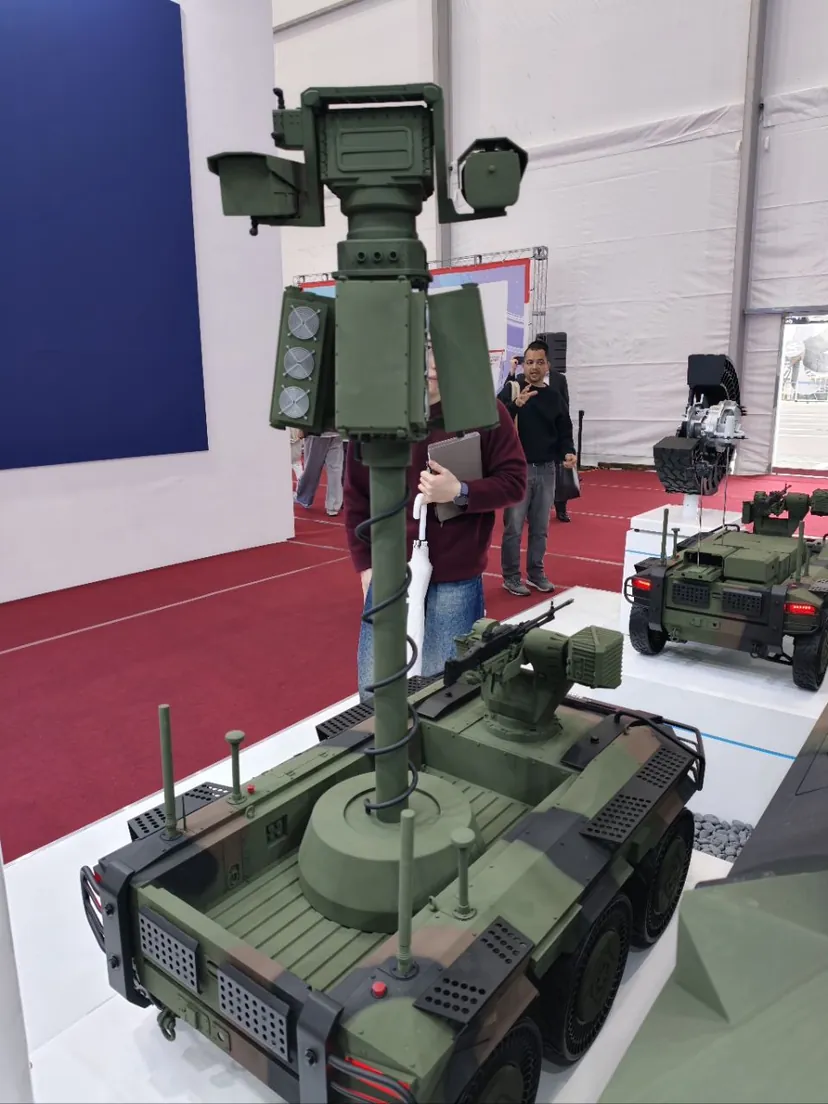
In narrow trails like DMZ search paths, tangled with brush and mines, track deviation, capsizing, and communication loss are inevitable. Therefore, to use UGVs for DMZ operations, military roads for moving supplies and equipment must first be established in the GOP area south of the Southern Limit Line. This is not a proposal to pave inside the DMZ, but to create rough-terrain paths along the GOP fence where UGVs can safely move and deploy.
While four-legged walking robots can operate on steep slopes and move through paths accessible to humans, they currently face limitations for DMZ deployment. Ghost Robotics' Vision 60 (Q-UGV) boasts IP67-level dust and water resistance and "blind locomotion" to push through thickets like a wild animal. However, by specification, continuous walking time is 3.15 hours, operating range is 10 km, and mixed operation lasts 8–10 hours with 21 hours of standby time. The payload is also only 10 kg. After about 3 hours of operation, it needs several hours to recharge, it can slip on wet grass and mud, and vines getting caught in its legs can cause walking issues.
Therefore, we must acknowledge the reality that GP/GOP search operations cannot immediately be replaced by drones and robots and start developing core technologies for new manned-unmanned teaming systems. We must establish a standard test environment—with 80% foliage density, 30-degree slopes, and 50m visibility—to compare which platforms can travel 1 km back and forth in such conditions and verify equipment with appropriate performance. Furthermore, to develop robotic weapon systems capable of DMZ operations, we must begin now to develop hybrid power sources for long-duration operation, low-noise multi-legged/tracked hybrid mobility systems, and detection algorithms that fuse GPR and foliage-penetrating radar with edge AI to identify mines 10 cm beneath the foliage.
Of course, all these improvements and equipment expansions must follow plans to augment GP/GOP security equipment in compliance with the Armistice Agreement. Instead of new development inside the DMZ, the approach should be to strengthen the GOP area south of the Southern Limit Line (SLL).
First, replace and reinforce the optical cable sensors, TOD, and radar already installed on GOP fences with foliage-penetrating radar like the ELM-2112FP and dome-shaped detection/identification sensors for sentry and drone use. Since surveillance is conducted from high ground south of the Southern Limit Line through the foliage toward the MDL, the potential for Armistice Agreement violations is reduced.
Second, convert GPs to an unmanned/remote-controlled model instead of increasing resident personnel inside the DMZ. GPs can be operated by minimal staff or left vacant during peacetime and monitored remotely from GOP control centers, while keeping existing GP buildings intact (as they were in 2018) and establishing procedures for temporary entry under UN Command notification when necessary.
Third, establish roads for UGVs not inside the DMZ, but along supply routes behind the GOP and on rough-terrain paths near the SLL. A single 4-meter-wide lane with passing shelters would minimize Armistice violation concerns while allowing UGVs to rapidly deploy to support search operations. The JCS's plans—such as renaming "suspected mine burial areas," concentrating ISR assets, and transitioning to an AI-based GOP security system—can also be pursued within this framework.
We must respond firmly to North Korean provocations and demand accountability for Armistice violations. However, separate from this, we must simultaneously build military power that can protect the lives and safety of our soldiers and respond to the era of the demographic cliff. South Korea aims to be one of the world's top four defense industry powers and can independently produce tanks, submarines, and fighter jets, yet there are not a few areas where robot and unmanned system technology has not yet reached the level of advanced nations.
Moreover, as seen in this incident, our DMZ operational environment is one where even the world's top-tier robots and drones struggle to operate. It possesses a level of operational difficulty that is on a completely different scale from operating robots and drones on the relatively open battlefields of Ukraine. To resolve this, we have no choice but to cool-headedly admit our technical level and limitations and overcome them through bold investment and research and development.