

[BizHanKook] The Seoul Metropolitan Government is accelerating its “Nodeul Global Art Island” project, which aims to transform Nodeul Island into a premier cultural and artistic space representing the Hangang River by 2030. While citizen response to the first phase—the waterfront cultural space—has been generally positive, the 450 billion won price tag, accessibility, and the challenge of maintaining long-term stability are being cited as critical factors for its future success.
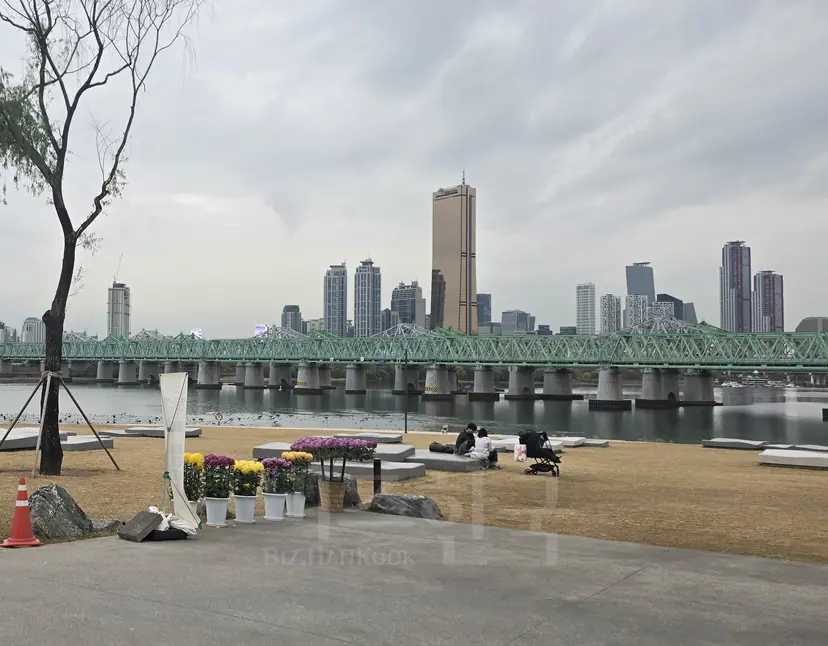
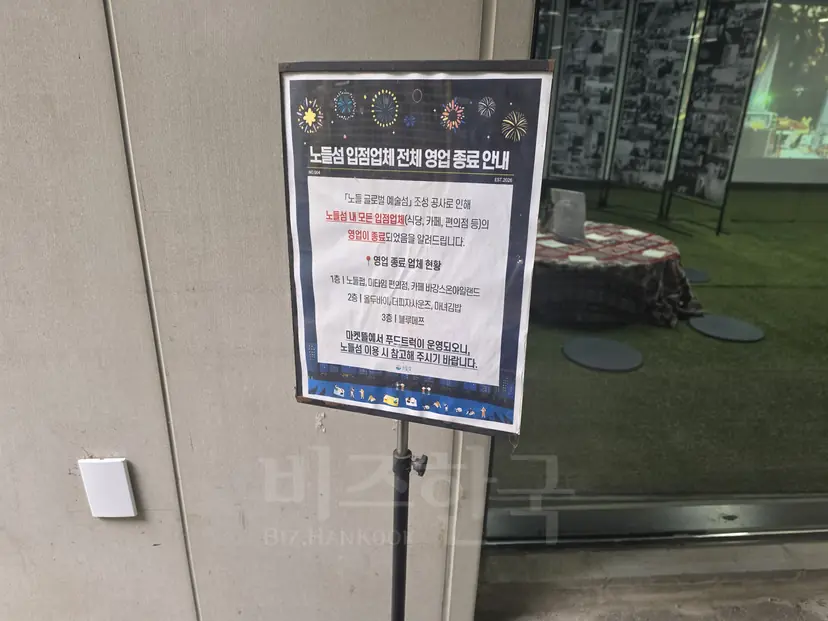
On the 17th, visitors were seen heading to Nodeul Island in Yongsan-gu, Seoul, despite the poor weather. Citizens strolled along the riverside paths or sat in the newly created gardens to gaze at the Hangang River and relax. Some were even spotted taking photos with the river and garden as a backdrop. Notice boards announcing the complete closure of existing businesses installed throughout the island signaled that the project is officially underway.
Seoul’s development vision for Nodeul Island has changed multiple times. During Mayor Oh Se-hoon’s first term, there was a plan to build an “Hangang Art Island” featuring an opera house and concert hall, but it drifted after facing the burden of project costs and opposition from the city council. After Mayor Park Won-soon took office, that plan was effectively shelved, and the island was used for a period as a community garden and event space.
Following criticism over the lack of a formal plan and the exclusive use of the land by a few garden plot owners, the Seoul Metropolitan Government converted Nodeul Island into a complex cultural space centered on nature and music in 2019. Since 2023, following Mayor Oh’s return to office, the city has been pushing the “Nodeul Global Art Island” project. The first phase, the waterfront cultural space, opened this past September.
Citizens met on the island that day were generally positive about the project. A man in his 40s walking along the riverside path remarked, “It’s positive to have a space in the heart of the city that combines nature and culture,” adding, “If it is developed as planned, I think it will be a quite impressive place.”
A woman in her 50s, who was taking photos on the island, said, “I usually love photography, and the space currently open is great for taking pictures,” and added, “If it’s developed according to the plan, I think I’ll visit it often.”
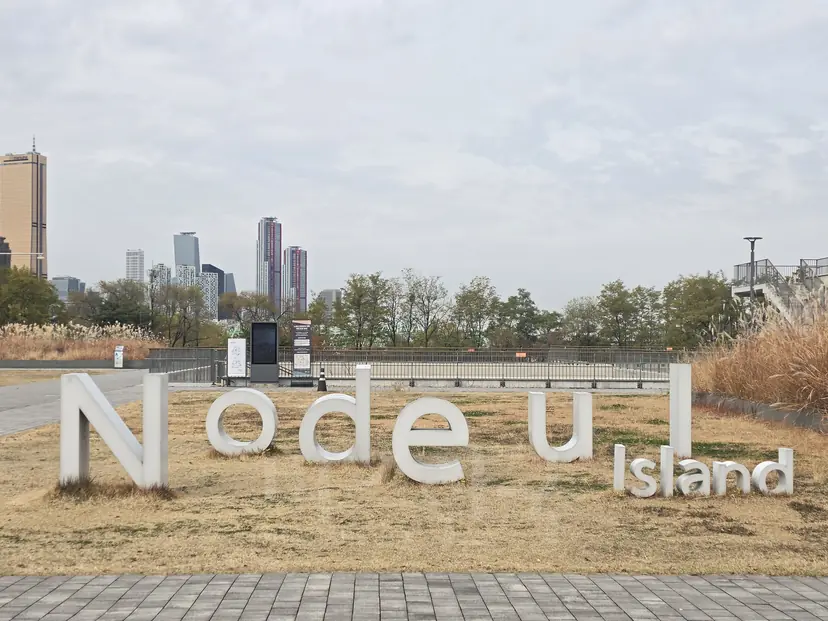
The positive sentiment among citizens is also reflected in Seoul’s own surveys. According to the city, approximately 380,000 people visited Nodeul Island in the month following the opening of the waterfront cultural space, and 89.2% of respondents in a city-conducted survey evaluated the space positively. The Seoul Metropolitan Government has also assessed the opening of the waterfront area as a successful first step in creating the Nodeul Global Art Island.
While local voices remain positive, there are significant concerns surrounding the project. Some are worried about the massive scale of the budget and the burden of future operations. Seoul City Council member Oh Joong-seok recently expressed concerns regarding the project costs, stating, “It is difficult to view the currently set 451.2 billion won as the final amount,” adding, “When you add construction costs that haven’t been reflected yet and the long-term nature of the project, it could end up costing hundreds of billions more.” He continued, “The city should disclose the total project budget, including land compensation and long-term costs, and present practical performance indicators such as target visitors, return rates, and length of stay.”
Concerns regarding environmental damage have also been raised. In May, the “Joint Action of Civil Society for the Suspension of the Nodeul Global Art Island Project,” which includes the Korea Federation for Environmental Movements, demanded a re-examination of the project, citing the removal of large numbers of trees during the construction of the waterfront cultural space.
In response, the Seoul Metropolitan Government maintains that the budget has been adjusted since the 2024 investment appraisal to reflect changes in project conditions, such as detailed design work, deliberations with relevant agencies, and inflation. The city stated it would strictly manage design changes and additional tasks during construction to minimize unnecessary budget increases.
Regarding environmental issues, the city explained that it would continue to operate an ecological and environmental consultative body consisting of citizens, experts, and officials throughout the remaining construction process to continuously monitor the ecological restoration process.
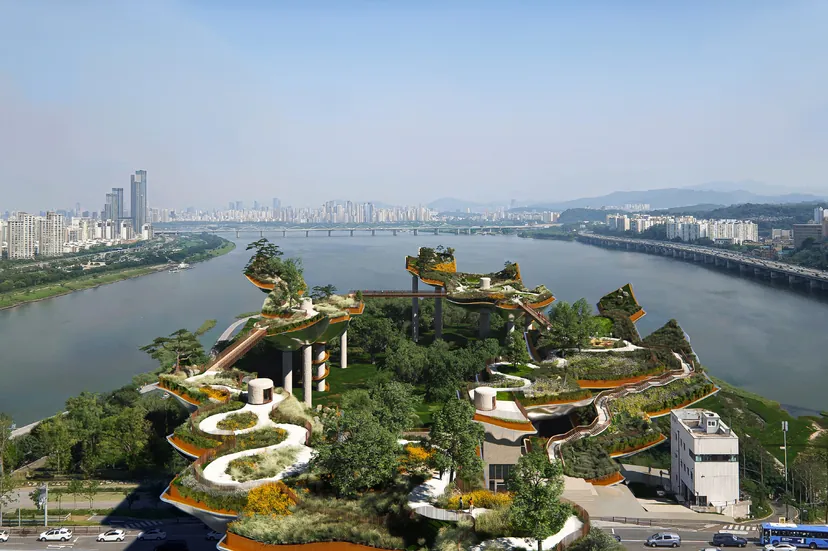
Seoul plans to create the Nodeul Island as a representative cultural and leisure space by sequentially developing a waterfront garden in 2027 and a “Sky Art Garden” in 2030.
Efforts to improve accessibility are also underway, with plans to reorganize pedestrian environments. The city is considering making the western side of the Hangang Bridge a pedestrian-priority zone and the eastern side a shared pedestrian and bicycle path, as well as installing additional crosswalks and expanding sidewalks near the north and south ends of the bridge. The goal is to begin design in 2027 and finish construction by 2029.
Seoul Mayor Oh Se-hoon appeared on the city’s YouTube channel “Ilta Mayor” on the 6th, where he reiterated his vision to make Nodeul Island a premier cultural and arts space for the Hangang River. As the Mayor continues to push for this project, momentum is expected to build.
However, securing future budgets remains a variable. Even if the Seoul Metropolitan Government drafts the budget, it must pass through the City Council. Currently, the Democratic Party of Korea holds 80 of the 118 seats in the Seoul City Council, maintaining a majority. Discussions regarding the appropriateness and effectiveness of the project costs are expected to continue.
Project continuity is another challenge. Nodeul Island has a history of development directions changing multiple times depending on the sitting Mayor. As this project is set to run until 2030, whether it can proceed as planned regardless of changes in city administration remains a key variable.
Meanwhile, experts point out that for the Nodeul Global Art Island project to be successful, it is crucial to ensure consistent content that can increase visitors’ length of stay, alongside improving accessibility.
Shin Bo-yeon, a professor at Sejong University’s Department of Real Estate AI Convergence, stated, “Nodeul Island’s geographical location is not bad, but it has limitations in terms of expansion due to the fact that it is an island.” She added, “Even if a complex cultural space is established, there are limits to creating a structure where people stay for a long time because the surrounding commercial areas and other facilities cannot easily expand.” She emphasized, “Ultimately, to keep people there, it is important to carefully organize movement flows and continuously create content that encourages visitors to stay for longer periods.”