

[비즈한국] When disputes over startup investments go to court, the relationships become quickly simplified. Only the parties to the contract, the plaintiff, and those with legal liability remain. In such cases, if the General Partner (GP), which directly manages the fund, files the lawsuit, it might seem that the Limited Partner (LP), as the investor, can simply step back. Looking strictly at the contract, this is not necessarily wrong. However, the situation changes entirely when a large financial institution managing public funds participates as an LP.
The recent heated dispute between OGQ and its investors is a case in point. To recover their investment, the investors filed a lawsuit not against the OGQ corporation, but against the founder personally, and under court ruling, procedures for the forced sale of the founder’s company shares are currently underway. However, through documents recently submitted to the Financial Services Commission, the background behind why the investors sued the individual founder instead of the company has been revealed.
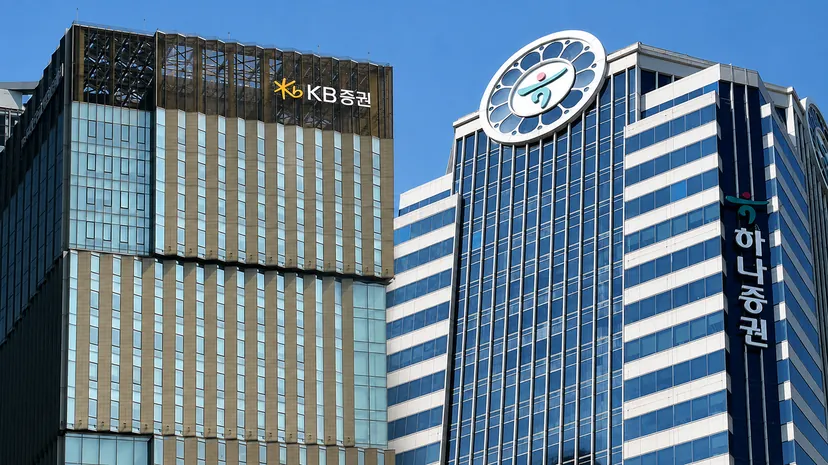
The investors' explanation was clear. They judged that suing the company could lead to a loss, and since that might result in breach of duty issues for the GP, they filed the suit against the CEO as an interested party. This lawsuit was reportedly reported to the LPs, KB Securities and Hana Securities. This implies that the lawsuit was filed with the prior consultation, or at the very least, the tacit consent, of both firms.
Currently, the investment funds remain within OGQ, and discussions are underway regarding a return of capital through a capital reduction. Shin Chul-ho, the CEO of OGQ, has even stated that he would collateralize his own shares for the difference against the judgment amount. In other words, if the investors agree, a path to recovery from the company is open. Yet, the forced execution against the individual founder does not stop.
The issue has now evolved beyond simply getting money back into a question of whether large financial firms like KB Securities or Hana Securities have any intention of protecting founders. This is why fellow founders in the startup industry are closely watching the actions of these two financial firms.
The government's recent perspective is also clear. Following the Ministry of SMEs and Startups, the Financial Services Commission also announced that it would eliminate the practice of placing de facto joint liability on third parties, such as founders who have no intent or gross negligence in investment contracts. The FSC is implementing guidelines to limit third-party joint liability even in investments in startups by new technology finance companies, and it plans to actively pursue discussions on amending the Specialized Credit Finance Business Act to codify this.
Amidst this, the recent decision by Shinhan Capital stands out. Although they won a Supreme Court victory in a lawsuit filed against Ha Jin-woo, the CEO of Urbanbase, they decided not to pursue personal collection. Setting aside the background of why Shinhan Capital made this decision, the noble cause of protecting the founder is evident.
In the OGQ investment dispute, do KB Securities and Hana Securities have no decision-making power or responsibility simply because they are LPs? I understand that the fund is managed by the GP and that it is a structure where it is difficult for an LP to oversee every single individual lawsuit. But precisely for that reason, a different kind of responsibility remains for the LP: the responsibility to know how their name and money are being used.
When a large financial firm invests in a venture fund, it is not simply transferring money. The company's name and its credibility are transferred along with it. Startups judge the fund by seeing the names "KB" or "Hana." Even if a contract feels somewhat unsettling, they often sign it, thinking, "surely they wouldn't." If so, is it acceptable to wash their hands of it when a problem arises by saying, "The GP managed it"?
These financial firms will not leave the investment market because of this one case. They will continue to meet countless founders in the future, and the founder whose money was clawed back today could return as a customer in a few years with another success. Those who will continue to encounter founders who remember how their names were used cannot pretend not to know the weight of that name.
Venture investment is predicated on failure from the start. That is why it is different from bank loans, and why high returns are expected. If they share the fruits of increased equity value when things go well, but force the founder to bear the burden of principal repayment individually when they fail, the risk of venture investment ends up being borne by the founder alone. If this structure is repeated, investors might become safer, but the market becomes dangerous. Who would dream of starting a business in a market where a single failure means losing a home, shares, and inheriting billions in debt?
This is not about simply coddling founders; it is about distinguishing investment from loans. If an investor who entered promising to share the risk uses a single contract clause to dump that risk back onto the founder, then that investment is no different from a high-interest loan. Furthermore, this is even more true when there is a way to get the money back without the funds disappearing, as in the OGQ case.
Changing the law will not solve everything. Existing contracts, clauses that bypass rules under different names, and who actually oversees the management remain as ongoing tasks. The ones who can make decisions before the law does are the LPs. Observing what is happening in the funds they have invested in, and being able to point out if something goes against market principles even if it is legally sound—this is the rightful responsibility that large financial firms, which talk about ESG, mutual growth finance, and supporting innovative companies, must bear.
Where money goes, the name goes too. And where the name goes, responsibility follows.