

[비즈한국] With the Namsan Gondola construction project, into which over 10 billion won has been poured, stalled for nearly two years, the Seoul Metropolitan Government lost its second trial on the 17th, making the timeline for resuming construction even more uncertain. While the city maintains its position to continue the project, controversy persists over concerns such as the infringement of learning rights for nearby schools and environmental damage.
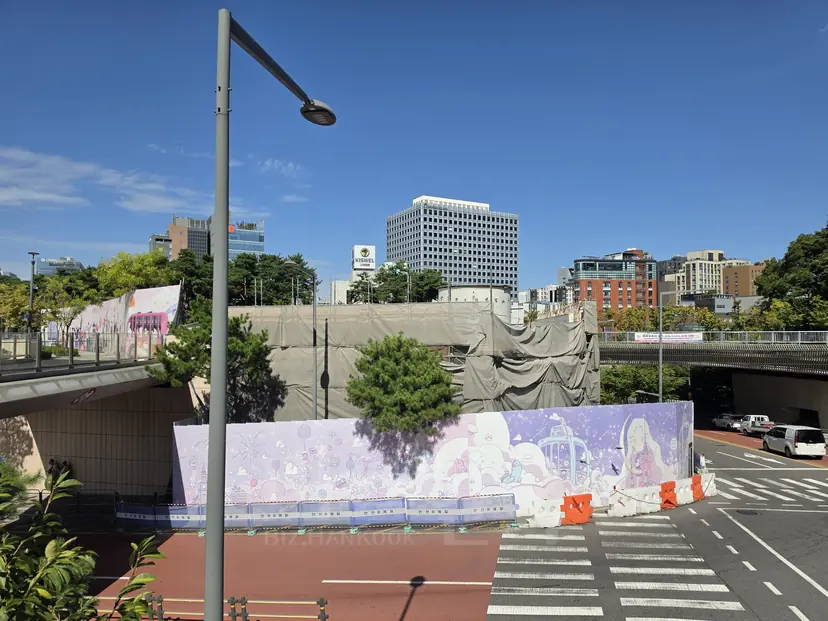
The Namsan Gondola is a project by the Seoul Metropolitan Government to install 25 cabins with a 10-person capacity along an approximately 832-meter section connecting Namsan Yejang Park and the mountain summit. The goal is to transport up to 2,000 people per hour to reduce congestion on existing cable cars and shuttle buses, while improving mobility for the transportation-vulnerable. The need to improve the monopolistic operating structure of the existing cable car also serves as background for the project.
However, it became embroiled in legal disputes during the process of changing the park zone designation. The current enforcement decree of the Park and Green Space Act limits the height of facilities within an urban natural park zone to 12 meters, but two of the five gondola support towers in the project plan exceeded this limit. Consequently, the Seoul Metropolitan Government decided to change the urban management plan, excluding a portion of Namsan from the urban natural park zone and incorporating it into a neighborhood park to allow for the installation of the towers.
In response, Namsan Cable Car operator Korean Ski Resort & Cable Car Co., Ltd. and others filed a lawsuit challenging the legitimacy of the decision, and the court accepted an application for an injunction, leading to the suspension of gondola construction in October 2024. Subsequently, the first trial ruled that the requirements for changing and lifting the park zone designation were not met, canceling the city's action, and construction has not been able to resume as the litigation continues.
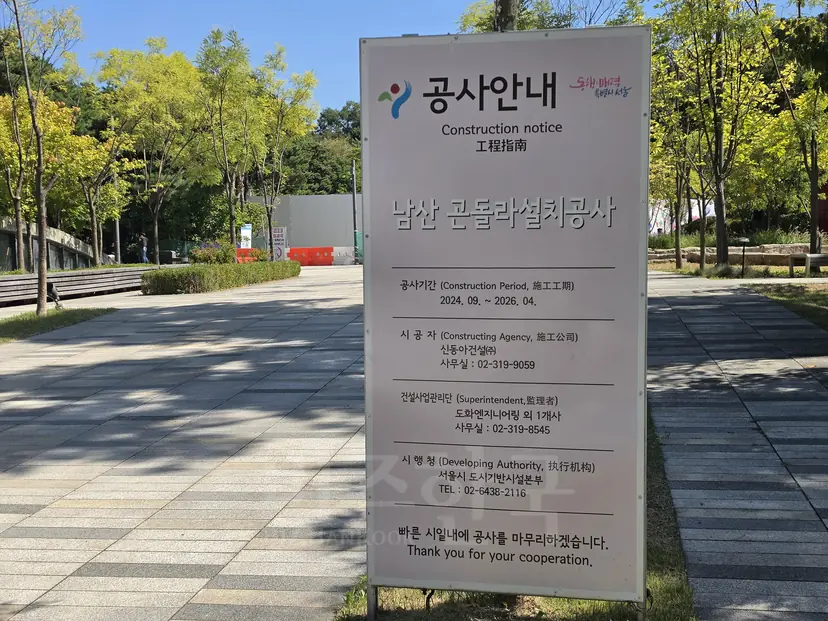
On the 21st, when visiting the top of Namsan Yejang Park in Jung-gu, Seoul, traces of the prolonged project remained in many places. The gondola installation guide sign posted in front of the construction site listed the project duration as September 2024 to April 2026. Although the originally scheduled completion date has passed by nearly five months, construction remains at a standstill. The environmental information status board for noise and fine dust installed around the construction site was also turned off. The entrance to the Memory 6 exhibition hall, located at the top of the park, was firmly shut with a notice stating, ‘Closed from September 1, 2024, due to gondola installation.’
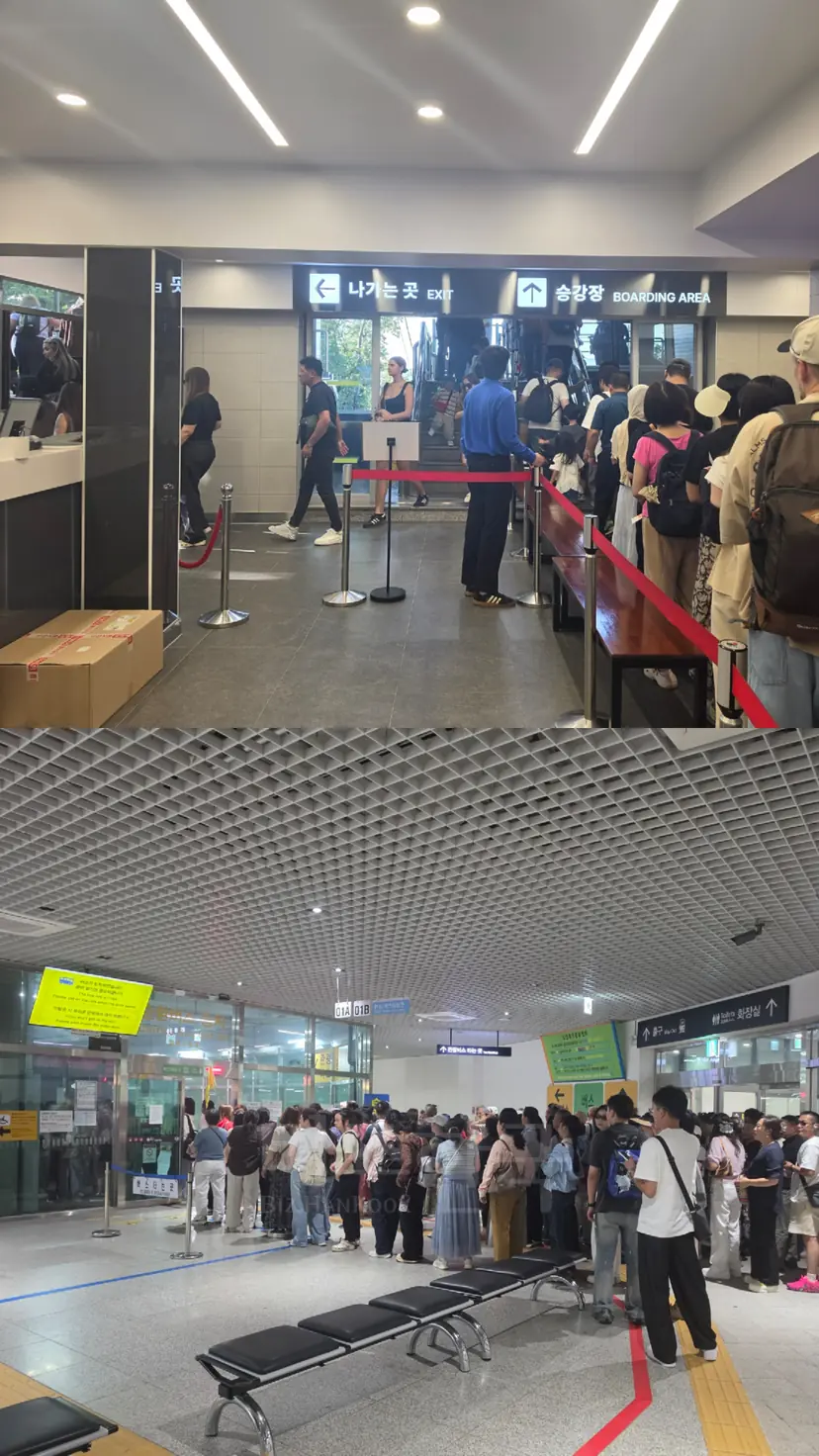
Unlike the quiet upper area, the shuttle bus terminal at the bottom of the park was crowded with foreign tourists waiting for buses heading to Namsan. The shuttle buses departing from the stop were also packed with tourists. The cable car boarding area, another means of transportation to Namsan, also had lines of people waiting to board. Although gondola construction has halted, the flow of tourists visiting Namsan continues. According to the Seoul Metropolitan Government, the annual average number of visitors to Namsan is about 12 million, and the number of Namsan Cable Car users reached about 1.7 million last year.
Citizens and tourism industry workers met on-site expressed expectations that the introduction of the gondola would improve accessibility to Namsan. A person in their 20s, identified as 'A,' who was at Yejang Park, said, “Currently, there are only two ways to get to the summit—the cable car and the bus—and since the number of visitors to Namsan is growing, both have become far too crowded recently,” adding, “I think these problems could be improved if the gondola is installed.”
A tour guide identified as 'B,' whom we met at the summit, also responded, “If the gondola is introduced, it will likely be much easier for visitors to reach the Namsan summit,” and added, “It is positive from the perspective of someone working in the tourism industry.”
Contrary to these expectations, the timing for resuming the gondola project remains opaque. On the 17th, the Seoul High Court dismissed the Seoul Metropolitan Government's appeal in the lawsuit filed by the Namsan Cable Car operator and others to cancel the urban management plan change decision. The Seoul Metropolitan Government issued a press release afterward, stating, “It is extremely regrettable that the city's public-interest administrative discretion, aimed at resolving the inconvenience of 12 million annual visitors and the transportation-vulnerable, was not recognized,” and added, “As the damage from the potential collapse of the gondola project would fall entirely on the citizens, we will thoroughly review the possibility of an appeal to the Supreme Court and proceed accordingly.”
Even if the legal issues are resolved, it does not mean all controversy will be put to rest. Environmental groups are opposing the project, fearing damage to Namsan's ecological environment due to the gondola installation. In a commentary on the 16th, the Korea Federation for Environmental Movements urged the withdrawal of the demand for the amendment of the Park and Green Space Act enforcement decree and the abandonment of the gondola project.
The impact on nearby educational facilities is also a point of contention. As Lila Elementary School, Soongui Elementary School, and Lila Art High School are located near the planned gondola route, concerns have been raised regarding the potential infringement of students' learning rights and privacy. In response, the Seoul Metropolitan Government conducted interviews with school officials and on-site investigations, and submitted data to the city council stating that, considering the altitude of Namsan and the shielding effect of trees, the impact on learning rights is expected to be minimal.
While legal disputes continue, the Seoul Metropolitan Government maintains its stance that it will continue to push forward with the gondola project. A city official stated, “The construction resumption schedule is currently unclear due to the litigation,” but added, “We are doing our best to ensure that construction resumes as soon as possible.”