

A couple in their mid-30s recently purchased a 30-year-old apartment in Yeongdeungpo-gu, Seoul, with a usable area of 59 square meters. Having taken out a "maxed-out loan" exceeding 500 million won on top of their own savings, they decided to manage the interior renovation as a "semi-DIY" project. They visited Bangsan Market in Euljiro, Seoul, personally to contract vendors for wallpapering, flooring, bathroom fixtures, and kitchen cabinets.
A explained, "With acquisition taxes and renovation costs potentially exceeding 100 million won, we decided to go with a semi-DIY approach to save every penny. While I have no experience with repairs or even buying a home, the quotes from local firms—ranging from 25 million to 40 million won—were just too burdensome." After receiving a quote that would allow them to remodel for about 13 million won, excluding the window frames, A is currently coordinating the renovation schedule.
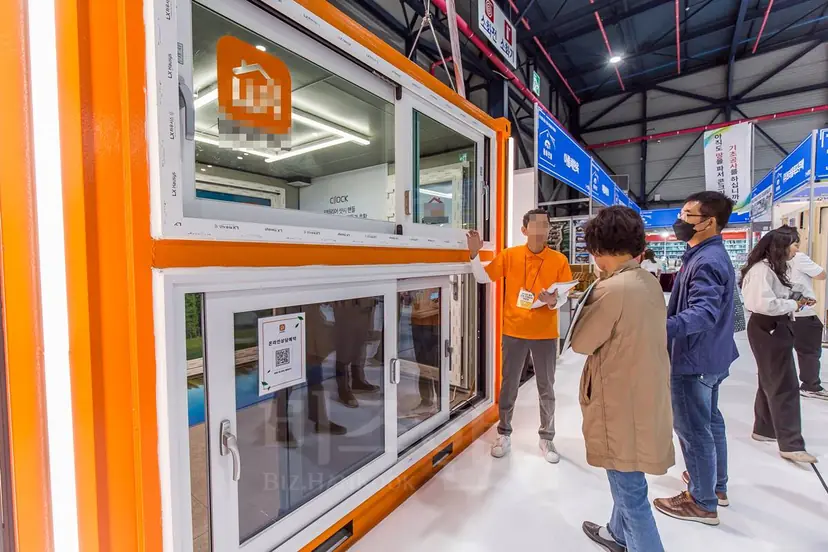
B, a resident in their mid-60s in Suwon, recently renovated their apartment using a mix of "semi-DIY" and professional contractors. Although they considered moving after 15 years in the same home, the recent spike in housing prices made the incidental costs of moving too burdensome. Instead, they opted for "stay-modeling"—repairing their existing home to continue living there.
B entrusted the bathroom, kitchen, and window frames to a local interior firm, while personally sourcing vendors at Bangsan Market for wallpaper, flooring, lighting, and adhesive film. "I initially wanted to leave everything to a professional because I didn't know much, but by doing it myself at Bangsan Market, I think I saved about 30%," B shared, adding, "Though if you asked me to do it again, it would be too exhausting."
Individual Interior Market Grows, Bangsan Market Bustles
As the "desperate buying" trend focuses on apartments around the 1.5 billion won range in the capital area, the interior industry reports an increase in "remodeling demand." Analysts suggest that various loan regulations, such as restrictions on gap investments that include lease deposits, combined with 30- and 40-somethings continuing to "stretch their finances" to buy homes for actual residence, have fueled the surge in interior demand.
According to the Ministry of Land, Infrastructure and Transport's actual transaction data, the trading volume for townhouses and multi-family housing in Seoul in the second quarter was 11,536 units, an 11.7% increase from the previous quarter (10,324 units). This was the highest since the third quarter of 2021 (13,652 units), indicating an increase in purchases of older villas for residential purposes, in addition to apartments.
Major domestic interior companies also saw strong performance in the second quarter (April–June) of this year. While the B2B (business-to-business) sector stalled due to a decline in new apartment supplies, the B2C (business-to-consumer) sector targeting individuals saw growth.
Hanssem recorded 417.2 billion won in revenue and 11.3 billion won in operating profit for the second quarter. While revenue fell 9% compared to the same period last year, operating profit surged by 400%. Specifically, its remodeling business, "Rehaus," turned a profit of 9.3 billion won, a 10.2 billion won turnaround from the 900 million won loss recorded in the same period last year. LX Hausys also recorded 939.7 billion won in revenue and 54.9 billion won in operating profit, up 15% and 329% respectively compared to the previous year. Ohouse, an online lifestyle platform, also recorded 321.5 billion won in revenue last year, growing 11.7% compared to the year before.
"Taking Out Credit Loans for Repairs": Saving Costs Through Semi-DIY Despite the Hardship
Industry experts note that it is important to pay attention to how the 3040 generation considers interiors as a "default setting." A real estate agent in Yangcheon-gu, Seoul, explained, "Ten out of ten buyers in their 30s and 40s who purchase apartments over 10 years old believe that repairs are mandatory. The only difference is how far they want to go with the renovations. Wallpaper and flooring are basics, and most will at least renovate the bathroom. Since apartment prices are so high, the current trend is to chase 'cost-effectiveness'."

C, who purchased an apartment in Dongjak-gu, Seoul, and began repairs this week, also said, "The cost of hiring an interior firm was a burden, so I chose non-branded materials for most items, excluding the window frames." They added, "How many 30-something newlyweds in Seoul live in apartments less than 5 years old? We have to live in an older apartment for a long time, so we even took out a credit loan to cover the 30 million won in repair costs."
A previously mentioned, "The house I bought had partial repairs done 10 years ago, but my wife and I agreed that we absolutely wanted to renovate because the idea of using a bathroom someone else used was unsettling. Since the loan amount is so large and we expect to live here for at least 5 years, it ironically made us feel even more strongly that the repairs were a 'must'."
D, a professional in their 40s who bought an older apartment over 20 years old and has been living there for over two years after a semi-DIY renovation, added, "Coordinating the repair schedule while having children was difficult, but I'm highly satisfied thinking I saved at least 20 million won. Looking at my friends and colleagues, everyone starts by factoring in at least 100 million won for repair costs and taxes at the time of purchase."