

[비즈한국] The government will supply more than 230,000 additional homes in the Seoul metropolitan area. It plans to designate over 100,000 new public housing sites and accelerate the construction start dates for projects already in the pipeline, such as 3rd-generation new towns and urban renewal projects. Through financial and tax support along with regulatory easing, the government also aims to boost sluggish private housing supply. The focus is on both increasing the volume of supply and reducing the time taken until actual construction begins.
From Public Housing Sites to Private Projects: A 'Race to Start Construction'
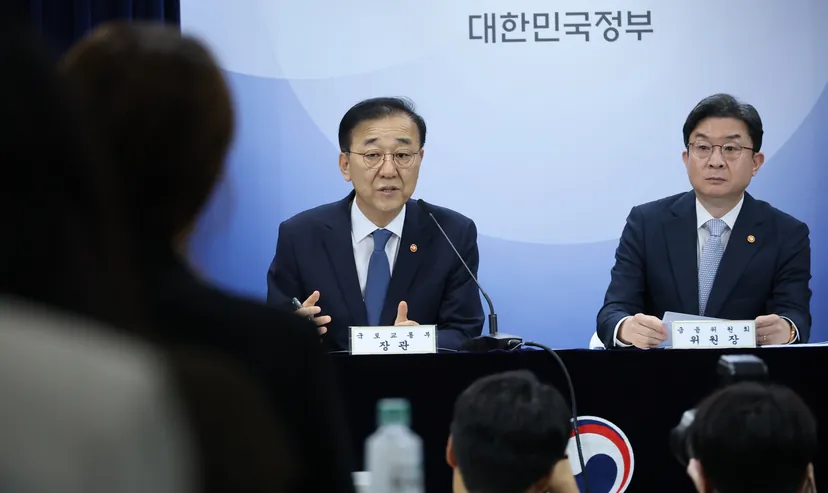
On the 13th, the government announced the "Plan for Rapid Housing Supply to Stabilize the Chonsei and Sales Markets." This measure aims to increase the effectiveness of the target to start construction on 1.35 million homes in the metropolitan area, which was set on September 7 last year, while also expanding the supply volume. The 230,000 units announced by the government include not only new public sites but also additional volume gained by accelerating existing projects or expanding private supply.
The centerpiece of the new supply is public housing sites. The government will designate over 100,000 new public housing units in the metropolitan area. Locations for 27,200 units have been disclosed first, including 1,000 units in Yeomchang-dong, Gangseo-gu, Seoul; 21,700 units in Wabu-eup, Namyangju-si, Gyeonggi-do; and 4,500 units in Jangji-dong, Gwangju-si. The target is to start construction in Gangseo, Seoul, by 2029, and in Namyangju and Gwangju by the first half of 2030. Candidates for the remaining 73,000+ units are planned to be announced within the year.
Construction start dates for existing public housing sites will also be moved up. Based on institutional improvements, the government aims to reduce the average period from site announcement to the start of construction from 68 months to 37 months, and move up the construction start for 89,000 units, including those in 3rd-generation new towns, by 1 to 2 years. Among these, 41,000 units originally scheduled for construction after 2031 will be moved up to within 2030. Urban sites announced in January this year, such as the Taereung CC and the Gwacheon Horse Racing Track/Defense Security Command site, are also planned to begin construction by 2030.
Private housing projects are also being encouraged to start construction through financial/tax support and deregulation. If projects in Seoul and Gyeonggi that meet certain requirements start construction by 2027, PF loan interest rates will be subsidized by 1 percentage point, and by 0.5 percentage points for those starting in 2028. The consent rate required for establishing redevelopment associations will be lowered from 75% to 70%, and financing for relocation costs will be strengthened. Standards for area and floor counts for multi-household and multi-family homes will be eased, and tax benefits that exclude new small homes from being counted toward housing ownership will be extended until 2028.
The government has released a series of plans to expand housing supply in the Seoul metropolitan area. In September last year, a target was set to start construction on 1.35 million homes in the capital area from 2026 to 2030, and in January this year, a supply plan using idle urban land such as the Taereung CC and Gwacheon Horse Racing Track was announced. In May, measures to support early construction for about 100,000 units with delayed starts in regulated areas of the capital region were also released.
However, housing starts in the Seoul metropolitan area remain sluggish. In the first half of this year, the number of housing starts in the metropolitan area was 65,204, down 0.7% compared to the same period last year. This is 61.4% of the 10-year average for the same period. Due to the decline in construction starts from 2022 to 2024, the government expects the number of apartment move-ins in the metropolitan area this year to be 105,000, well below the 10-year average of 183,000.
The government plans to separately manage the implementation of future supply plans. A "Pan-Government Housing Rapid Supply Inspection Meeting" presided over by the Prime Minister will be established to monitor project progress on a weekly basis by case and district. A "Rapid Supply Innovation Task Force," led by the First Vice Minister of Land, Infrastructure and Transport, will also operate to resolve on-site bottlenecks encountered during permitting and project implementation in cooperation with local governments.
Minister of Land, Infrastructure and Transport Kim Yun-deok emphasized, "I felt that rebuilding a solid supply foundation is more important than anything else for the housing stability of the public." He added, "To normalize housing supply, we will do our best to supply the housing that the public wants, where they want it, at the right time, under the principle of promptly executing what the public sector must do and boldly supporting the areas where the private sector excels."

Seoul City: "More Deregulation Needed for Redevelopment Projects"... Experts: "Wait and See on Shortened Timelines"
The Seoul Metropolitan Government holds the position that more deregulation of redevelopment projects is required. While they viewed the partial reflection of their proposals—such as lowering the consent rate for redevelopment associations and improving relocation cost loans—as positive, they believe further improvements are necessary, including easing restrictions on the transfer of association member status, increasing floor area ratios for private redevelopment, and adjusting the mandatory ratio for rental housing. They also emphasized that while urban redevelopment should be prioritized, the use of Green Belts should be approached with caution.
On the 13th, the day the government's supply measures were announced, Seoul Mayor Oh Se-hoon stated, "It is fortunate that the government acknowledged the need for smooth redevelopment and reconstruction and accepted some of the institutional improvement tasks that Seoul has consistently proposed." He added, "While we will actively cooperate with the government on areas of consensus, we will clearly demand the unreflected regulatory improvements based on the voices from the field and approach the damage to green areas with caution."
Meanwhile, there are also skeptical views regarding the reduction of construction start periods for public sites. Lee Eun-hyung, a research fellow at the Korea Institute for Construction Policy, pointed out, "The plan to reduce the construction start period for public sites from 68 months to 37 months is a significant reduction, so it is necessary to take a conservative view at this stage." He noted, "For projects involving the relocation of existing facilities, such as the Gwacheon Horse Racing Track, it is necessary to verify whether the period can actually be shortened as planned."