

[BizHanKook] “Na-eun dol uiji, dol-eun na-eun uiji.”
This is a Jeju Island saying that means, “The tree relies on the stone, and the stone relies on the tree.” It describes 'Gotjawal,' the unique vegetation of Jeju where thorny forests grow on top of lava rocks. However, in Gotjawal, it is not just trees and stones that rely on each other. Bacteria do, too.
This bacterium, named *Beribacter Gotjawalensis*, lives parasitically on the roots of plants stretching between the rocks of Gotjawal. In exchange for feeding on various substances secreted by plant roots, it provides the plants with nutrients and growth promoters, while also blocking pathogens. It exchanges help with plants that must take root in boulders without even a proper layer of soil. One cannot help but admire that such small and seemingly insignificant bacteria possess such wisdom.
Microbiologist Professor Kim Eung-bin’s book, *Bacteria Know How to Love*, discusses the symbiosis and cooperation of life through the lives of 'micro-beings' that are less than 0.1mm in size. According to the author, bacteria have survived on Earth for billions of years through ways of mutual growth, communication—in other words, coexistence—rather than through isolation.

Written by Kim Eung-bin, Social Review
Sometimes, the world of bacteria seems more generous than our own harsh lives. Some microorganisms spend their own energy and resources to synthesize 'public goods,' secreting them outside their cells so that other neighboring microorganisms can use them together. Why do they engage in such 'charity'?
Microorganisms that produce public goods and those that benefit from them are usually kin. This behavior, which appears highly altruistic, is actually for the preservation and prosperity of their own species. However, they do not only do this for their kin. Even unfamiliar bacteria engage in friendly exchanges. And it happens quite commonly.
In the process of metabolism, bacteria lose some metabolites outside their cells. As a result, other surrounding bacteria enjoy the benefits for free. As different bacteria release various substances, the scale of sharing grows, and over time, it develops into a level of regular barter. Eventually, they become a community that cannot live apart from one another. They even continue their relationships across generations; they undergo cell division while remaining stuck together, or even use nanotubes at close range to directly transfer substances between each other.
Humans also coexist with microorganisms. From the moment we are born, countless microorganisms enter and settle in our digestive tract, from our mouth to our anus. For instance, the hundreds of species of gut microbiota living in our intestines ferment dietary fiber and other substances we consume to produce short-chain fatty acids, vitamins, amino acids, and anti-inflammatory substances. The metabolites emitted by gut microbiota are known to influence not only immune functions but even the brain. In other words, microorganisms are essential to human survival. The lactic acid bacteria we are familiar with are prime examples of these beneficial bacteria, commonly known as probiotics.
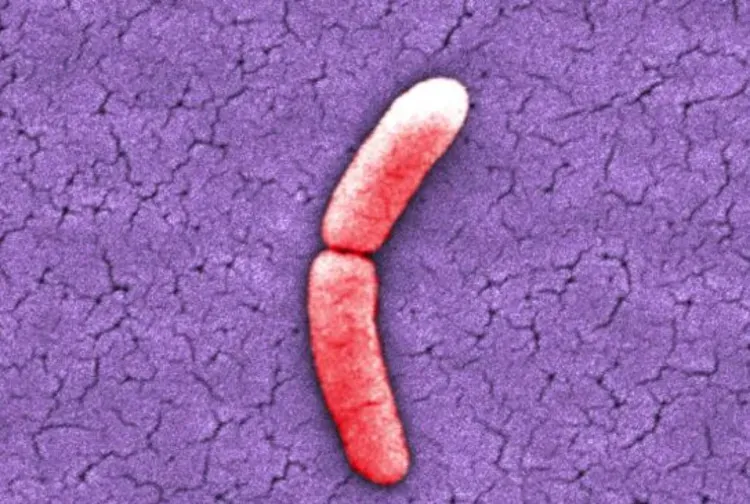
Particularly surprising is the bacteria's 'descending love' (parental love). Bacteria are single-celled organisms where one cell is an individual. Usually, when they grow to double their size, they undergo cell division and split into two bacteria of equal size. In the past, it was believed that bacteria did not age and die, but a new study was released in 2005. It was confirmed that when a bacterium splits into two, both ends have a side that existed previously and a new cut surface, and damaged proteins are sent to the old side.
As cell division continues, the cell where damaged proteins accumulate accelerates in aging and eventually dies. If the two cells were to share the damaged biological material equally, the damage would spread across generations, so this is a strategy to prevent that. The author is reminded of a grandmother's 'descending love' in the way even these insignificant creatures provide a better starting point for the next generation.
People often tease those who are simple or thoughtless by calling them 'single-celled.' However, looking at this book, one realizes that bacteria are actually not that 'single-celled' in their thinking. The author emphasizes that bacteria are not merely disease-causing entities, but the most intimate link supporting the Earth's ecosystem. The examples of symbiosis and cooperation shown by these smallest living things in the world make us reflect on human society, where everyone is busy looking out for themselves. If “even bacteria know how to love,” shouldn't humans be better than that?