

[비즈한국] MBK Partners is stepping away from the management of Nepa, 13 years after acquiring the brand. Since coming under MBK’s ownership, Nepa has seen its performance and financial structure deteriorate significantly, with sales dropping by nearly 40% and the company falling into an operating loss. As the new owner, K2 Korea Group, is also facing a recent slowdown in its own growth, all eyes are on whether it can alleviate Nepa’s financial burden and lead the brand to a turnaround.

Switch to Deficit Last Year, Worsening Performance and Financials
K2 Korea Group is moving forward with the acquisition of Nepa. Nepa announced that it would hold a board meeting to discuss a capital increase through a shareholder allotment. MBK Partners, the current largest shareholder, does not plan to participate in this capital increase.
Plans are in place for K2 Group to acquire the new shares that would have been allotted to MBK. If the paid-in capital increase is completed as planned, K2 Group will become Nepa's largest shareholder. Subsequently, the existing stake held by MBK is expected to be transferred to K2 Group. Once the transaction concludes, MBK will have completely exited the management of Nepa, 13 years after its initial acquisition.
In 2013, MBK invested 997 billion won to acquire a 100% stake in Nepa. It was the first instance of a domestic private equity fund acquiring an outdoor brand, garnering significant market interest. At the time, Nepa was the fifth-largest brand in the domestic outdoor market by sales and was experiencing rapid growth. Its sales in 2012 reached 400 billion won, a 60% increase from the previous year, and grew further to 470 billion won in 2013, the year the acquisition by MBK was finalized.
However, as the growth of the outdoor market slowed, Nepa’s performance also took a downturn. Sales fell to 280.3 billion won in 2020 before recovering to the 300 billion won range, but in 2024, they fell back below the 300 billion won mark to 297.3 billion won. Last year, sales were 288.7 billion won, a 38.6% decrease compared to 2013. The company also shifted from an operating profit of 118.2 billion won in 2013 to an operating loss of 2.2 billion won last year.
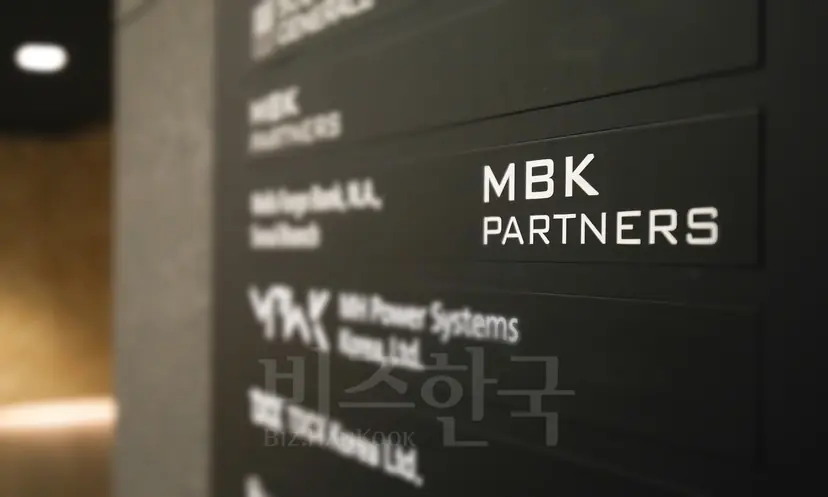
The financial structure also worsened. Equity, which stood at 452.9 billion won in 2013, shrank by 87% to 59.3 billion won last year, while debt more than doubled from 154.4 billion won to 339.7 billion won during the same period. In this process, the burden of borrowings increased sharply. While there was no debt at the end of 2013, it ballooned to 221.7 billion won on an individual basis by the end of last year.
The increase in debt led to a higher interest burden. Last year, the cash generated by Nepa through operating activities was 15.7 billion won, while interest payments during the same period reached 20.3 billion won. In essence, more cash was flowing out in interest than was being generated by its core business.
For this reason, Nepa intends to prioritize reducing its debt burden under the new shareholder structure. The plan is to use the funds secured from this capital increase to repay borrowings, thereby lowering interest expenses and creating capacity for product development and brand investment.
Nepa stated, "We have identified that non-operating factors, such as financial costs and goodwill impairment, have affected our recent profit and loss," adding, "Through this capital increase, we will resolve the burden of borrowings and financial costs to establish a financial structure that is effectively debt-free." They added, "After securing financial soundness, we plan to focus on building a foundation for stable growth by strengthening Nepa's competitiveness in products, distribution, and marketing."
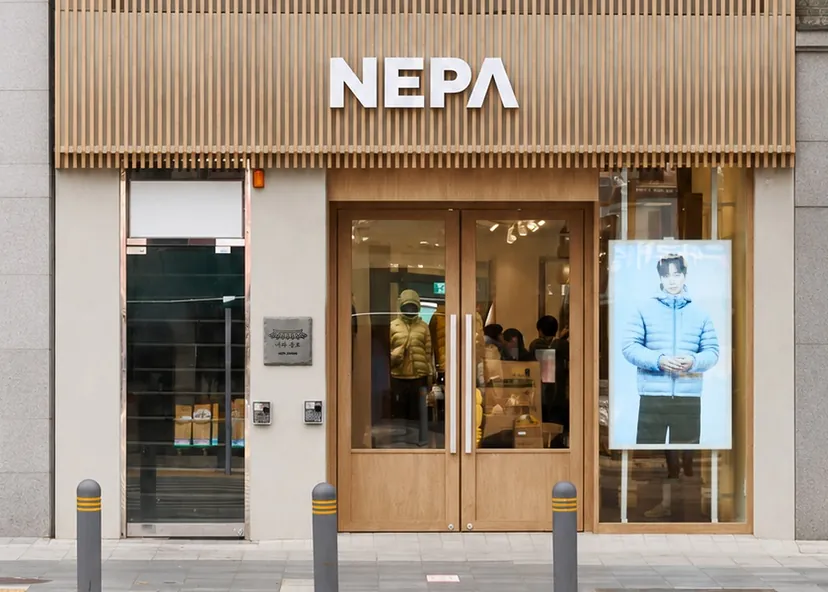
From Eider to Nepa... Synergy or Cannibalization?
Industry experts view K2 Group's acquisition of Nepa as an attempt to expand synergies with its existing outdoor business. K2 Group operates various outdoor and sports brands including K2, Eider, Dynafit, and Nordisk. Analysts suggest that adding Nepa to its lineup will further broaden the group's outdoor brand portfolio.
The ability of K2 Group to leverage its existing business infrastructure for Nepa is also cited as a synergy. By jointly operating procurement, production, logistics, and distribution networks, the group can reduce overlapping costs and increase efficiency. K2 Group plans to share its manufacturing, sourcing, and distribution networks with Nepa after the acquisition and expand investments in product planning, design, marketing, and existing stores.
However, it is worth noting that K2 Group itself has recently seen a slowdown in its earnings growth. K2 Korea’s consolidated revenue last year was 367.4 billion won, a 1.9% decrease from the previous year, and operating profit also fell from 54.5 billion won to 48.9 billion won during the same period. K2 Group is now faced with the dual challenge of restoring growth to its core business while normalizing Nepa.
Nepa stated, "We understand that the acquisition and investment are proceeding stably, taking into account K2 Korea Group's financial capacity," and "From Nepa's perspective, we expect that combining K2 Korea Group's expertise in the outdoor business with our product and distribution capabilities will strengthen Nepa’s brand equity and competitiveness, allowing us to build a stable profit structure."
As the lineup targeting the same outdoor market within K2 Group increases, concerns about brand overlap are emerging. K2 Group already operates K2 and Eider, and adding Nepa increases the potential for overlap in customer base and product lines.
Nepa maintains that K2 Group can operate each brand independently, given its experience in acquiring Eider. K2 Group acquired the domestic trademark rights for Eider in 2009 and has since grown it as a separate brand from K2. A Nepa official said, "Even at the time of the Eider acquisition, there were concerns about brand overlap, but the group has experience in growing each brand independently while maintaining their unique identities and customer bases," adding, "We plan to focus on enhancing synergies by leveraging the strengths of each brand and the group's overall business capabilities."