

[비즈한국] Frustration is mounting among merchants at the Mapo Agricultural and Marine Products Market in Seoul as the vacancy left by Danong Mart remains unfilled for a long period. Merchants report a visible decline in foot traffic since the store's closure, arguing that the prolonged vacancy is accelerating the downturn of the local commercial area.
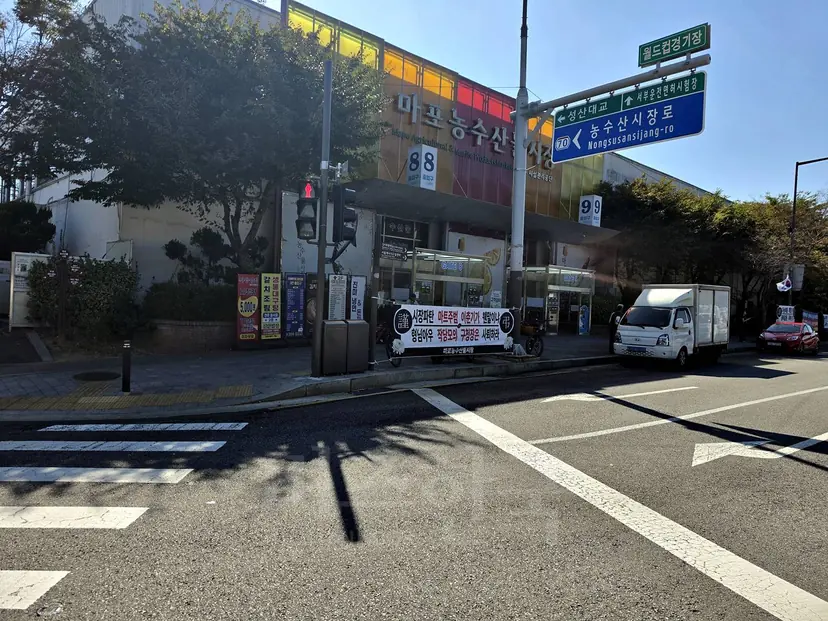
The space has remained vacant since Danong Mart ceased operations on December 31 of last year. Although the Mapo Facilities Management Corporation held a bidding process in June this year to select a new operator, none of the three bidders proceeded to a final contract. No further re-bidding notices have been posted since.
I visited the Mapo Agricultural and Marine Products Market on the 7th. The entrance to the former Danong Mart was firmly shut. The interior behind the glass doors was blocked by fabric and wooden partitions, and notices of business closure were posted on some of the doors.
Near the market, it was easy to spot banners hung by merchants protesting the long-term vacancy of the mart. The sharp language directed at the Mapo-gu Office and the Mapo Facilities Management Corporation clearly revealed the accumulated anxiety and anger of the merchants.
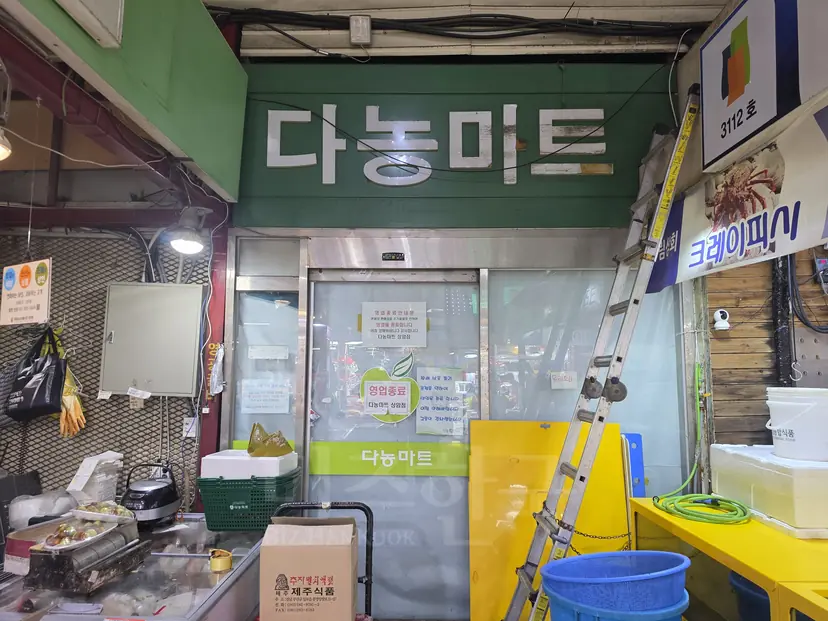
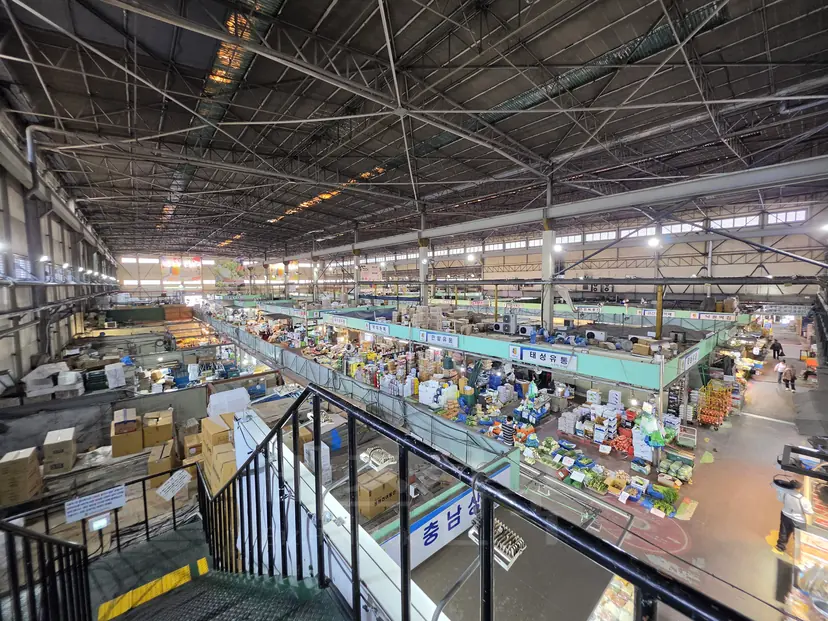
In reality, the merchants I met at the market that day expressed their frustration over the unresolved mart issue. They all agreed that the closure of the mart led to a significant drop in visitors, which in turn resulted in reduced sales. When Danong Mart was open, restaurant owners and small business owners often purchased necessary items there and then also bought vegetables, fruits, and seafood within the market. However, with the mart closed, customers have turned to other regional marts or markets where they can buy all their needs in one place, leading to a loss of both new visitors and existing customers.
A merchant trimming green onions in a passageway next to a store remarked, "I feel like customers have dropped by two-thirds. When the mart was open, you could buy everything you needed in one place, but now, even if people visit here, they still have to go to a separate mart afterward. Would people bother to come if they have to endure that inconvenience?"
Merchants pointed to the open bidding system based on the highest price, implemented in 2020, as the reason for the long-term vacancy. They explain that this has driven up rental costs and created a heavy burden with a security deposit that reaches approximately 20 times the monthly rent. This leads to potential operators abandoning contracts, creating a vicious cycle where the vacancy of a core anchor store further drives away customers and reduces revenue.
Furthermore, the one-year contract term has been identified as a problem. According to the 'Bid Announcement for Selection of Mart Operation Business Operator at Mapo Agricultural and Marine Products Market' released by the Mapo Facilities Management Corporation on June 5, the lease period is one year from the contract date. Merchants point out that having to renew the contract every year causes significant anxiety regarding the continuity of business operations.
This issue was also raised at the Mapo-gu Council. During the administrative audit by the Administrative and Economic Committee on September 4, committee member Choi Young-seop questioned the one-year contract mentioned in the announcement. In response, Hwang Jin-taek, the acting chairman of the Mapo Facilities Management Corporation, initially replied that the intent was to guarantee five years of operation. However, when Chairperson Cha Hae-young pointed out that the announcement explicitly stated the lease period was "one year from the contract date," the corporation official explained that it was intended as a one-year renewable contract within a 10-year limit under the Commercial Building Lease Protection Act. The corporation later acknowledged that the announcement could be misleading and stated they would carefully review and supplement the bid notice.
There is also growing resentment that the district office and the corporation did not provide sufficient explanations to the merchants during the delayed bidding process. The Mapo Agricultural and Marine Products Market Merchants Association claims that despite sending multiple official letters and meeting with officials to demand the normalization of the mart, they have not received a specific re-bidding schedule or future plans. They noted that even after holding protests for 21 days, they received no meaningful response. The association stated that although they met with officials from Mapo-gu and the corporation on the 6th, no concrete measures were presented, and their requests for follow-up answers have gone unanswered.
The merchants' anger is directed at Mapo-gu and the corporation. In particular, resentment grew stronger when a former official of the corporation, who had previously been at odds with the market, was mentioned as a candidate for a key position. When news broke that he was visiting the market, merchants gathered in front of the corporation's office to protest, leading to heated exchanges.
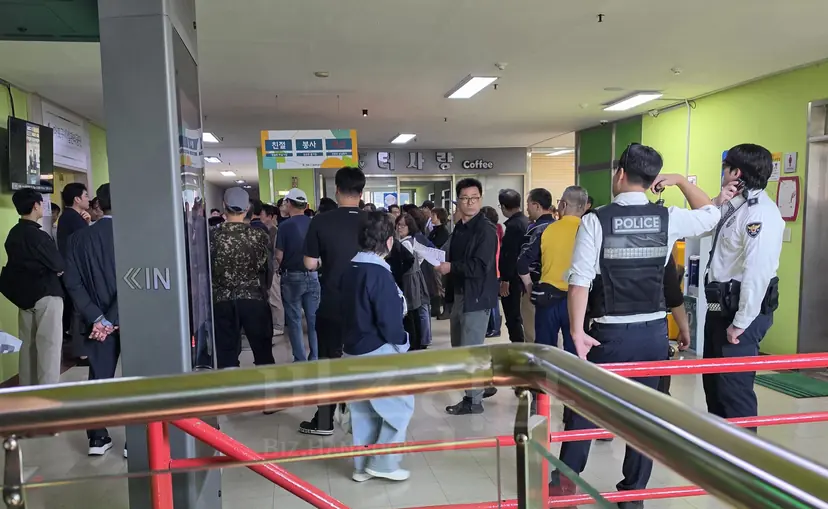
The conflict is expected to continue for the time being. Merchants have registered to hold protests from October 10 to November 7 and are planning marches between the market and the Mapo-gu Office. They have also decided to oppose the use of the market parking lot for the Shrimp Paste Festival, which they have cooperated with in the past, and will refuse to participate in event booths. They plan to continue collective action if measures for the mart's normalization and merchant support are not established.
BizHankook inquired with Mapo-gu regarding its stance on the current situation, plans for normalizing the mart, the reasons for the bidding delay, and measures for supporting merchants. Mapo-gu explained that since this is a significant issue, it is currently under internal coordination, and they intend to announce their position and future plans at a later time.