

[BizHanKook] It has been confirmed that LS Cable & System has halted its joint venture project with VAC (Vacuumschmelze), a German company specializing in permanent magnets. The plan to enter the rare-earth permanent magnet market in partnership with an overseas specialist firm was stalled due to cost competitiveness issues. Instead, LS Cable & System will invest approximately 350 billion KRW to build its own production facility in Gumi, North Gyeongsang Province, through its wholly-owned subsidiary, Korea Motion Works (KMW).
An official from LS Cable & System told BizHankook, "We have decided not to pursue cooperation with VAC further due to issues with cost competitiveness." This indicates that the recently announced investment in the Gumi permanent magnet plant was driven by the decision to abandon the initial joint venture plan and transition to an independent production system.
Moving Beyond China to Become a Key Hub for Rare-Earth Supply Chains
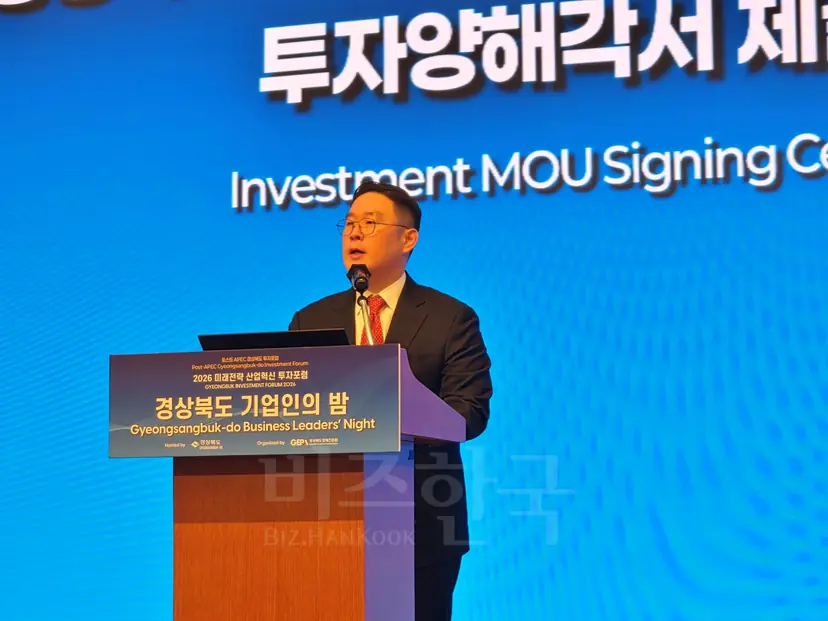
On the 29th of last month, at the ‘Gyeongbuk Entrepreneurs’ Night’ held at The Grand Lotte Seoul in Jung-gu, Seoul, LS Cable & System signed an investment agreement with Gyeongsangbuk-do and Gumi City for the construction of a permanent magnet production facility. Korea Motion Works (KMW), a 100% subsidiary of LS Cable & System, plans to invest 345.56 billion KRW by 2029 on idle land at the LS Cable & System Indong plant within the Gumi National Industrial Complex and hire 212 new employees.
Rare-earth permanent magnets are materials that generate strong magnetic forces using rare-earth elements such as neodymium or samarium; they are used in electric vehicle drive motors, industrial robots, and wind power generators. According to the Daishin Securities Research Center, the demand for neodymium permanent magnets is projected to surge from 210,000 tons in 2025 to 753,000 tons in 2050. However, as raw material processing and permanent magnet production are concentrated in China, the need for supply chain diversification is growing.
LS Cable & System CEO Koo Bon-kyu stated at the event, "LS Cable & System has maintained a close relationship with Gumi City for several decades and has grown alongside the local community." He emphasized that the Korea Motion Works Gumi plant, which is being built with an investment of approximately 350 billion KRW, will become a key hub for a non-Chinese rare-earth supply chain strategy.
The backdrop for LS Cable & System's move to build its own production facilities lies in the termination of the joint venture with the overseas firm.
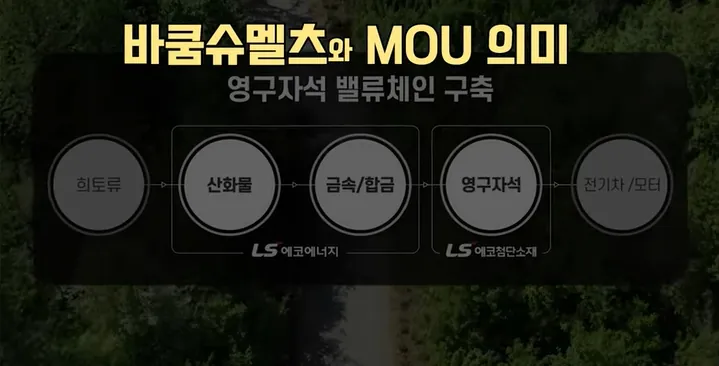
In February 2024, LS Cable & System’s subsidiary, LS Eco Advanced Materials, announced that it had signed a Memorandum of Understanding (MOU) with German permanent magnet specialist VAC to establish a joint venture for the permanent magnet business. At the time, both companies planned to establish the joint venture within the year and begin supplying 1,000 tons of neodymium (NdFeB) permanent magnets annually to automakers and others starting in 2027. This volume is enough to be used in approximately 500,000 electric vehicles.
The concept was for LS Cable & System to build a supply chain with reduced dependence on China by linking VAC’s permanent magnet manufacturing expertise with LS Eco Energy’s rare-earth business. However, an LS Cable & System official told BizHankook, "We decided not to pursue cooperation with VAC further due to cost competitiveness issues." Replacing the existing joint venture, they have set out to build an independent production system through Korea Motion Works.
Gumi for Domestic Supply, US for North American Market… Linking Raw Materials and Processing Overseas
LS Cable & System has begun building its own permanent magnet production facilities in earnest, including a decision in September to contribute 150 billion KRW to Korea Motion Works.
The plant that Korea Motion Works will build in Gumi aims to secure an annual production capacity of 1,300 tons in total, including 1,000 tons of neodymium permanent magnets and 300 tons of samarium-cobalt (SmCo) permanent magnets. Neodymium permanent magnets are primarily used for electric vehicle and robot motors, while high-heat-resistant samarium-cobalt permanent magnets are used in aerospace and defense sectors.
A specific schedule for mass production was also presented. Hong Young-ho, CEO of Korea Motion Works, stated, "We plan to complete the plant in March 2028, undergo trial production in April, and enter mass production starting in July."
CEO Hong attributed the choice of Gumi as a production hub to its designation as a specialized complex for the robot industry, the cluster of automotive parts companies in the Gyeongbuk region, and excellent industrial infrastructure. In particular, he explained that the prompt and active administrative support from Gumi City was an important factor in the investment decision.
Permanent magnets produced at the Gumi plant will be mainly supplied to domestic automakers and parts companies. An official from LS Cable & System said, "The Gumi plant is basically intended for supply to automakers and auto parts companies in Gumi and nearby domestic areas."
LS Cable & System is also pushing to build a permanent magnet production hub in the United States. An LS Cable & System official explained, "Since supply might be tight just meeting domestic demand alone, we are preparing a dualized supply chain with the US plant targeting the global automotive market, including North America."
The neodymium permanent magnet production capacity goal for the US facility is 2,000 tons per year. Combining this with Korea's production capacity, it amounts to building a 3,300-ton annual production system. However, the specific investment scale and timeline for the US plant have not yet been finalized. According to LS Cable & System, they are currently in the initial stage of securing land, and civil engineering and site leveling work are required before construction of the factory can begin.
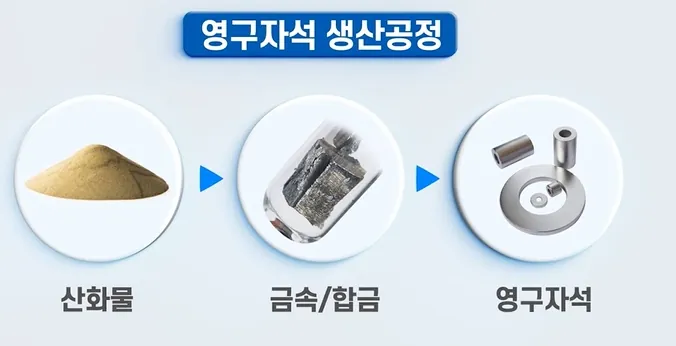
Although LS Cable & System is building an in-house permanent magnet production system, not all production processes will be kept in Korea. They are pursuing the construction of a supply chain that secures rare-earth oxides from the Australian rare-earth company Lynas, processes them into metal at the LS Eco Energy production facility in Vietnam, and performs the final manufacturing of permanent magnets in Korea and the United States.
CEO Koo Bon-kyu emphasized, "LS Cable & System is actively working with affiliates to build a non-Chinese supply chain that ranges from rare-earth metals to permanent magnet manufacturing."
CEO Hong Young-ho also explained, "We intend to resolve the raw material portion through strategic overseas partnerships, and subsequently pursue rare-earth metallization and final magnet production using a sophisticated model similar to Japan's."